When people ask me what software for insurance brokers should automate first, they usually expect me to say quoting. Or rating. Or some grand all-in-one portal that promises to make every broker faster by next Tuesday.
My answer is less glamorous, which is usually a sign that it is right: automate the messy work before the quote.
I learned this the hard way years ago watching a commercial auto broker chase one missing driver date of birth across an email thread, two PDFs, and a spreadsheet with eight tabs named some version of Final. We lost almost an hour before anyone even discussed risk. Nobody became an insurance broker to play hide-and-seek with a VIN.
That is the point. The best broker automation does not start by replacing judgment. It starts by clearing the fog around the submission so the broker can actually broker.
My hot take: automate the messy middle first
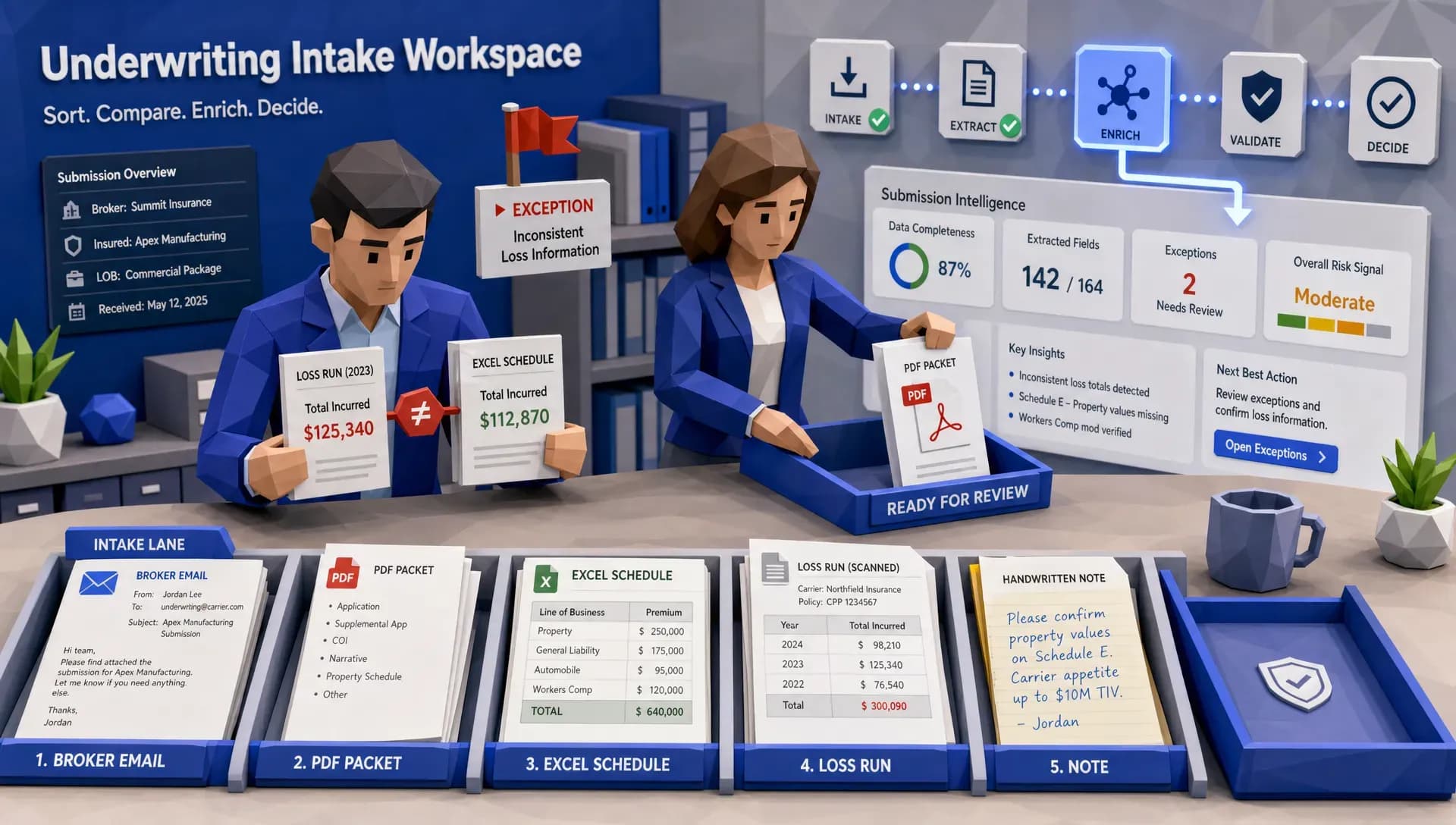
The first workflow to automate is the work between a client request and a marketable submission. That includes reading inbound emails, identifying attachments, extracting data, checking completeness, enriching missing context, and routing the file to the right person or market.
Why not start with quoting? Because quote automation sitting on top of bad submission data is like putting premium tires on a car with no steering wheel. It looks expensive, but it will still end up in a ditch.
This is especially true for P&C brokers, MGAs, and wholesale teams dealing with messy commercial submissions. A single account can include ACORD forms, supplemental applications, loss runs, driver lists, vehicle schedules, property statements, emails, photos, expiring policy documents, and carrier-specific forms. The real bottleneck is rarely one magic underwriting decision. It is the ten small handoffs before that decision.
McKinsey has noted that underwriters can spend up to 60% of their time on administrative work rather than risk assessment. Brokers feel the same pain from the other side of the desk. The admin tax is baked into submissions, remarketing, renewals, endorsements, and follow-ups.
If your software for insurance brokers cannot reduce that admin tax, it is just another system to feed.
The first workflow software for insurance brokers should automate: submission intake
Submission intake is the front door. If that door is chaotic, everything behind it gets slower.
A good broker automation workflow should take inbound emails and uploaded documents, understand what arrived, classify the file, extract the key fields, and turn the package into structured data. In plain English, the software should know the difference between a loss run, an ACORD application, a fleet schedule, and a random email from a client saying, Please see attached.
This matters because brokers spend a shocking amount of time doing low-value translation work. A client says they have 42 vehicles. The schedule says 43. The expiring policy shows 41. The loss run names a vehicle that is not on either schedule. Someone has to spot that before the submission goes to market, or the broker looks sloppy and the underwriter loses confidence.
Automation should catch those inconsistencies early. It should flag missing fields, duplicate records, stale documents, and unreadable attachments before the broker burns half a morning on manual review.
If the intake process is still fully manual, start there. Not because it is flashy. Because every other automation depends on it.
Second: automate completeness checks and appetite triage
Once the data is captured, the next step is not to blast it to every carrier in the known universe. We have all seen that movie, and the ending is usually a very polite decline.
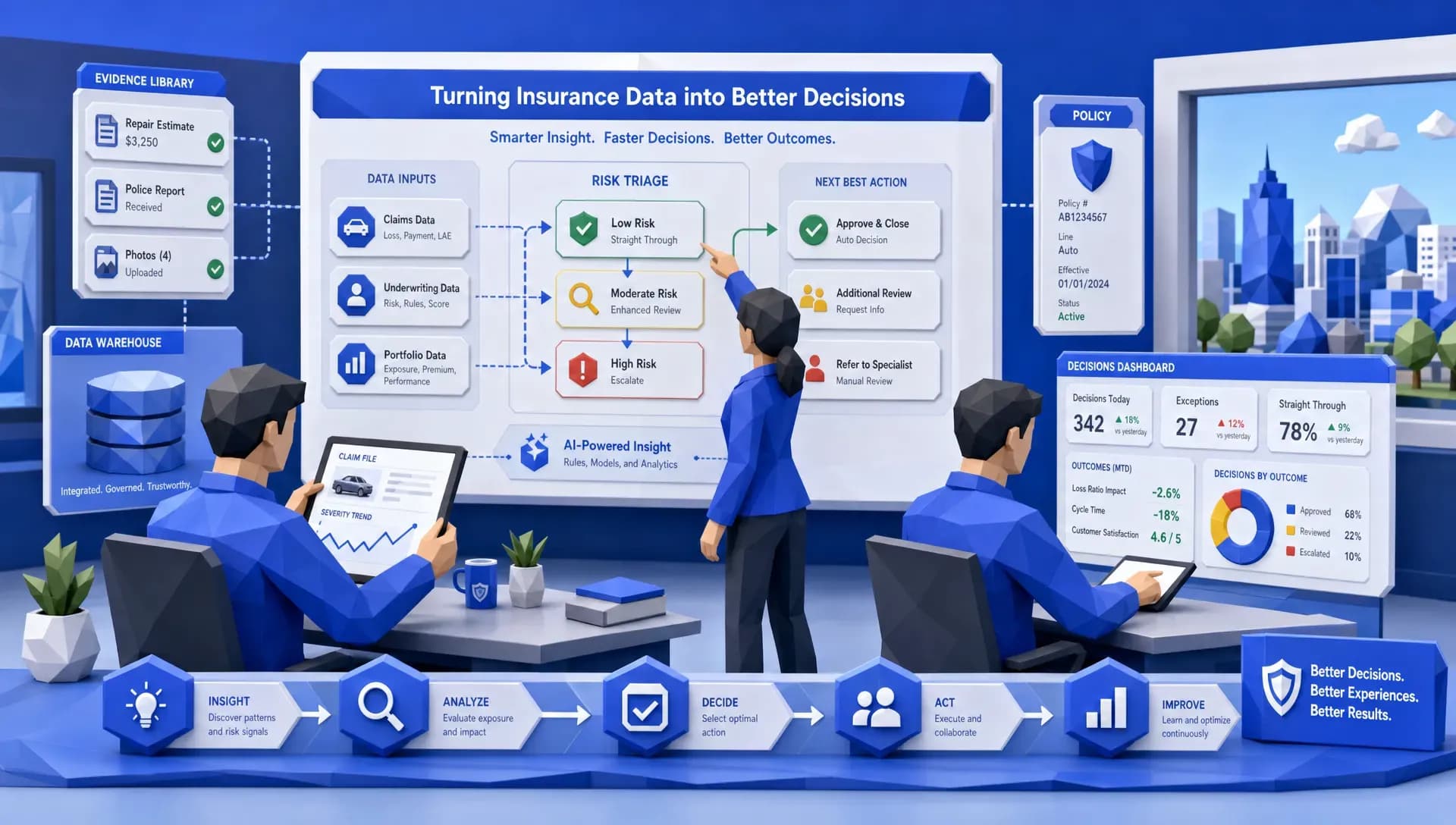
The second thing broker software should automate is submission readiness. Is the account complete enough to send? Does it meet basic market appetite? Are there obvious referral triggers? Are key subjectivities missing? Is the loss history current? Are the driver records complete? Are there coverage gaps that need human review before the file leaves the office?
This is where automation helps brokers protect relationships with underwriters. Good underwriters remember who sends clean, thoughtful submissions. They also remember who sends mystery meat.
A readiness workflow can help brokers decide whether to submit, request more information, escalate internally, or route to a specialist. That does not replace a producer’s market knowledge. It gives that knowledge cleaner inputs.
The best version of this feels like a seasoned account manager whispering, You are missing three things, and Carrier B will hate this occupancy. That is useful. A bot that says submission received is less useful.
If the inbox is a major part of the pain, this deeper look at broker and agent email workflows is a good next read.
Third: automate data enrichment and verification
After intake and completeness, the next priority is enrichment. This is where insurance broker software starts doing more than organizing documents. It starts adding context.
For auto risks, that might mean VIN validation, driver history checks, vehicle data, garaging information, or prior coverage verification. For property, it might mean hazard, geospatial, or weather exposure data. For commercial accounts, it might mean business classification, claims history normalization, or public record checks.
The goal is not to drown the broker in data. We already have enough tabs open to heat a small apartment. The goal is to bring back the few signals that change the conversation.
This is also where fraud and misrepresentation checks begin to matter. The FBI estimates that insurance fraud costs the United States more than $300 billion each year. Brokers are not fraud investigators, but they are often the first line of defense against bad information entering the workflow. Automated checks can flag inconsistencies early, before they become pricing issues, claim disputes, or awkward renewal conversations.
My advice is to choose enrichment that supports the workflows you already run. Do not connect every data source just because a vendor has a logo slide. Connect the data that answers practical questions: Can we quote this? Is the information reliable? Which market should see it first? What needs human review?
Fourth: automate client and carrier follow-ups
Here is where I get a little stubborn. Brokers often underestimate follow-up automation because it sounds simple. It is not. Follow-up is where trust is won or lost.
Clients do not always know whether silence means their broker is working hard, waiting on a carrier, missing information, or lost under a pile of submissions. Underwriters do not always know whether the broker has clarified subjectivities, received signed forms, or moved the account elsewhere.
Broker software should automate status updates, missing-info requests, renewal reminders, document requests, and internal nudges. The tone still needs to be human. The timing does not.
A useful analogy comes from payments. Small businesses did not need a lecture about payment innovation. They needed an easier way to take the card in front of them. Tools like tap to pay on phone from nashi work because they remove friction at the exact point work happens. Broker automation should follow the same logic: remove the small delays that keep real work from moving.
This is not about sending robotic emails. It is about making sure no submission dies because nobody remembered to ask for the updated loss run.
Fifth: automate renewals and servicing, but only after intake is stable
Renewals are a tempting place to start. They are predictable, repeatable, and tied directly to revenue. I get the appeal.
But if a brokerage still has messy intake, poor document handling, and inconsistent data capture, renewal automation will simply create faster confusion. The better sequence is intake first, then readiness and enrichment, then communications, then renewals.
Once the data foundation is stable, renewal automation becomes powerful. Software can compare expiring terms, identify missing updates, trigger remarketing workflows, prefill applications, request updated schedules, and surface accounts that need attention early. For brokers, this means fewer last-minute scrambles. For clients, it means fewer panicked emails two days before expiration.
The same logic applies to endorsements, certificates, policy checking, and routine servicing. These are excellent automation candidates once the broker’s data is clean enough to trust.
What not to automate first
Do not start by automating the broker’s relationship with the client. That is the wrong target.
A broker’s value is advice, negotiation, advocacy, and market judgment. Those are not the first things software should touch. The first target should be repetitive work that is high volume, rules-driven, easy to measure, and painful enough that everyone already complains about it in meetings.
I would also be cautious about starting with a full rip-and-replace project. Most brokerages do not need a giant transformation program to get value. They need one workflow that works in production, proves savings, and gives the team confidence.
For a broader look at common friction points, we have also covered insurance software solutions that fix workflow bottlenecks.
A practical 90-day sequence for broker automation
In the first 30 days, map the submission intake workflow exactly as it happens today. Not the clean version from the process document. The real version, including shared inboxes, side conversations, attachments, spreadsheets, manual rekeying, and all the little exceptions people swear only happen once a week.
In days 31 to 60, automate intake and extraction for one line of business or one recurring submission type. Commercial auto fleet schedules, loss runs, ACORD forms, and renewal submissions are good candidates because the data is valuable and the pain is obvious.
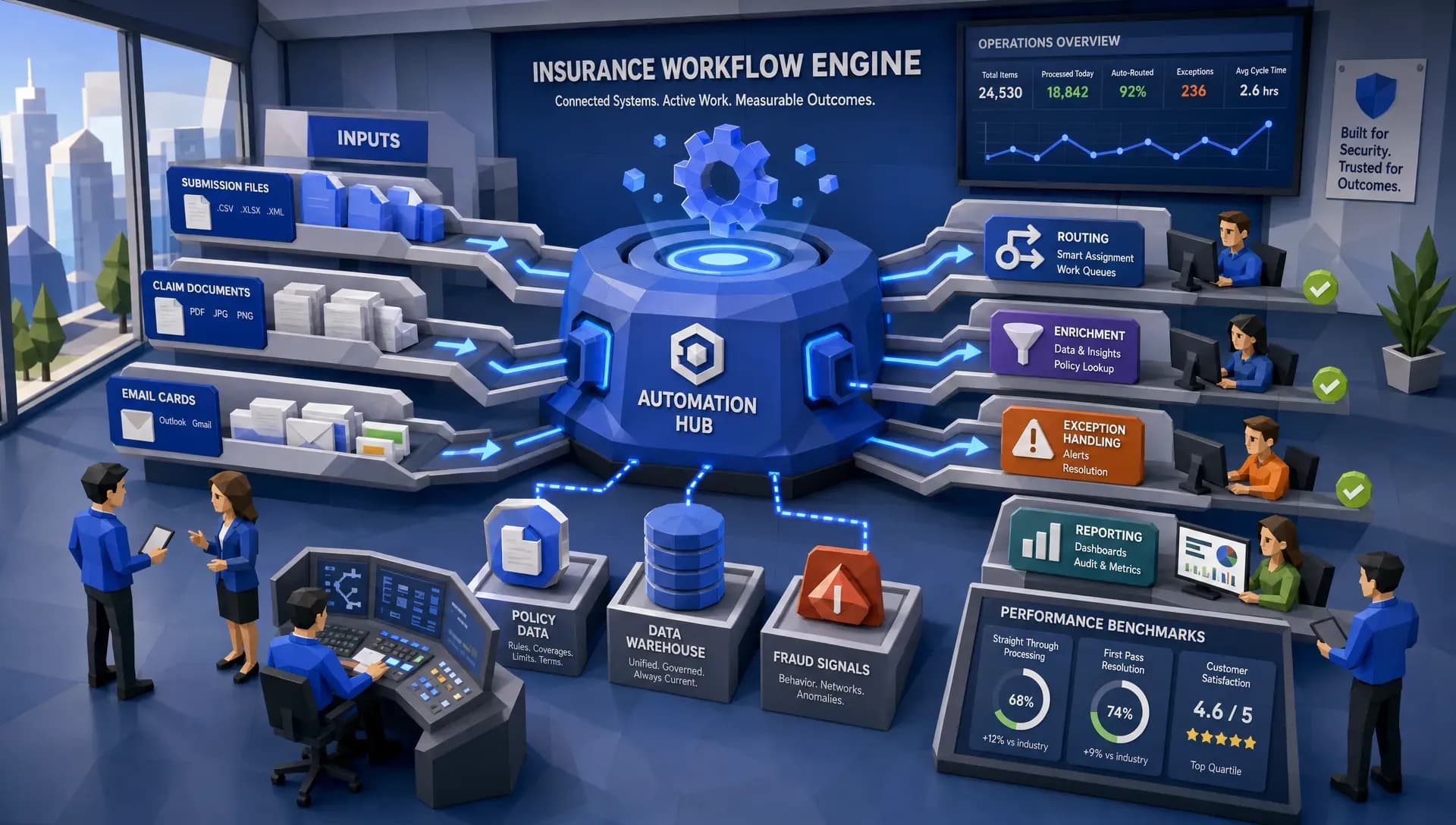
In days 61 to 90, add enrichment, routing, and reporting. This is when the workflow starts becoming a management tool, not just an admin shortcut. You can see which submissions are incomplete, which markets decline most often, how long each handoff takes, and where revenue is getting stuck.
The important part is to avoid the classic trap: spending 90 days debating the perfect future-state operating model while brokers keep copying data from PDFs into spreadsheets. Start smaller. Ship something real. Learn from it.
What to measure after the first automation goes live
If you cannot measure the workflow, you cannot defend the budget. Broker automation should be judged by operational outcomes, not by how impressive the demo looked.
The most useful metrics are usually straightforward:
- Submission-to-market turnaround time
- Manual touches per submission
- Incomplete submission rate
- Decline-after-submit rate
- Quote-to-bind ratio
- Renewal leakage and late-renewal volume
- Time spent rekeying data
- Number of submissions handled per account manager
Do not overcomplicate this. If the team can process more submissions with fewer errors and better market response, the software is doing its job. If it merely creates another dashboard nobody opens, send it to the same place we send old carrier passwords.
Where Inaza fits
Inaza is built around the idea that automation should begin where the work is already happening. For brokers, MGAs, and carriers, that often means submissions, documents, emails, underwriting checks, claims inputs, and operational reporting.
The platform integrates with existing systems and can automate data capture, reporting, analytics, and workflow execution without forcing teams into a long retraining cycle. Inaza also supports customizable workflows, 250+ workflow templates, and pre-built API templates for data enrichment sources such as Verisk, LexisNexis, HazardHub, and others.
The part I like most, and the part many broker tools miss, is the data layer underneath the workflow. Automation should not just move a file from A to B. It should capture the useful data along the way so leaders can see turnaround times, bottlenecks, appetite patterns, renewal issues, and performance against benchmarks.
That is how software for insurance brokers becomes more than task automation. It becomes operational intelligence.
Frequently Asked Questions
What should software for insurance brokers automate first? Submission intake should usually come first. That means automating email handling, document classification, data extraction, completeness checks, and routing before moving into quoting or renewals.
Should brokers automate quoting before submission intake? Usually, no. Quote automation works best when the submission data is complete, clean, and structured. If the intake process is messy, quoting automation will inherit those problems.
Will automation replace broker relationships? No. The best use of automation is to remove repetitive admin work so brokers can spend more time advising clients, negotiating with markets, and managing complex risks.
Which broker workflows are easiest to automate early? Good early candidates include ACORD form processing, loss run extraction, fleet schedule normalization, renewal reminders, missing-information requests, and email triage.
How do brokers know if automation is working? Track turnaround time, manual touches, incomplete submissions, quote-to-bind ratio, decline rates, renewal leakage, and time spent rekeying data. These metrics show whether the workflow is improving real operations.
Ready to automate the right workflow first?
If your brokerage, MGA, or carrier team is evaluating software for insurance brokers, start with the workflow that creates the most drag before quoting ever begins. In most teams, that is submission intake and data preparation.
Inaza can help you deploy practical automation workflows that connect with existing systems, capture operational data, and give your team clearer visibility from day one. If you want to see what that could look like for your submissions, underwriting, claims, or policy operations, talk to Inaza and start with the bottleneck your team complains about most.