Claims leaders rarely lose time because a claim is truly “hard.” They lose time because the same claims questions get asked over and over, across email threads, call notes, PDFs, and core systems that do not share context.
Every repeated question creates a micro-delay: a follow-up request, a diary note, a handoff, a re-key, a supervisor interruption. Multiply that by thousands of claims and you get the real culprit behind cycle time creep, rising LAE, and frustrated policyholders.
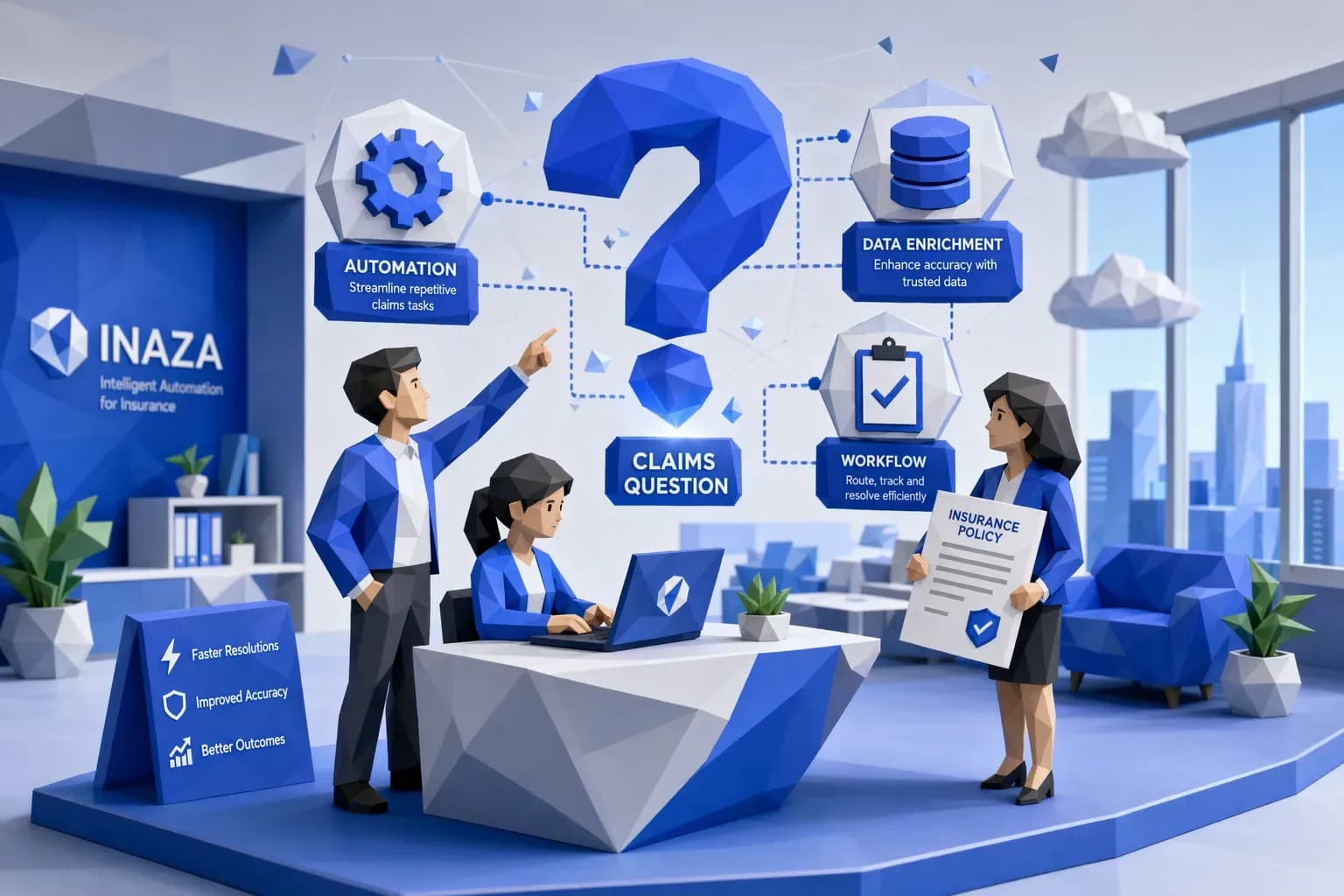
This article breaks down the most common claims questions that slow teams down, why they keep happening, and how to eliminate them with structured intake, data enrichment, and workflow automation.
Why the same claims questions keep resurfacing
Most “back-and-forth” in claims operations is not a people problem. It is a systems and data design problem.
1) Intake arrives unstructured (and incomplete)
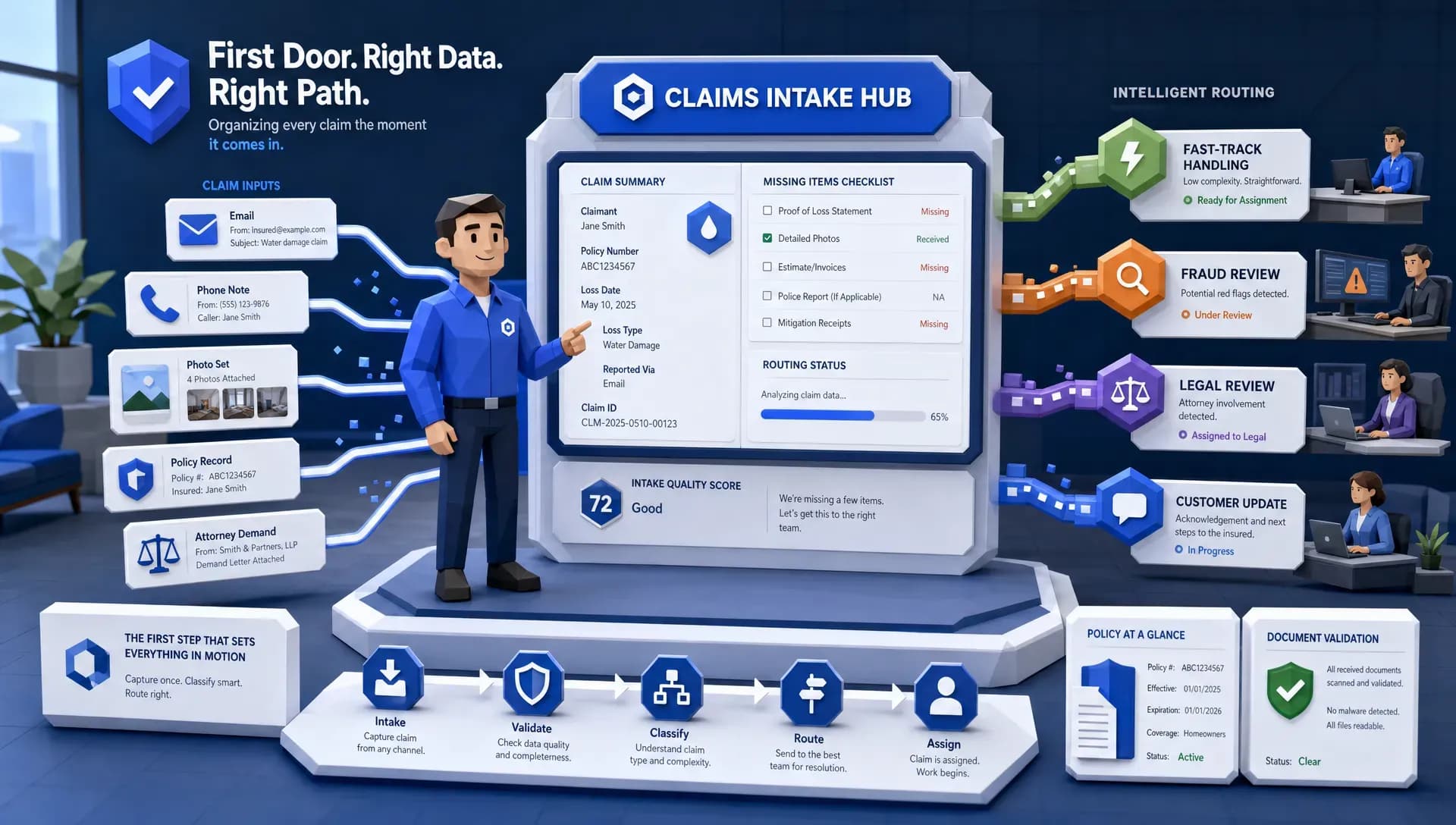
FNOL still comes in through a messy mix of channels: phone calls, web forms, agent emails, attachments, photos, police reports, and invoices. If the first capture is incomplete, your adjusters spend the next few days reconstructing the claim.
2) Core systems hold data, but not context
A coverage screen may show limits and dates. It usually does not explain which documents were reviewed, which rules fired, what was missing at intake, or why a claim was routed the way it was. That missing context becomes questions.
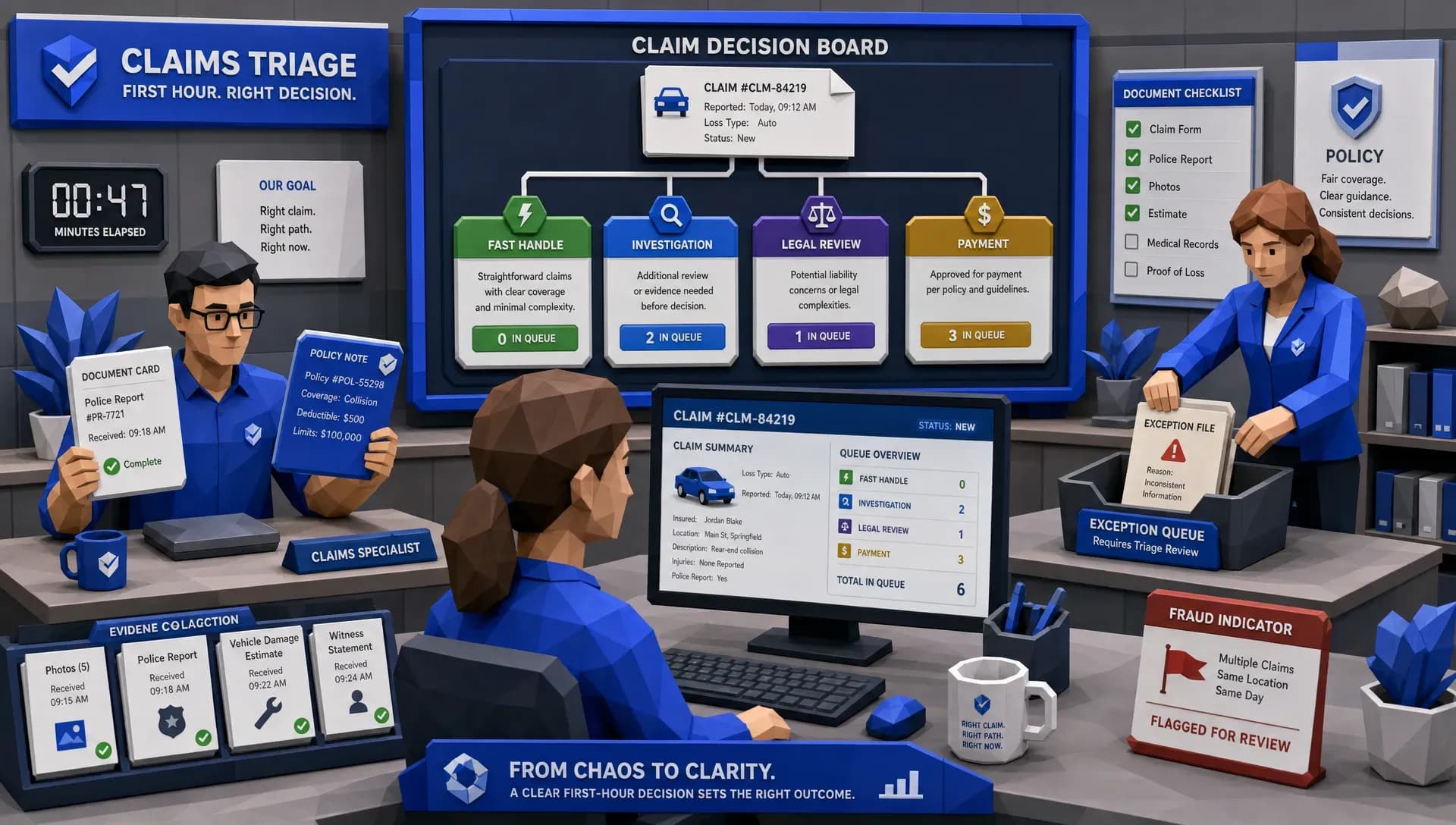
3) Triage is often manual and inconsistent
When routing rules live in tribal knowledge (or spreadsheets), two adjusters ask different questions on similar claims. That inconsistency creates rework and escalations.
4) External data is available, but hard to operationalize
Most teams know third-party enrichment can help. The bottleneck is turning “we should check that” into a repeatable, compliant workflow step that runs automatically.

Top claims questions slowing teams down (and what to do about them)
Below are the recurring questions that create the most drag in P&C claims, especially for carriers, MGAs, and high-volume adjusting teams.
1) “Is this loss covered, and are we inside the policy period?”
This sounds basic, but it becomes a time sink when the adjuster has to chase the declarations page, endorsements, or underwriting notes.
What to change:
- Standardize an automated “coverage evidence bundle” step at FNOL (policy, endorsements, key exclusions summary, deductibles)
- Route claims with coverage uncertainty into a defined exception workflow (with a clean audit trail)
2) “Do we have enough FNOL data to start handling?”
The most expensive moment to discover missing info is after the claim has already been assigned and touched.
Common missing fields include loss location specifics, involved parties, vehicle or property identifiers, photos, or repair facility information.
What to change:
- Use dynamic intake that asks different follow-ups based on claim type and severity
- Automate document and photo collection nudges (SMS/email) when a required item is missing
3) “What exactly happened, and does the story stay consistent across documents?”
Narrative mismatches are a top driver of delay because they trigger extra calls, extra documentation, and often SIU review.
What to change:
- Convert unstructured text (emails, statements, PDFs) into structured fields early
- Flag inconsistencies automatically so adjusters review the exception, not every file
4) “Is liability clear, or do we need more investigation?”
Liability questions often expand into multiple micro-questions:
- Are there witnesses?
- Is there a police report?
- Were there prior losses at the same location?
What to change:
- Introduce a triage workflow that separates “liability clear” from “needs investigation” within hours, not days
- Trigger enrichment steps only when thresholds are met (for example, injury present, disputed facts, high exposure)
Even when documents exist, claims stall because teams cannot confidently say:
- Which version is latest
- Whether required pages are included
- Whether the file is readable or complete
What to change:
- Automate document classification, completeness checks, and indexing across all file types
- Eliminate re-keying by extracting key fields directly into your workflow
6) “Are these photos usable, and do they match the alleged damage?”
Poor photo quality, missing angles, or questionable authenticity forces manual follow-up. In higher-risk environments, image verification becomes a fraud and fairness issue.
What to change:
- Use automated photo quality and consistency checks at intake
- Apply image screening to route only suspicious or ambiguous cases to specialists
If you are building this capability, it is worth reviewing the broader fraud context from the industry, including resources from the NICB on insurance fraud trends.
7) “What is the scope of damage, and do we trust the estimate?”
Teams lose hours reconciling estimates, supplements, and invoices, especially when formats vary and line items are inconsistent.
What to change:
- Automate invoice and estimate intake into structured, comparable fields
- Add anomaly detection for unusual labor rates, parts pricing, duplicate billing patterns, or suspicious timing
8) “Is there subrogation potential, and did we capture the facts in time?”
Subro is often missed not because teams do not care, but because indicators are scattered across statements, photos, and notes.
What to change:
- Capture subro signals as structured fields at FNOL (third-party involvement, product failure indicators, commercial premises, contractors)
- Auto-create tasks with deadlines so evidence requests do not get buried in diaries
9) “Do we need a vendor, and if so, which one, and how fast?”
Vendor coordination becomes a hidden queue, especially after storms or in property claims that require mitigation and temporary storage.
For example, some claims operations use onsite containers to secure contents or salvage during remediation. If your network occasionally needs rapid procurement, a reference option for buying shipping containers online can be useful during surge periods (see buy shipping containers online).
What to change:
- Treat vendor requests as workflow objects (not emails)
- Track cycle time from “vendor needed” to “vendor assigned” to identify bottlenecks and staffing gaps
10) “Can we pay this now, or are we missing payment readiness items?”
Payments get delayed for operational reasons: missing lienholder info, missing W-9, missing repair completion evidence, missing coverage confirmation, or unclear authority.
What to change:
- Run an automated “payment readiness checklist” before a claim reaches settlement
- Escalate exceptions with clear ownership and SLAs
The fastest way to reduce claims questions: turn them into rules
A practical way to start is to treat each recurring question as one of three categories:
- Missing data (we do not have it)
- Missing verification (we have it, but it is not validated)
- Missing context (we have it and validated it, but no one can see the decision trail)
When you label questions this way, your automation roadmap gets clearer:
- Missing data points to better intake, document capture, or enrichment
- Missing verification points to cross-checks and guardrails
- Missing context points to logging and audit-ready decisioning
What “good” looks like operationally
High-performing claims organizations do a few things consistently:
They front-load intelligence
They capture structured FNOL, run enrichment early, and route accurately before a file gets multiple touches.
They keep humans for the moments that matter
Sensitive conversations (injury, total loss disputes, suspected fraud, litigation signals) benefit from human judgment and empathy. Automation should accelerate those handoffs with better information, not replace them.
They measure questions as a leading indicator
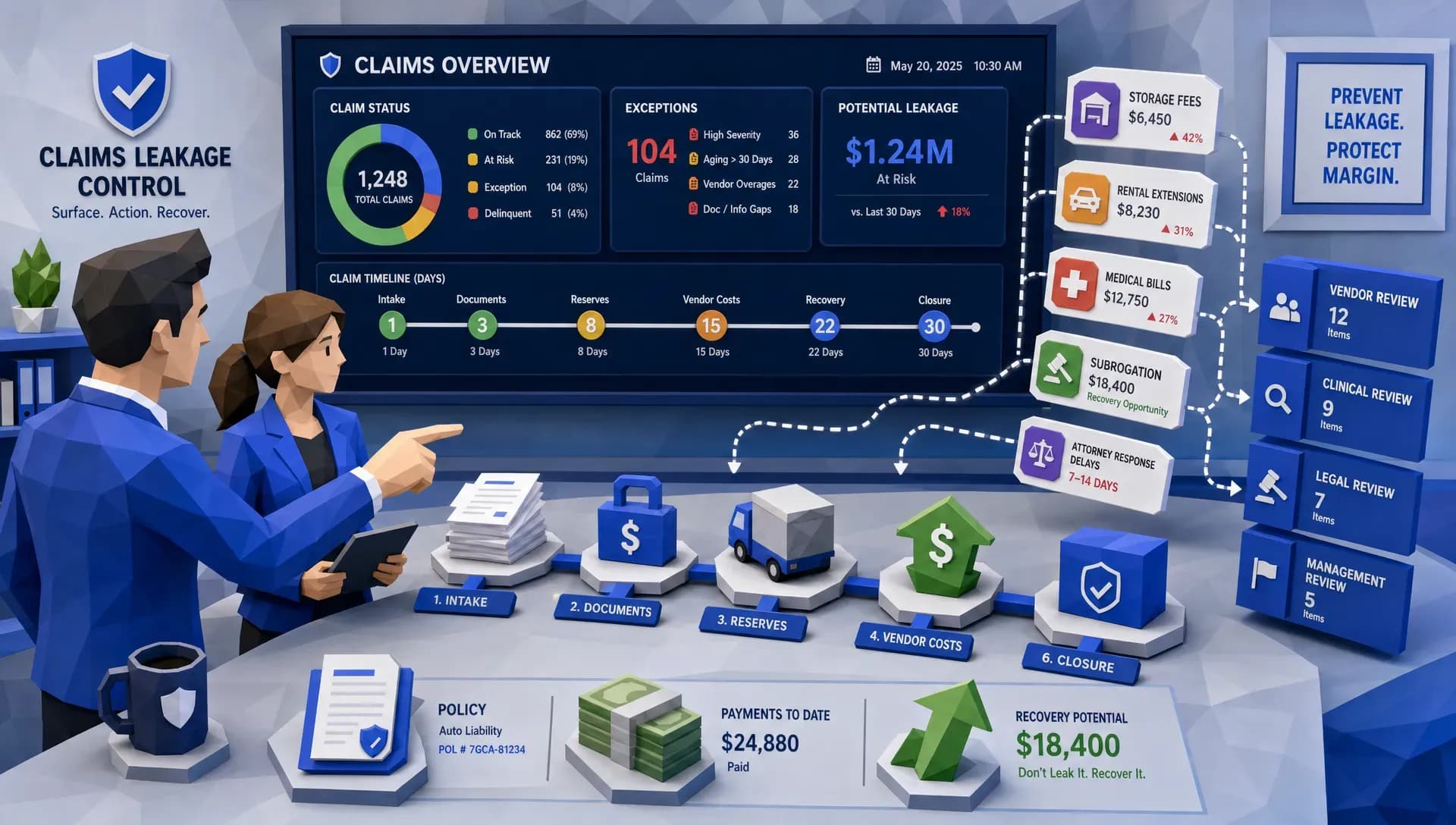
If you want fewer delays, do not only track cycle time. Track the drivers that create it:
- Re-open rate
- Number of inbound follow-ups per claim
- Time from FNOL to “first complete file”
- Touches per claim and touches per adjuster
Where Inaza fits (without a rip-and-replace project)
If the core problem is repeated claims questions, the fix is repeatable workflows that capture, enrich, and log the information adjusters keep chasing.
Inaza’s AI-powered insurance automation platform is designed to help carriers, MGAs, and brokers reduce operational drag by automating data capture and workflow steps across underwriting and claims, while keeping a unified data warehouse underneath for reporting and analytics.
Relevant capabilities to claims teams include:
- Deploying customizable workflows quickly (without extended PoC cycles)
- Using a unified data warehouse to capture the key data points produced by automations
- Enriching workflows via pre-built API templates (including Verisk, LexisNexis, and HazardHub)
- Building real-time dashboards and using built-in industry benchmarks to compare performance versus the market
If you want a deeper look at claims workflow improvements, you may also find these Inaza resources helpful:
Frequently Asked Questions
What are “claims questions” in a claims operations context? Claims questions are the recurring information gaps that force follow-ups, escalations, and rework, such as coverage confirmation, missing documents, liability clarity, or payment readiness.
Which claims questions typically create the biggest delays? Questions tied to missing FNOL data, coverage evidence, liability uncertainty, document completeness, estimate validation, and payment readiness tend to create the most back-and-forth.
How do you reduce claims questions without sacrificing compliance? Standardize intake, automate validation steps, log decisions with timestamps and data lineage, and route exceptions into defined workflows with clear ownership and audit trails.
Where should automation start in claims? Start where volume is high and questions are frequent: FNOL completeness, document classification/extraction, early enrichment, triage/routing, and payment readiness checks.
How do you measure whether claims automation is working? Track touches per claim, time to first complete file, reopen rate, inbound follow-ups per claim, cycle time by segment, and exception rates by rule.
Reduce the back-and-forth in your claims operation
If your team feels “busy” but cycle times are not improving, it is often because the same questions are being answered repeatedly in different places.
Inaza helps insurers automate the workflows behind those questions, capture the resulting data in a unified warehouse, and turn it into real-time visibility for claims leadership.
Learn more at Inaza or request a walkthrough to identify which claims questions you can eliminate first.