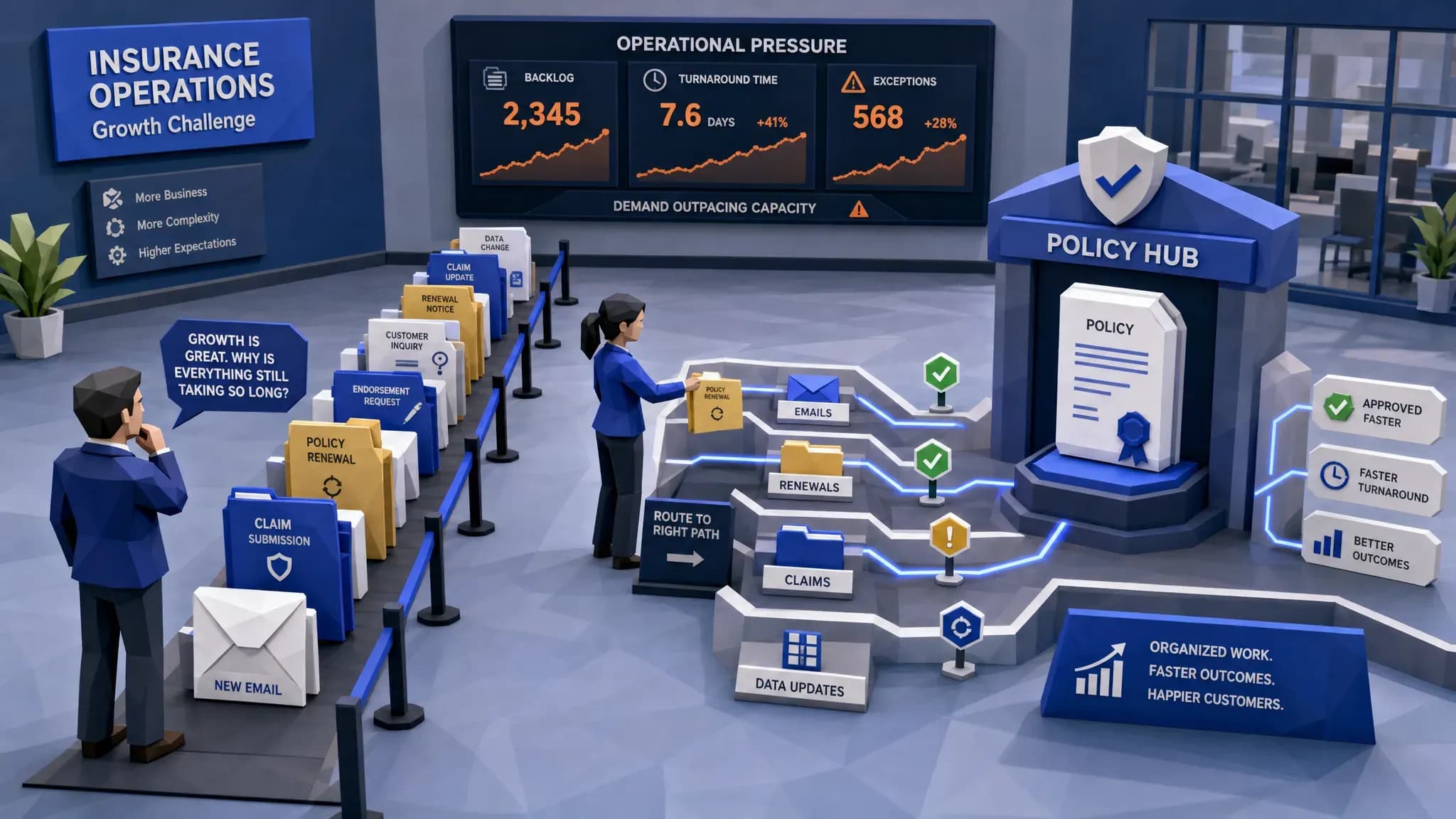
The uncomfortable truth about growth in insurance is that most carriers and MGAs do not lose it in the boardroom. They lose it in the inbox.
I have sat in enough underwriting and claims war rooms over the past decade to know the pattern. Everyone wants growth, better bind rates, cleaner books, faster claims, happier brokers, fewer leakage surprises. Then someone opens a shared mailbox with 1,846 unread items, and the room goes quiet. That, right there, is where the strategy meets the filing cabinet.
In 2026, the insurance challenges hurting growth are not mysterious. Demand is there. Capacity is there in some lines. The problem is that too much of the industry still runs on manual review, fragmented data, and heroic employees holding the machine together with spreadsheets and caffeine.
My hot take: the winning insurers in 2026 will not be the ones with the flashiest transformation deck. They will be the ones that remove operational drag from underwriting, claims, fraud review, and reporting before it quietly taxes every policy they write.
1. Underwriting teams are still doing too much admin
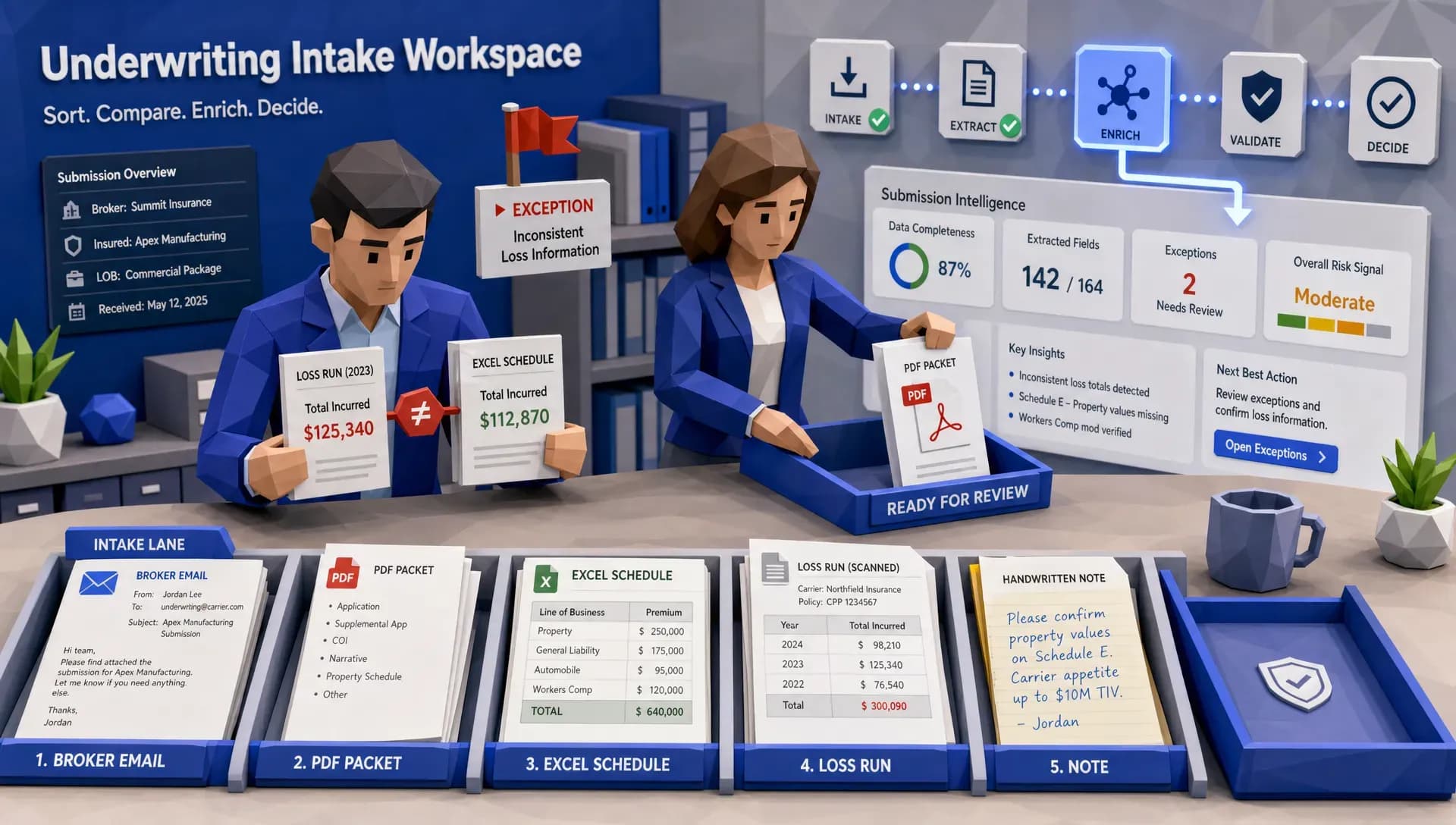
McKinsey has noted that underwriters can spend around 60 percent of their time on administrative work rather than risk assessment. If you have ever watched a skilled commercial auto underwriter copy values from a PDF into a rating workbook, then compare it against a loss run, then chase a broker for a missing VIN, you know how painful that statistic feels in real life.
I once worked with an underwriter who could spot a bad fleet risk in about three minutes. The problem was that it took her 45 minutes to get the submission into a shape where she could actually make that call. That is not underwriting. That is clerical weightlifting.
For MGAs and carriers, this hurts growth in three ways. It slows quote turnaround, creates errors that lead to premium leakage, and makes underwriters unavailable for the nuanced judgment that actually protects the book. A quote that arrives two days late might as well arrive with a polite note saying, please bind elsewhere.
The fix is not to remove underwriters from the equation. The fix is to stop making them hunt for data. Automating intake, file classification, loss run extraction, ACORD form handling, and third-party checks gives underwriters back the one thing the market never has enough of: time.
2. Claims speed has become a growth issue, not only a service issue
For years, claims speed was treated as a customer satisfaction metric. In 2026, it is a growth metric. Slow claims hurt retention, referrals, broker confidence, and loss adjustment expense. If a policyholder has to call three times to learn whether anyone has reviewed their photos, they are not thinking about your combined ratio. They are thinking about switching.
J.D. Power’s 2024 U.S. Auto Claims Satisfaction Study has highlighted the long timelines that still plague auto claims, with average settlements often stretching beyond 30 days. In a world where consumers can track a takeaway pizza from oven to doorstep, waiting weeks for a straightforward claim feels prehistoric.
The operational issue is usually not one giant bottleneck. It is a series of small delays. FNOL information arrives incomplete. Photos sit in a queue. Documents need to be renamed. A claims handler waits for a police report. Fraud review happens after too much work has already been done. One delay is survivable. Ten delays become a reputation.
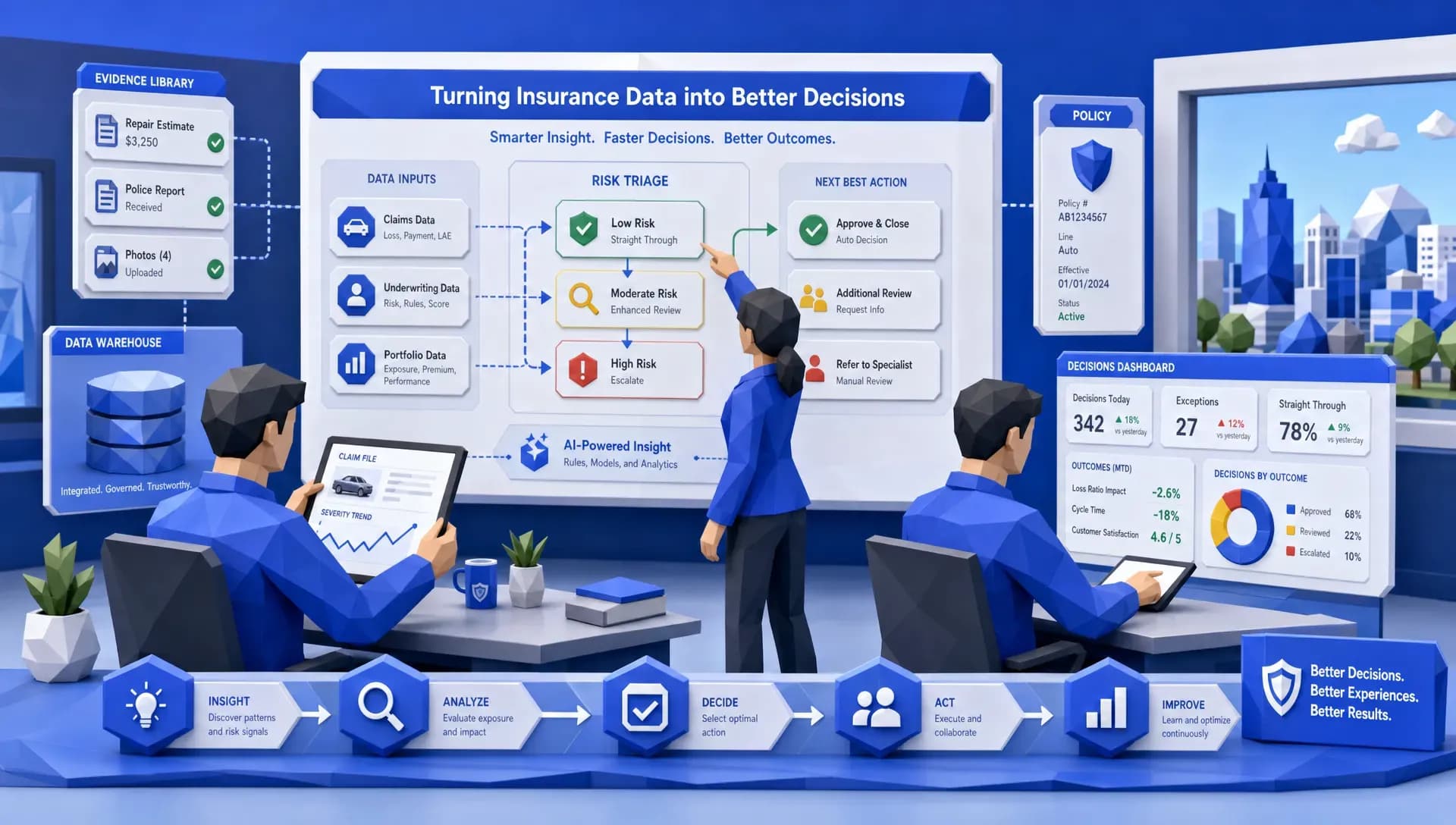
The best claims teams I have seen do not automate everything blindly. They triage. Simple, low-risk claims move quickly. Complex or sensitive claims get human attention earlier. Fraud signals are checked at intake, not after everyone has spent three weeks building the file.
That distinction matters. Customers do not mind humans being involved. They mind silence.
3. Fraud is getting cheaper to attempt
Fraud used to require effort. Now, a bad actor can doctor an image, create fake documents, or exaggerate a claim with tools that cost less than lunch. That is why fraud has become one of the most serious insurance challenges for growth in 2026.
The FBI estimates insurance fraud costs the U.S. more than $300 billion annually. Meanwhile, Verisk’s 2025 fraud report points to a market where carriers are deeply concerned about digital fraud, including the use of new tools to create or inflate claims.
Here is the bit that makes me twitch: too many fraud processes still behave like airport security in 2004. Lots of blanket checks, lots of queues, lots of false positives, and still plenty slipping through. That approach annoys honest customers and burns analyst time.
Modern fraud prevention has to be more surgical. It needs to compare data across underwriting and claims, examine image metadata, detect document inconsistencies, identify repeat patterns, and escalate only what deserves attention. A suspicious claim should not be handled the same way as a clean glass claim from a long-standing customer.
Fraud teams also need visibility into what the automation is flagging and why. If the system simply shouts suspicious and runs away, nobody trusts it. Good fraud operations create evidence, context, and a clear path for human review.
4. Data silos are still quietly eating margin
Everyone says they want better data. Fewer people want to talk about the unglamorous work of connecting it.
In many insurance operations, underwriting knows one version of the risk, claims knows another, finance sees a third, and leadership gets a monthly report that has been manually stitched together with the confidence of a school science project. I am exaggerating, but only slightly.
Data silos hurt growth because they slow decisions and hide patterns. A claims team may see a cluster of attorney-represented bodily injury claims tied to a segment that underwriting still treats as ordinary. An underwriting team may miss premium leakage because renewal data is trapped in documents. A reinsurance team may struggle to explain portfolio performance because the story lives across ten systems and three people’s inboxes.
A connected data strategy changes the conversation. When operational workflows capture key data points as work happens, reporting stops being an archeological dig. You can see quote turnaround, referral reasons, document defects, fraud flags, claims cycle time, and leakage indicators without sending someone into spreadsheet exile.
If this is a sore spot, our guide on how to understand insurance risk better with a connected-data platform is worth a read.
5. Legacy systems have become the favorite excuse for inaction
I have a soft spot for old core systems. Some of them have survived longer than several insurtech trends and at least two office redesigns. But let us be honest: in 2026, legacy constraints are often treated as if they are weather events. Unfortunate, unavoidable, and nobody’s fault.
That mindset is expensive.
The good news is that growth does not require every insurer to rip out its core platform and start again. In fact, I usually flinch when I hear someone propose a full replacement as the first move. Big-bang technology projects have a special talent for turning reasonable people into steering committee ghosts.
A better approach is to automate around the pain points first. Start where work enters the business: emails, submissions, FNOL, documents, attorney demands, images, and third-party data checks. Then connect those workflows back into the systems that already run the business.
This is where platforms like Inaza are useful. Inaza is designed to integrate with existing systems, automate underwriting, claims, customer service, and operations, and capture the data produced by those workflows in a unified warehouse. That means automation is not a side project floating outside the business. It becomes part of how the business measures itself.
The real test is not whether a vendor can run a neat demo. It is whether they can move from conversation to production without the usual proof-of-concept swamp.
6. Quote abandonment is becoming a silent growth killer
Quote abandonment does not always look dramatic. A broker sends a submission, waits, follows up, gets partial questions, waits again, and eventually places the business somewhere faster. Nobody storms out. No alarm rings. Growth simply leaves through the side door.
This is especially painful for P&C MGAs and brokers operating in competitive auto, specialty, and commercial lines. Speed matters, but consistency matters too. Brokers remember which markets respond quickly and which ones require a full archaeological expedition for every quote.
The real culprit is often intake quality. If the first step requires humans to read every attachment, normalize every field, and check every eligibility rule, the quote process is already behind. A faster workflow should identify missing items immediately, enrich data through approved sources, and route only true exceptions to underwriters.
That is how you improve quote-to-bind without loosening underwriting discipline. You are not saying yes to more bad risks. You are saying no faster, yes faster, and maybe with better evidence.
7. Compliance pressure is now baked into growth
Regulatory pressure is not new, but the bar for auditability is rising. Insurers need to show how decisions were made, what data was used, who reviewed exceptions, and whether rules were applied consistently.
This is where some automation projects go wrong. They chase speed and forget evidence. In 2026, that is a dangerous trade. If a workflow cannot show its work, it may create more risk than it removes.
Audit-ready operations need timestamps, clear decision logs, versioned rules, escalation records, and reporting that compliance teams can actually use. That may sound boring. Boring is good here. Boring keeps regulators calm, auditors busy in a manageable way, and executives out of awkward meetings.
For carriers working across multiple states, or MGAs managing delegated authority, compliance by construction is a growth enabler. It lets you scale without relying on one senior operations person who knows where every skeleton and spreadsheet is buried.
8. Expense pressure is squeezing innovation
The insurance industry loves innovation until it hits the budget meeting. Then suddenly everyone becomes a philosopher of restraint.
Expense ratio pressure is real. Claims costs, litigation, reinsurance pricing, staffing costs, and regulatory overhead all compete for the same dollars. But cutting costs without improving processes is like trying to lose weight by throwing away the scale. You may feel decisive, but you have not changed the underlying behavior.
The CFO view matters here. Growth initiatives need clear financial logic: lower cost per transaction, reduced leakage, faster cycle time, fewer manual touches, better fraud detection, and cleaner reporting. For insurance firms expanding internationally or managing cross-border operations, strong financial controls also need to sit beside operational transformation. In markets like Australia, working with advisors that provide expert tax and accounting services can help keep the finance side from becoming another growth bottleneck.
My advice is simple: do not pitch automation as a shiny technology project. Pitch it as an operating model improvement with measurable financial outcomes. The board will lean in faster.
What high-growth insurers are doing differently in 2026
The insurers pulling ahead are not necessarily the biggest. They are the most operationally honest. They know exactly where work slows down, where errors happen, and where customers or brokers lose patience.
They also stop treating underwriting, claims, fraud, customer service, and reporting as separate planets. A claims fraud trend should inform underwriting. A recurring underwriting data defect should inform broker communication. A customer service spike should inform product and renewal strategy. When those signals move together, the organization gets smarter.
Inaza’s model supports that kind of connected operation. The platform can automate workflows across underwriting, claims, customer service, and operations, while feeding captured data into analytics dashboards. Its workflow templates help teams avoid starting from a blank page, and pre-built API templates can enrich automations with sources such as Verisk, LexisNexis, HazardHub, and others. The important part is not simply faster processing. The important part is making the work observable, measurable, and easier to improve.
Another advantage is benchmarking. When insurers can compare portfolio and operational performance against market benchmarks, they can tell a stronger story to reinsurers, capacity providers, boards, and renewal committees. In a tighter market, that narrative is not window dressing. It is leverage.
A practical 30-day plan for insurers
If I were advising a carrier, MGA, or broker leadership team tomorrow, I would not start with a 90-slide transformation roadmap. I would start with one painful workflow.
Pick a workflow where growth is clearly being constrained. It might be commercial auto submissions, FNOL intake, attorney demand review, renewal leakage, or shared mailbox triage. Then measure the basics: volume, average handling time, referral rate, error rate, cycle time, and customer or broker follow-up frequency.
Next, identify which steps require judgment and which steps only require structured data. That distinction is everything. Judgment should stay with experienced people. Data capture, classification, enrichment, routing, status updates, and reporting should be automated wherever possible.
Then deploy a production-ready workflow, not a science project. The goal is to prove operational value quickly, learn from real usage, and expand from there. If the first workflow saves time, improves accuracy, and creates better data, the next one becomes easier to justify.
If you need a framework for spotting where workflow drag lives, our article on insurance software solutions that fix workflow bottlenecks digs into the handoffs that usually cause the most pain.
The big insurance challenge is execution
Insurance has no shortage of smart people. Underwriters know the risks. Adjusters know the claims. Fraud analysts know the patterns. Operations leaders know exactly which processes make everyone miserable.
The problem is execution.
In 2026, growth belongs to teams that can turn that knowledge into repeatable workflows, connected data, and faster decisions. The carriers and MGAs that keep relying on manual workarounds will still grow in pockets, especially when the market is kind. But they will struggle to scale profitably because every extra submission, claim, renewal, and demand letter adds friction.
The market will not wait for perfect transformation conditions. Brokers will place business where responses are faster. Customers will stay where claims feel clear and fair. Fraudsters will test weak spots. Regulators will ask for evidence. Reinsurers will want better portfolio stories.
That is the growth test for 2026. Not whether insurers understand the challenges. Most do. The test is whether they fix the operational machinery before competitors do.
Frequently Asked Questions
What are the biggest insurance challenges hurting growth in 2026? The biggest challenges are underwriting admin overload, slow claims handling, rising digital fraud, data silos, quote abandonment, legacy system limitations, compliance pressure, and expense ratio strain. Each one slows decisions or increases leakage.
Why do data silos hurt insurance growth? Data silos prevent teams from seeing patterns across underwriting, claims, fraud, and renewals. That leads to slower decisions, weaker pricing, duplicated work, and poorer portfolio insight.
Should insurers replace legacy systems to grow faster? Usually, no. A full replacement can be expensive and risky. Many insurers get faster value by automating high-friction workflows around existing systems, then connecting the data back into core operations.
How can automation improve underwriting without replacing underwriters? Automation can handle intake, extraction, enrichment, routing, and reporting. Underwriters still make judgment calls, but they spend less time on admin and more time assessing risk.
What should insurers automate first? Start with the workflow that most clearly blocks growth. Common first targets include submission intake, FNOL, loss run extraction, shared inbox triage, fraud checks, attorney demand handling, and renewal validation.
Ready to remove the drag from growth?
If 2026 is the year your team needs faster underwriting, cleaner claims workflows, better fraud visibility, and reporting that does not require spreadsheet archaeology, Inaza can help.
Inaza’s insurance automation platform is built for carriers, MGAs, brokers, claims teams, fraud analysts, and underwriters that want production-ready workflows, connected data, and real operational intelligence without forcing teams to relearn everything from scratch.
Explore Inaza and see how automation can turn today’s insurance challenges into tomorrow’s growth advantage.