Here is my mildly unpopular opinion: title insurance claims do not usually go bad because the claim is mysterious. They go bad because intake lets mystery into the file.
I have seen this movie before. A claim arrives by email with a subject line like, 'Urgent title issue,' three attachments named scan.pdf, and a note from someone who may be the insured, the lender, the closing agent, or a cousin with admirable confidence. By the time the examiner opens the file, the clock is already running, the documents are already messy, and everyone is pretending the intake step was just clerical.
That is the first mistake.
For title insurance claims, intake is not clerical. It is the control point that decides whether the claim starts with clean facts, verified parties, complete documents, and an auditable trail, or whether the team spends the next three weeks asking, 'Wait, which deed are we talking about?'
Why title insurance claims are uniquely unforgiving
Most insurance claims involve facts about something that happened: a collision, a storm, a theft, an injury. Title insurance claims are different because they often involve facts about something that happened years ago, sometimes decades ago, in a chain of records that may include deeds, liens, tax documents, probate filings, surveys, closing instructions, payoff letters, and policy exceptions.
The Consumer Financial Protection Bureau explains owner’s title insurance as protection against someone later making a claim against the home based on events before purchase. That sounds simple enough in a brochure. In the claims office, it can mean untangling an old unreleased mortgage, a forged deed, an unknown heir, a boundary dispute, a missed easement, or a tax lien that somehow survived closing like a cockroach in a hotel kitchen.
That is why intake quality matters so much. If a claim arrives without the policy schedule, property identifiers, claimant authority, key dates, and recorded documents, the examiner is immediately working with fogged glasses.
And unlike a fender-bender claim, title claims often carry legal deadlines, reputational risk with lenders and agents, and a high chance of attorney involvement. A weak opening file creates delays and delays create distrust. In claims, distrust has a way of becoming expensive.
The intake mistake: treating every submission like a mailbox item
Many title claims still enter through email inboxes, PDFs, shared drives, phone notes, and portal forms that were designed more for convenience than control. I am not judging. Insurance operations are full of systems that started as a temporary workaround and somehow became infrastructure. The shared mailbox is the junk drawer of the industry. Useful, yes. Dangerous, also yes.
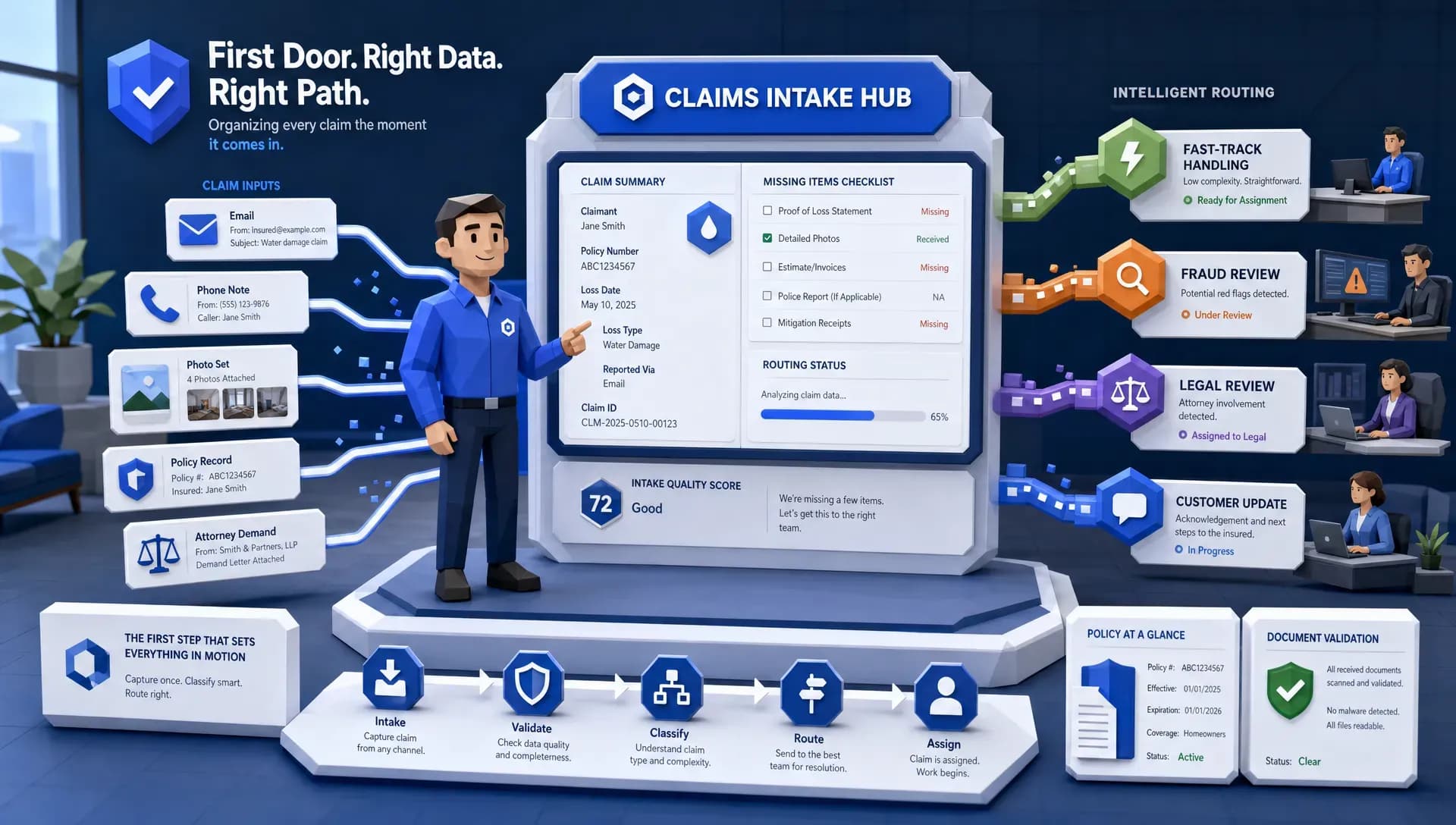
The trouble is that title claim intake often accepts information without forcing structure. A claimant can send a scanned complaint with no policy number. A closing agent can forward a lien notice without the final settlement statement. A lender may send a demand letter that references a loan number but not the title policy. Then the claim team has to reconstruct the basic file from scattered clues.
That is expensive. McKinsey has written about the broader insurance problem of professionals spending too much time on administrative work instead of judgment-heavy work, particularly in underwriting and operations, in its analysis of automation in the insurance industry. Claims teams feel the same drag. When experienced title examiners spend their day renaming PDFs and hunting for missing schedules, the insurer is paying expert wages for scavenger-hunt labor.
Here is the plain-English version. If you have ever tried to return an appliance without the receipt, the model number, or proof you bought it from that store, you understand bad intake. Now imagine the appliance is a property right, the receipt is in a county record system, and a lawyer is on copy.
What better intake controls actually mean
Better intake controls do not mean making the claimant suffer through a 14-page form. Nobody wants that, and it tends to backfire. Good controls create just enough friction to protect the file.
A strong title insurance claims intake process should capture and validate the essentials before the claim is routed, reserved, or escalated:
- Claimant identity and relationship to the insured property
- Authority to submit or act on behalf of the insured, lender, or owner
- Policy number, issuing agent, insured name, and effective date
- Property address, legal description, parcel number, and loan reference where applicable
- Claim type, such as lien, ownership dispute, encroachment, easement, fraud, tax issue, or closing error
- Date the issue was discovered and date of any legal notice or demand
- Required documents by claim type, including deeds, notices, court filings, surveys, payoff records, or title commitments
- Duplicate claim checks against property, policy, claimant, and document metadata
- Escalation triggers for litigation, fraud indicators, regulatory timing, or high-severity exposure
That list is not glamorous. It will not get applause at an insurtech conference. But it is the stuff that keeps title insurance claims from becoming operational soup.
Control 1: verify identity and authority before the file moves
The first intake control is simple: confirm who is making the claim and whether they have standing to make it.
In title claims, this can get murky quickly. The person reporting the issue may be the homeowner, the lender, a real estate attorney, a closing agent, a servicer, a buyer under contract, or someone who found your claims email address on the internet and decided today was the day.
That does not mean intake should be hostile. It means the process should ask for the right proof at the right moment. If the claimant is an attorney, capture the representation letter. If it is a lender, match the loan and insured interest. If it is an owner, validate the owner and property relationship. If someone is reporting on behalf of another party, document that authority.
Fraudsters love vague authority. Claims teams should not.
The FBI continues to warn that insurance fraud imposes major costs across the U.S. market. Title insurance has its own flavor of risk, especially around forged documents, deed fraud, wire fraud aftermath, and suspicious ownership claims. A basic identity and authority check at intake is not paranoia. It is hygiene.
Control 2: match the claim to the policy and property, not just the name
Names are slippery. Properties are less slippery, but they still like to cause trouble.
A good intake workflow should not rely only on the insured name or the property address. It should match across policy number, legal description, parcel data, loan information, insured parties, endorsements, and policy schedules. If the address says one thing and the legal description says another, that conflict should surface immediately.
I once watched a title file bounce between three people because the street address matched the insured property, but the parcel referenced in the attached tax notice was adjacent land. The claim was not hard. The intake was weak. The team lost time because nobody forced the mismatch into view early.
That is the kind of operational leak nobody budgets for, yet everyone pays for.
Control 3: classify documents before humans read them in detail
Title claims are document-heavy. That is not a complaint, it is the job. But intake should separate and label the documents before an examiner has to do deep analysis.
A complaint is not a deed. A deed of trust is not a payoff letter. A survey is not a title commitment. If all of them arrive as one merged PDF, the system should still identify document types, extract key fields, and flag what is missing.
This is where automation earns its keep. We do not need technology to decide every coverage question. We need it to make sure the right papers are in the right place, named correctly, searchable, and connected to the right claim. Humans should spend their time on coverage and strategy, not guessing whether page 17 of scan_final_final2.pdf is the recorded instrument.
Some organizations build a front-end intake portal or mobile capture layer with specialized development partners like Ravenna Interactive, then connect that front end into core claims and data workflows. The important point is not whether the screen is custom or packaged. The important point is that intake should produce structured, usable data rather than a prettier pile of attachments.
Control 4: triage coverage signals early
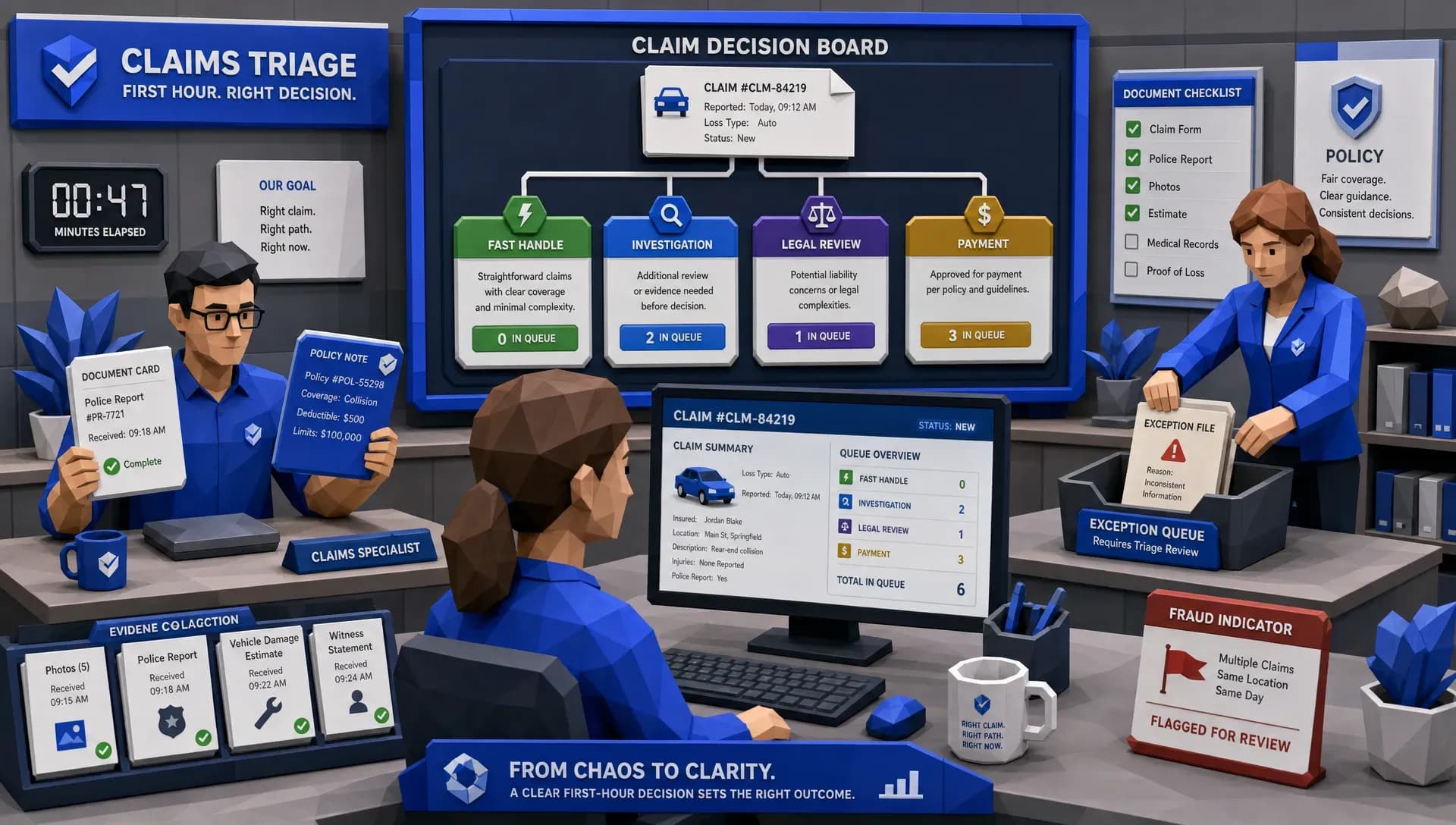
A title claim should not wait three handoffs before someone notices the alleged defect may fall under a policy exception or exclusion. Intake should capture the facts needed to route the claim intelligently.
For example, a lien claim needs different early documents than a boundary claim. A forged deed allegation needs a different escalation path than an unreleased mortgage. A matter already in litigation should not sit in a general queue behind routine correspondence.
This is where insurers can get a real operating advantage. Intake can map the alleged issue to policy schedules, known exceptions, endorsement language, and prior file history. That does not replace legal or examiner judgment. It gives that judgment a clean starting line.
The best claims professionals I know are not afraid of complexity. They are annoyed by preventable mess. There is a difference.
Control 5: make the audit trail automatic
Every intake decision should leave a trail: who submitted the claim, when it arrived, what documents were received, what data was extracted, what conflicts were found, what was missing, who reviewed it, and why it was routed or escalated.
This matters for compliance, but it also matters for management. Without a reliable intake trail, leaders cannot answer basic questions. Which claim types are increasing? Which agents produce the most incomplete submissions? Which document gaps delay resolution? Which geographies or transaction types generate more disputes?
If the data is not captured at intake, it is usually lost or reconstructed later by someone with a spreadsheet and a haunted expression.
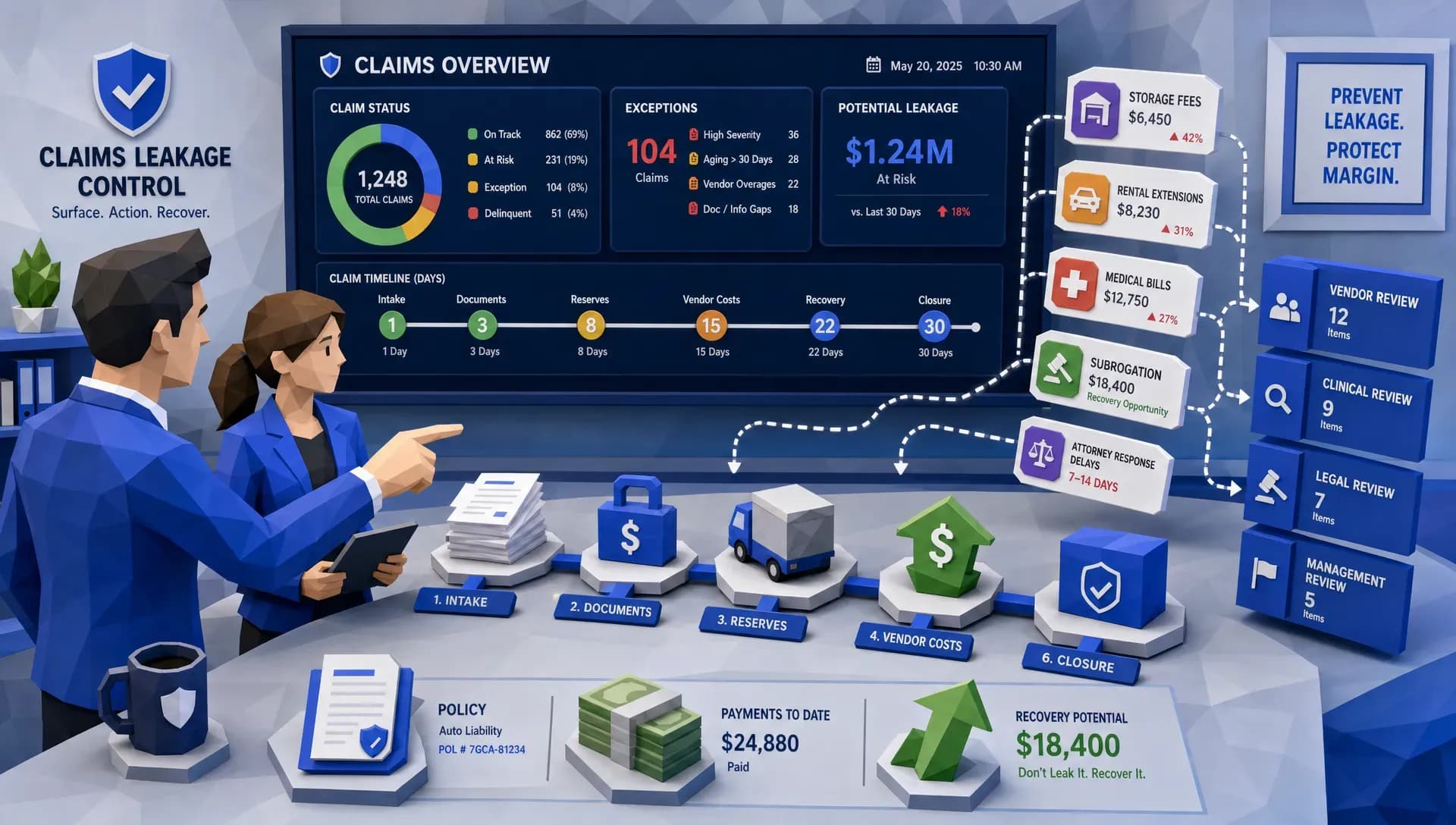
That is why I like intake controls that feed operational analytics automatically. When every claim starts with structured data, claims leaders can see patterns instead of anecdotes. Anecdotes are useful at lunch. They are less useful when setting reserves or negotiating with partners.
Digital fraud raises the stakes
We also need to be honest about the fraud environment. Digital documents are easier to alter, easier to submit, and easier to scale. A bad actor does not need to walk into an office with a suspicious folder anymore. They can send a polished PDF from a couch.
Verisk’s 2025 fraud report highlights how insurers are increasingly concerned about digital fraud and manipulated evidence. While title insurance has different workflows than auto or property claims, the lesson carries over: intake needs to inspect the integrity of what comes in, not merely receive it.
For title insurance claims, that can mean checking document metadata, spotting duplicate submissions, validating recorded instrument information, comparing dates across documents, and flagging conflicts between the claim narrative and attached evidence. None of this needs to slow down legitimate claims. In fact, it should speed them up by separating clean files from questionable ones earlier.
Where Inaza fits into the intake-control conversation
At Inaza, we think the future of insurance operations is less about massive system replacement and more about controlling the messy points where work enters the business. Claim intake is one of those points.
Inaza’s insurance automation platform is designed to integrate with existing systems, automate data capture from many file types, support configurable workflows, and turn workflow data into reporting and analytics. For a title insurer, MGA, carrier, or claims operation looking at intake controls, the practical value is straightforward: capture the right data once, validate it earlier, route it consistently, and keep the resulting intelligence available for operations, claims leadership, and audit review.
The data warehouse matters here. Workflow automation without data capture is like buying a treadmill and using it as a coat rack. You may technically own the thing, but you are not getting the benefit. When intake controls feed dashboards and reporting, leaders can see where delays, leakage, and quality issues actually start.
A practical way to start
If I were improving title insurance claims intake tomorrow morning, I would not begin with a giant transformation deck. I would pick the highest-volume or highest-severity claim types and build controls around those first.
Start with lien claims, ownership disputes, fraud allegations, or litigated matters. Define the required fields and documents for each. Add duplicate checks. Set escalation rules. Track missing information. Measure how often files arrive complete, how quickly they route, and how much rework examiners perform in the first week.
The goal is not perfection. The goal is fewer claims starting life as a mystery novel.
Once that first workflow works, expand. Add more claim types. Add more document validation. Connect more data sources. Build dashboards for claim age, missing-document frequency, escalation rates, and agent-level submission quality. That is how intake becomes a control system rather than a mailbox.
Frequently Asked Questions
What are title insurance claims? Title insurance claims arise when an insured owner or lender reports a covered issue affecting title, such as a lien, ownership dispute, forged document, undisclosed easement, boundary issue, tax problem, or other defect tied to events before the policy date.
Why do title insurance claims need stronger intake controls? They need stronger intake controls because these claims are document-heavy, legally sensitive, and often depend on historical records. Missing policy details, incomplete documents, or unclear claimant authority can delay triage, increase costs, and weaken the audit trail.
Will better intake controls slow down legitimate claimants? Good controls should do the opposite. By asking for the right information upfront and routing complete files faster, insurers can reduce back-and-forth communication and help examiners focus on coverage decisions sooner.
Can automation decide coverage on title insurance claims? Coverage decisions should still involve appropriate human expertise, especially for complex or litigated matters. Automation is most useful for intake validation, document classification, data extraction, duplicate detection, routing, and analytics.
What is the first intake control a title insurer should improve? Start with policy and property matching. If the claim is not accurately tied to the correct policy, insured party, property, and legal description, every downstream decision becomes harder than it needs to be.
Ready to tighten claim intake without ripping out your systems?
Title insurance claims will always require expertise. The question is whether your experts are spending their time on judgment or janitorial data work.
If your claims team is still relying on inbox triage, manual document sorting, and after-the-fact reporting, it may be time to put stronger controls at the front door. Inaza helps insurance teams automate intake workflows, capture structured data, integrate with existing systems, and turn operational activity into usable intelligence.
Better intake will not make every title claim simple. But it will make far fewer of them messy for no good reason. In claims, that is a very good place to start.