Most of us who have worked around commercial auto have a re-keying story. Mine involved a 74-unit fleet, two driver rosters, and a spreadsheet with columns named VIN, VIN#, and Vehicle ID, because apparently consistency had taken PTO that week. An underwriter spent half the afternoon copying the same data into a rating system, a policy admin screen, and a clearance log. By the time we found the transposed digit in one VIN, the broker had already asked for an ETA. Twice.
That is why I have little patience for the argument that re-keying is simply part of the process. My hot take: re-keying is a hidden surcharge on every commercial auto account. It slows quote turnaround, creates quiet leakage, and burns the time you hired underwriters to use on risk.
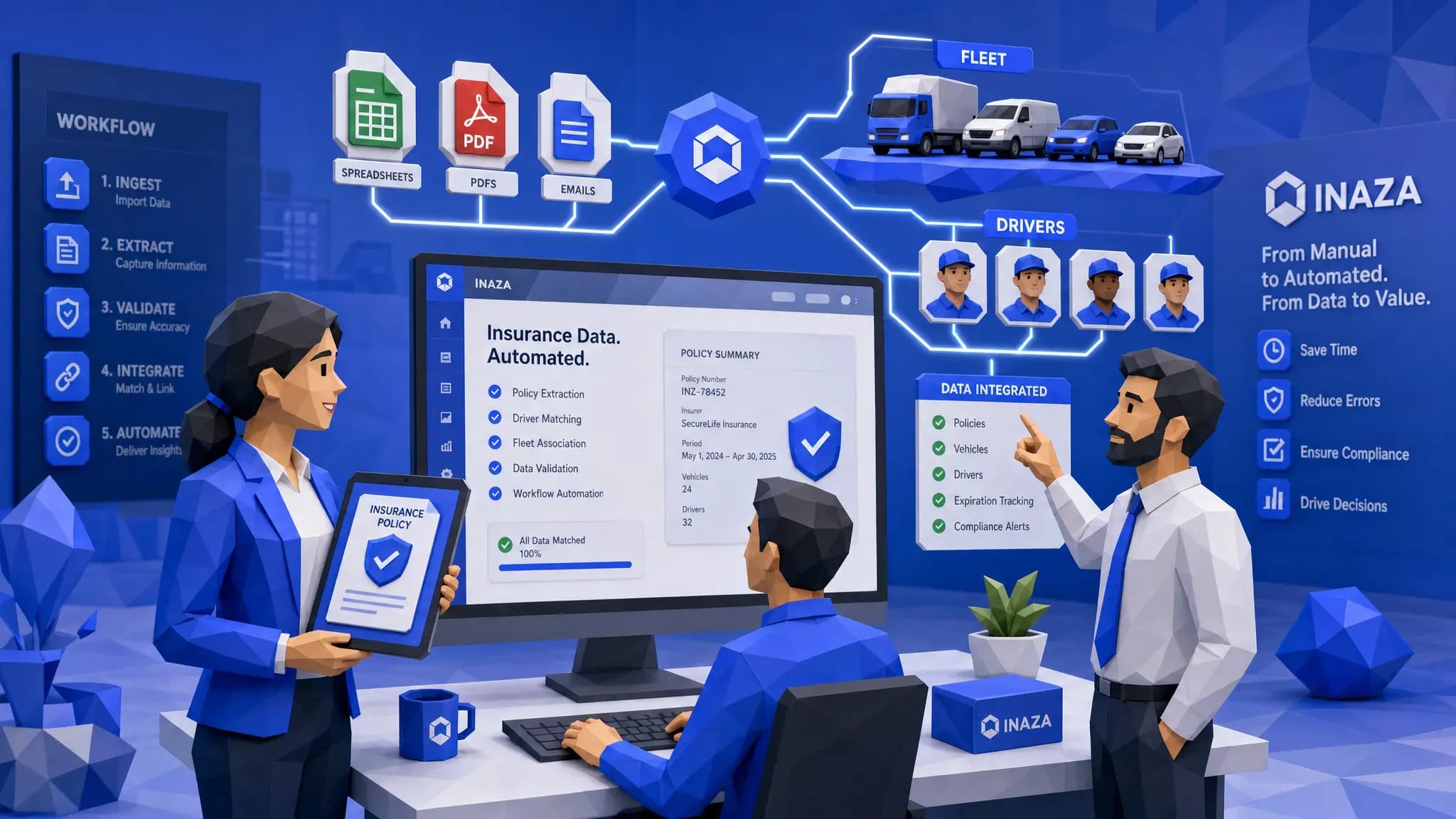
Commercial auto insurance automation beats re-keying because it changes the shape of the work. Instead of asking people to move data from one box to another, it captures the data once, validates it, enriches it, routes exceptions, and leaves an audit trail. That may sound less dramatic than a giant transformation program, but in real operations, it is the difference between quoting with confidence and doing spreadsheet archaeology under deadline pressure.
Re-Keying Looks Cheap Until You Count the Real Bill
Manual data entry feels inexpensive because the tools are already there: inboxes, spreadsheets, portals, and people who know how to get things done. The cost hides in the drag. A few extra minutes per vehicle, a few duplicate checks per driver, a few missing fields chased by email, and suddenly your underwriting team is spending its best hours as a human integration layer.
McKinsey has noted that underwriters can spend as much as 60 percent of their time on administrative work, rather than risk assessment. If that sounds high, sit beside a commercial auto underwriter during submission season. You will see a lot of valuable judgment, but you will also see copying, pasting, renaming files, comparing PDFs, checking portals, and asking brokers to resend the same information in a slightly less mysterious format.
Here is the simple analogy I use with non-insurance friends: imagine a restaurant where the waiter writes down your order, another person retypes it for the kitchen, the kitchen retypes it for the cashier, and the cashier retypes it for delivery. You would not call that quality control. You would call that how onions end up on a no-onion burger. In commercial auto, the burger is a fleet account with liability exposure, filings, drivers, vehicles, garaging, radius, commodities, and claim history attached.
The problem is not that people make mistakes. People are generally pretty good at heroic workarounds. The problem is that re-keying invites mistakes, then hides them until they are expensive.
Commercial Auto Punishes Bad Data Faster Than Most Lines
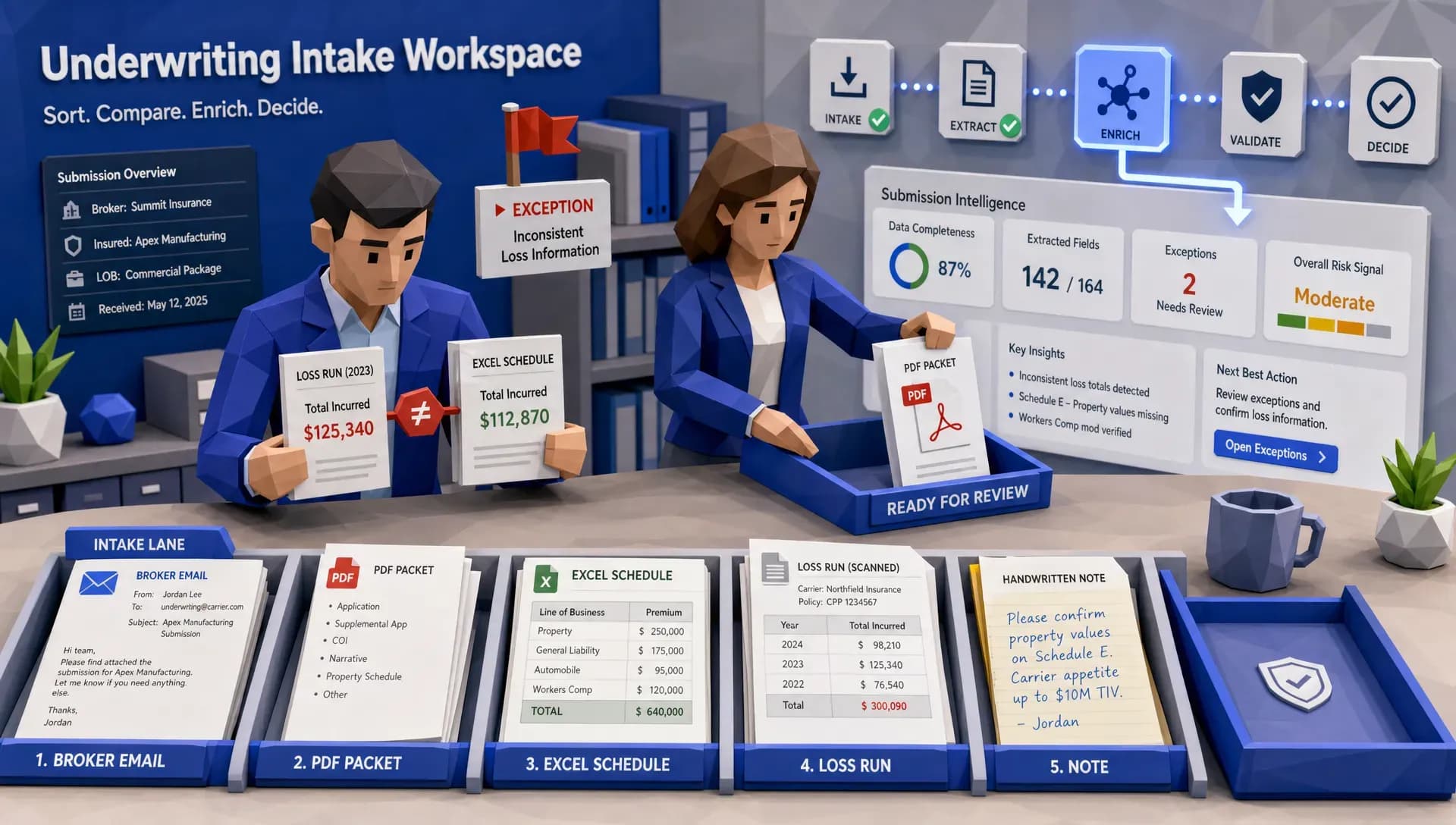
Commercial auto has a lot of moving parts. A single submission can include the named insured, legal entity variations, DOT data, vehicle schedules, driver rosters, Motor Vehicle Reports, loss runs, garaging locations, radius of operation, vehicle use, coverage limits, prior insurance, filings, and endorsements. That is before anyone starts asking whether the account is for local delivery, long-haul trucking, contractors, passenger transport, or a mixed fleet that somehow includes one trailer nobody can explain.
A one-digit VIN error can change the vehicle attributes you think you are rating. A missed driver can change eligibility. A garaging mismatch can affect territory assumptions. A loss run copied into the wrong account can distort the story of the risk. None of these errors need to be dramatic to be costly. Commercial auto leakage often arrives dressed as small inconsistencies.
This is where re-keying becomes dangerous. Every time data is manually moved from a broker submission into a rating system, then into policy admin, then into a document workflow, then into a reporting spreadsheet, you create another chance for the truth to drift. The operation still appears busy and productive, but the data foundation gets weaker with every handoff.
And speed matters. If your quote takes longer because your team is cleaning and retyping data, the broker has options. Speed is a distribution issue as much as an operations issue. A broker may win a fleet relationship through referrals, niche expertise, or warm introductions. Tools like Inroad Engine can help revenue teams find those warm paths into target accounts, but the relationship loses shine if the submission then sits in a queue waiting for someone to retype 200 vehicles.
What Automation Actually Does Better
Good commercial auto insurance automation is not a shiny button that says go. I have seen enough demos in my career to know that buttons can be very charming and very useless. The useful version is practical. It removes repetitive work, catches bad data early, and gives underwriters a cleaner file before they spend time on judgment.
At a basic level, strong automation should do five very unglamorous, very valuable things:
- Capture data once from emails, PDFs, spreadsheets, ACORD forms, portals, images, and other incoming files.
- Normalize it into standard account, vehicle, driver, coverage, and loss fields.
- Validate it against business rules and trusted internal or external sources before the quote progresses.
- Route exceptions to the right person with context, rather than dumping everything into a general queue.
- Write clean data back into core systems, dashboards, and downstream workflows.
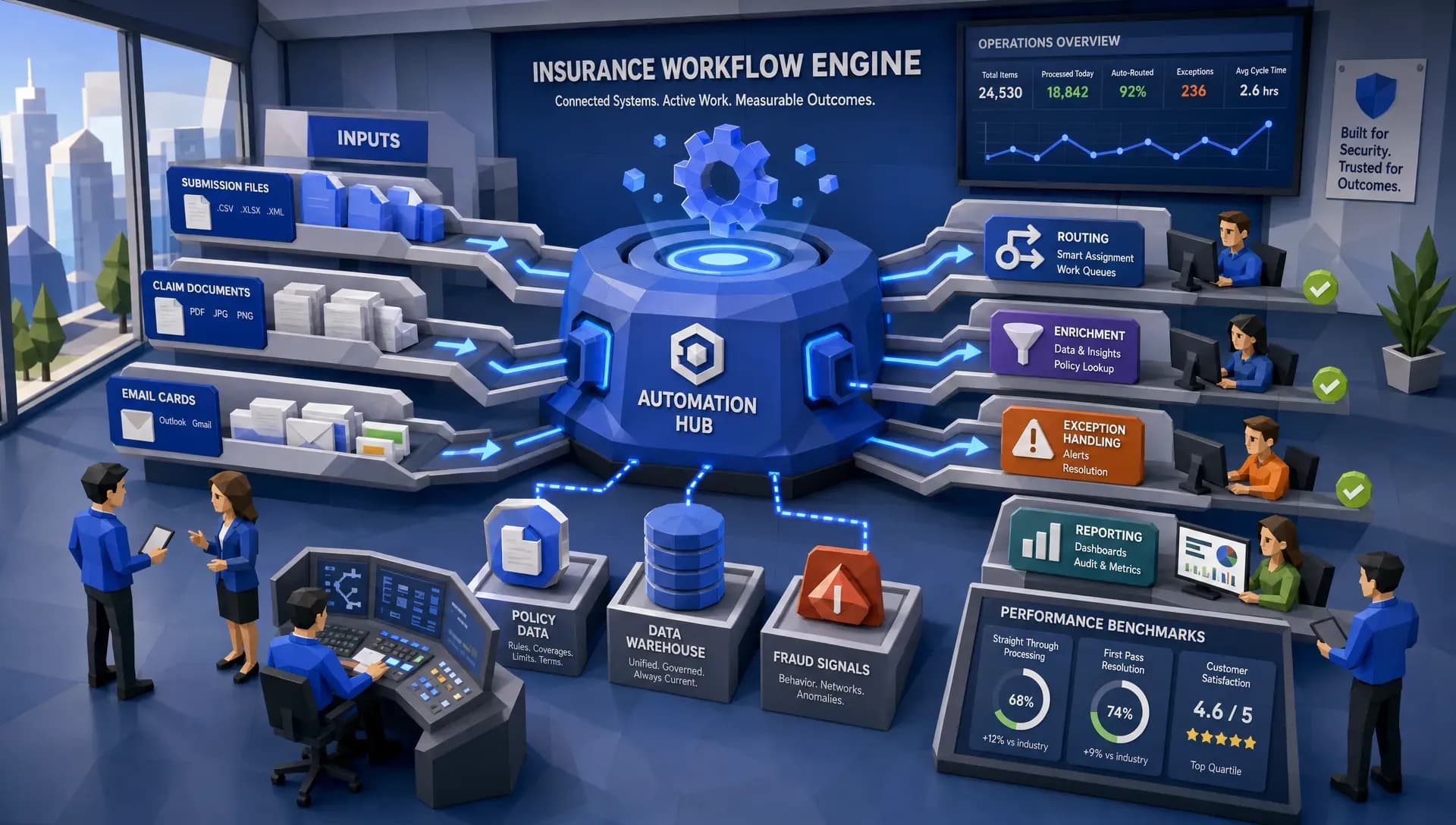
That last point matters more than people think. If automation extracts a fleet schedule but leaves the underwriter to manually update the rating system, you have not solved the problem. You have only moved the bottleneck. The win comes when intake, enrichment, underwriting, issuance, reporting, and claims context can share the same structured data.
At Inaza, we approach this by connecting workflows to existing systems and capturing the data underneath the workflow, not merely moving files from one folder to another. The platform supports all file types, customizable automation workflows, and pre-built API templates for sources such as Verisk, LexisNexis, and HazardHub. That means an automation can capture the submission, enrich the key fields, validate the obvious issues, and feed a unified data warehouse for reporting and analytics.
This is where commercial auto automation becomes more than back-office efficiency. It becomes control.
The Best Automation Creates Operational Memory
Re-keying has amnesia. Every submission starts over. The same broker sends another inconsistent schedule. The same vehicle field causes another exception. The same underwriter creates another spreadsheet to track something the system should have known already.
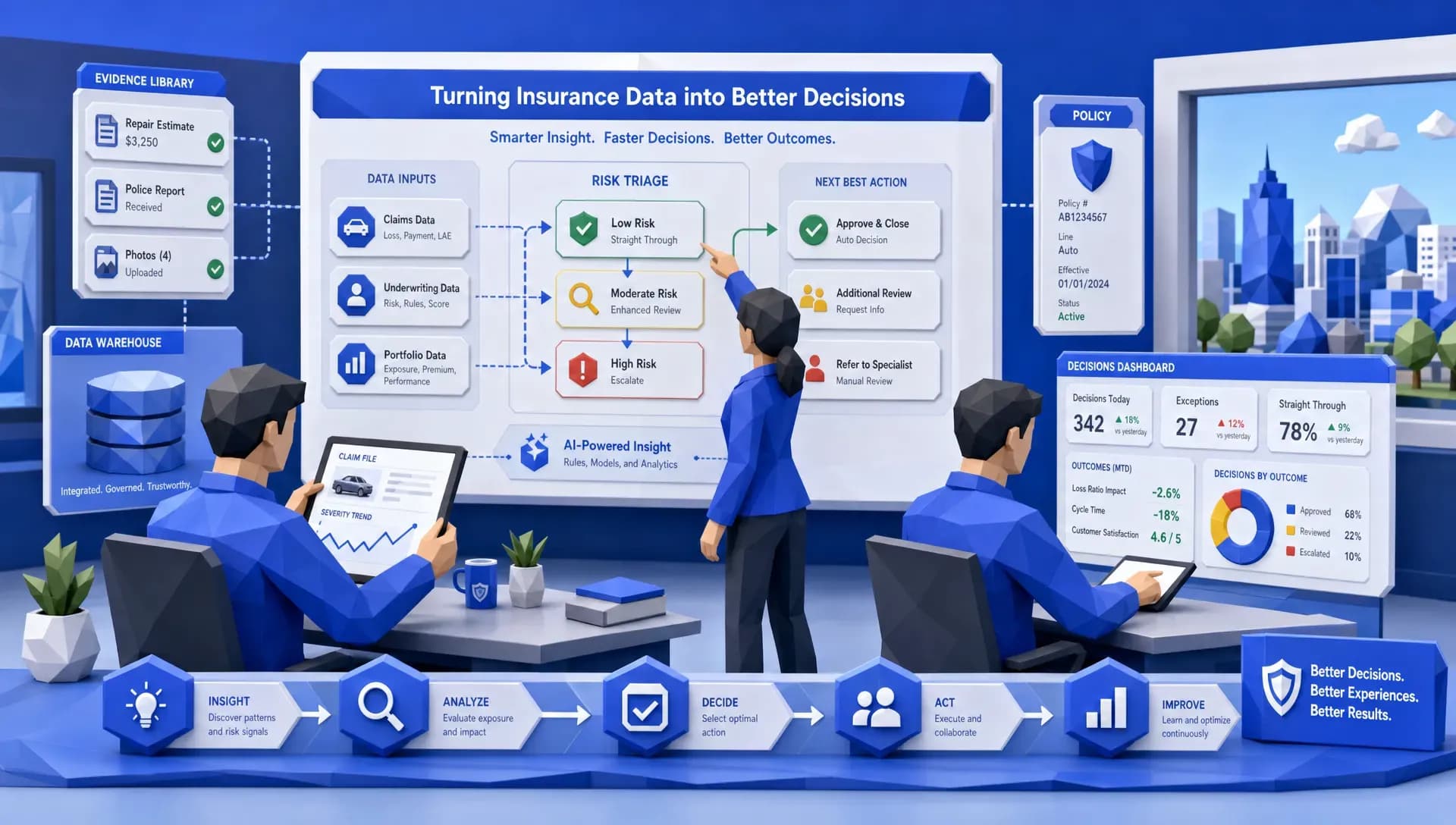
A connected automation platform gives operations leaders memory. You can see which brokers send the cleanest submissions, which fields cause the most rework, where quote abandonment happens, and which exceptions genuinely require underwriter attention. You can also see whether operational issues are isolated annoyances or portfolio-wide patterns.
That visibility is especially useful in commercial auto because portfolio narratives matter. MGAs and carriers need to understand not only individual risks, but also what the book is doing. Are certain vehicle classes creating more claim severity? Are specific territories producing more exceptions? Are discounts being applied consistently? Are renewals reflecting the latest loss and driver information?
Inaza’s data warehouse and dashboard layer is built around that idea. Workflow automation is the start, but the data captured along the way becomes business intelligence. Benchmarking also adds another lens. Market benchmarks associated with firms such as Aon, Munich Re, and Howden can help teams compare portfolio performance, support renewal narratives, and prepare for reinsurance discussions with better evidence.
That is a very different conversation from asking someone to send the latest spreadsheet again.
Automation Helps Claims Too, Even If Underwriting Starts the Work
Commercial auto data does not stop being useful at bind. When a claim arrives, the quality of underwriting data can affect triage, fraud review, coverage confirmation, and settlement speed. If the vehicle, driver, garaging, usage, and prior loss context are structured and accessible, the claims team starts with a better picture.
That matters because claims are under pressure from both customer expectations and fraud risk. J.D. Power’s 2024 U.S. Auto Claims Satisfaction Study highlighted how cycle time remains a major factor in auto claims satisfaction. Meanwhile, the FBI warns that insurance fraud costs consumers and businesses billions each year. Commercial auto is not immune, with staged accidents, garaging misrepresentation, phantom drivers, exaggerated injuries, and inflated repair costs all creating exposure.
Automation helps by preserving the thread between underwriting and claims. If the claim facts do not line up with the policy record, prior submission, listed drivers, vehicle data, or expected operating radius, the system can flag that inconsistency early. A human still needs to make the call, but they are no longer starting with a blank page and a suspiciously large PDF packet.
Underwriters Should Not Be Copy-Paste Specialists
I have never met a great underwriter who dreamed of spending their career fixing column headers. Underwriters want to assess risk, structure terms, negotiate with brokers, decide what is in appetite, and use judgment on the cases that deserve judgment.
That is where automation should draw the line. It should not pretend every account is simple. Commercial auto is too nuanced for that. A good workflow separates the routine from the meaningful. It can clear the clean risks faster, collect missing data before the underwriter asks for it, and highlight the three issues that actually need review.
My favorite automation handoff is not one that says approved. It is one that says here are the three things a human should look at, and here is why. That is how you make underwriters faster without making them reckless.
How to Start Without Wrecking Month-End
The mistake I see insurers make is waiting for the perfect future-state architecture before fixing the obvious pain. That is how re-keying survives for another budget cycle. You do not need to replace every core system to start reducing manual entry. You need to pick the workflows where manual touchpoints are frequent, measurable, and expensive.
For commercial auto, the best starting points are usually submission intake, fleet schedule extraction, loss run extraction, VIN and driver verification, eligibility checks, and quote-to-bind handoff. These are high-volume areas where a wrong field or a slow handoff can affect speed, pricing, compliance, and broker experience.
The practical test is simple: if the same data is typed into more than one place, automate the path. If an underwriter has to open three files to answer one question, structure the data. If an operations manager needs a weekly spreadsheet to explain workflow status, capture the workflow activity directly.
This is also where workflow templates matter. Inaza has 250+ workflow templates, which means teams do not have to begin with a blank page. The better approach is to start with a known insurance workflow, adapt the rules to your appetite and process, integrate with the systems you already use, and improve from there. When a carrier or MGA can configure a production-ready workflow in one working session, momentum changes.
For a broader look at the issuance side of this problem, we have also written about faster issuance with zero re-keying.
What to Measure When You Replace Re-Keying
Do not measure automation by how impressive it looks in a demo. Measure whether it removes drag from the business.
For commercial auto, I would track time from submission receipt to first review, time to quote, number of manual touches per submission, field correction rate, exception reasons, quote abandonment, bind ratio, premium leakage found, and underwriter capacity returned. I would also track the boring but critical operational signals, such as how often files arrive incomplete, how often data enrichment fails, and how quickly exceptions are resolved.
The goal is not to declare victory because a document was processed. The goal is to know whether the organization is quoting faster, pricing more accurately, reducing rework, and giving underwriters better information.
That is why commercial auto insurance automation beats re-keying. Re-keying gives you motion. Automation gives you usable data, cleaner decisions, and a better operating rhythm.
Frequently Asked Questions
What is commercial auto insurance automation? Commercial auto insurance automation uses workflows to capture, validate, enrich, route, and store data across underwriting, policy operations, claims, and reporting. In practice, it reduces manual entry across fleet schedules, driver rosters, loss runs, VIN checks, eligibility reviews, and quote-to-bind handoffs.
Why is re-keying risky in commercial auto insurance? Re-keying is risky because commercial auto policies depend on many connected data points, including vehicles, drivers, garaging, usage, filings, coverages, and loss history. A small manual error can affect pricing, eligibility, compliance, claims handling, or premium leakage.
Does automation replace commercial auto underwriters? No. The best automation removes repetitive administrative work so underwriters can focus on appetite, pricing judgment, coverage structure, broker negotiation, and complex exceptions. Human judgment remains essential, especially for unusual risks.
Which workflows should insurers automate first? Start with the workflows that create the most repeated typing and rework. For many commercial auto insurers and MGAs, that means submission intake, fleet schedule extraction, loss run extraction, driver and VIN verification, eligibility checks, and quote-to-bind processing.
Can automation work with legacy policy admin systems? Yes, if the automation platform is designed to integrate with existing systems rather than force a full replacement. The key is to capture and structure incoming data, validate it, and pass it into the systems and dashboards your teams already use.
How does automation help reduce premium leakage? Automation reduces leakage by validating key rating and eligibility inputs before bind. It can flag missing drivers, incorrect VINs, garaging mismatches, misapplied discounts, incomplete loss history, and other issues that might otherwise slip through manual review.
Stop Paying the Re-Keying Tax
If your commercial auto team is still copying the same fleet, driver, and loss data across systems, you are paying for speed with accuracy and paying for accuracy with time. That tradeoff is getting harder to justify.
Inaza helps insurers, MGAs, and brokers automate underwriting, claims, customer service, and operations while turning workflow data into usable business intelligence. If you want to see how commercial auto automation can work with your current systems, visit Inaza and bring one messy fleet file. We like those.