Here is my slightly unpopular renewal opinion: if insurance analytics only tells you what happened last year, it is doing half a job. At renewal, history is useful, but momentum pays the bills.
I once walked into a renewal prep meeting where the most trusted source of truth was a spreadsheet called Final_v7_really_final.xlsx. By the time someone noticed several vehicles had changed garaging ZIP codes, the quote was already out. The broker did what brokers do: asked why we were revising terms after the fact. Nobody enjoyed that call.
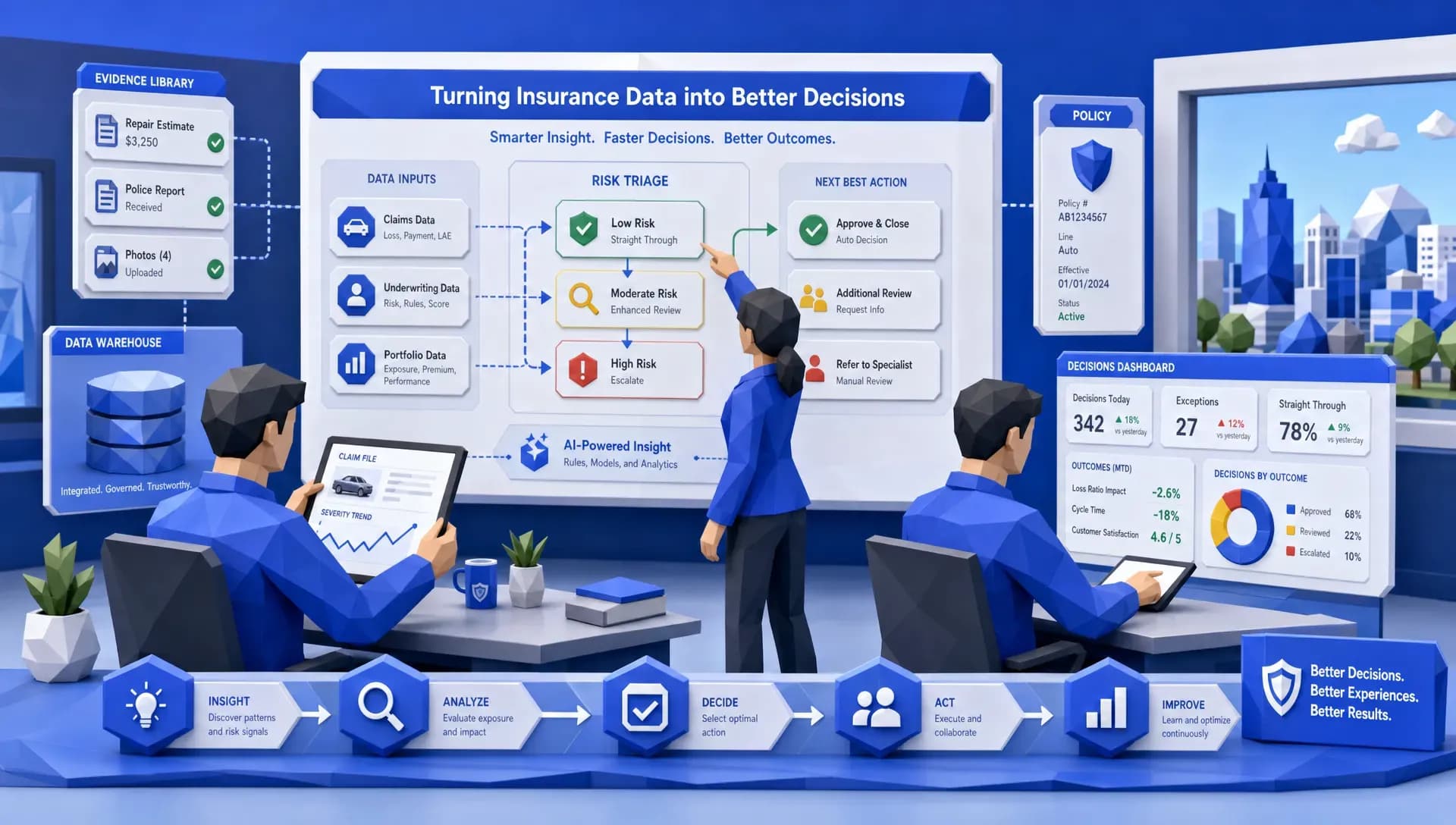
That is the point. Before renewals, insurance analytics should tell you five things before anyone touches pricing: what changed, whether premium still fits the risk, whether losses are signal or noise, whether the customer is likely to stay, and whether your operation can execute cleanly. Everything else is dashboard wallpaper.
Start with the only renewal question that matters
The renewal question is simple: would we write this account again today, and under what terms?
That question sounds obvious, but many renewal processes still behave like copy-and-paste underwriting with a rate change attached. The underwriter looks at the expiring policy, checks losses, applies trend, adjusts terms if something feels off, and moves on to the next file. It works until the portfolio gets bigger, claims get stranger, brokers expect faster answers, and regulators ask better questions.
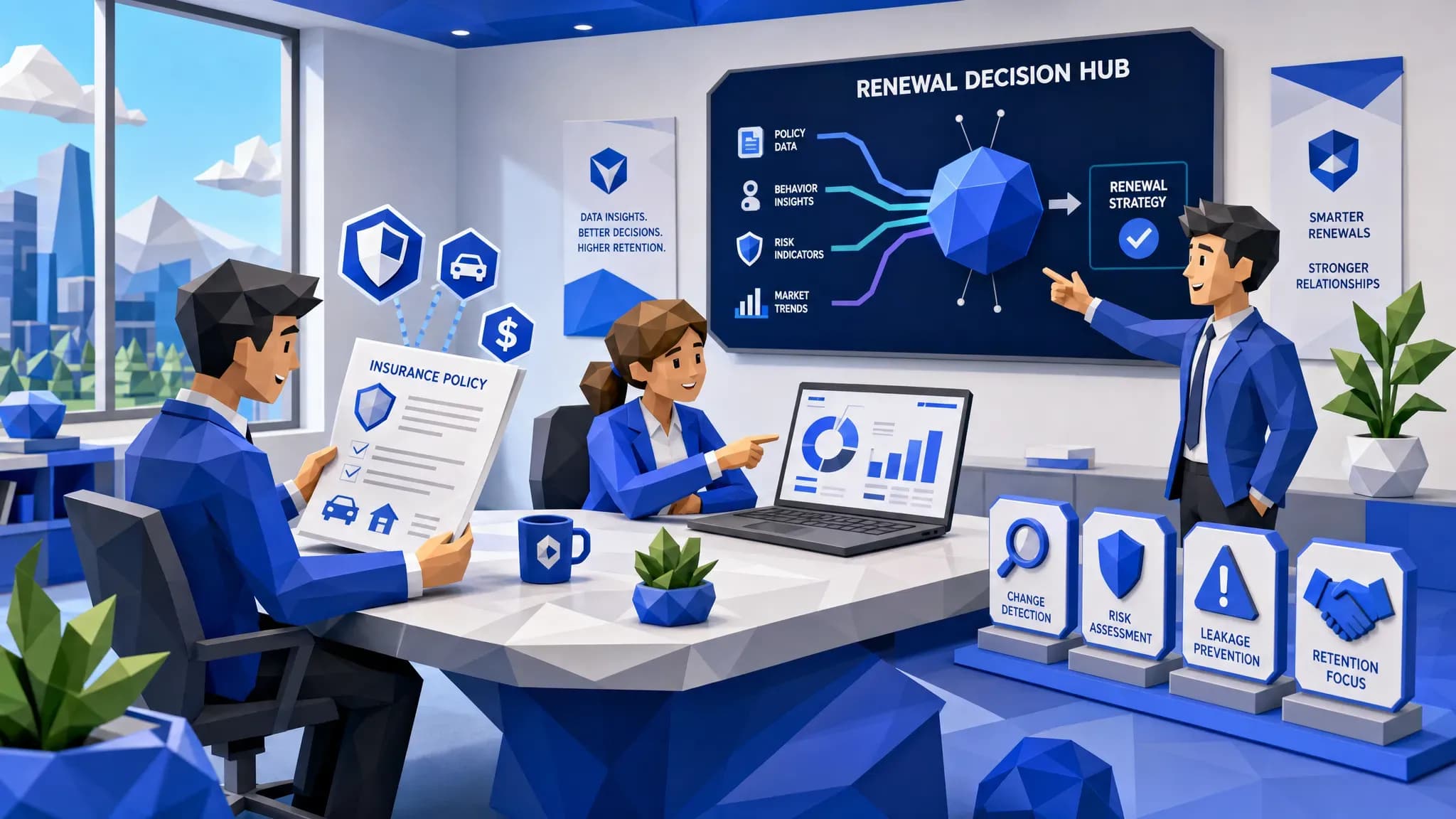
This is where insurance analytics earns its keep. A good renewal view does not drown the team in metrics. It helps underwriters, claims leaders, actuaries, and operations teams see the same risk from different angles. If the analytics cannot support a decision, a referral, a rate action, a coverage change, or a broker conversation, I would question why it is on the screen.
The industry needs this because the human workload is already overloaded. McKinsey has estimated that as much as 60% of underwriter time can be spent on administrative work rather than risk assessment. Renewal analytics should give that time back, not create a prettier scavenger hunt.
What changed since the last term?
The first job of renewal analytics is change detection. Not dramatic change, the boring kind that causes expensive mistakes.
For commercial auto, maybe the fleet added vehicles, shifted routes, hired younger drivers, changed garaging locations, or started doing late-night deliveries. For property, maybe replacement costs moved, occupancy changed, maintenance signals worsened, or catastrophe exposure became less friendly. For personal auto, maybe a driver moved, added a vehicle, changed usage, or triggered new eligibility concerns.
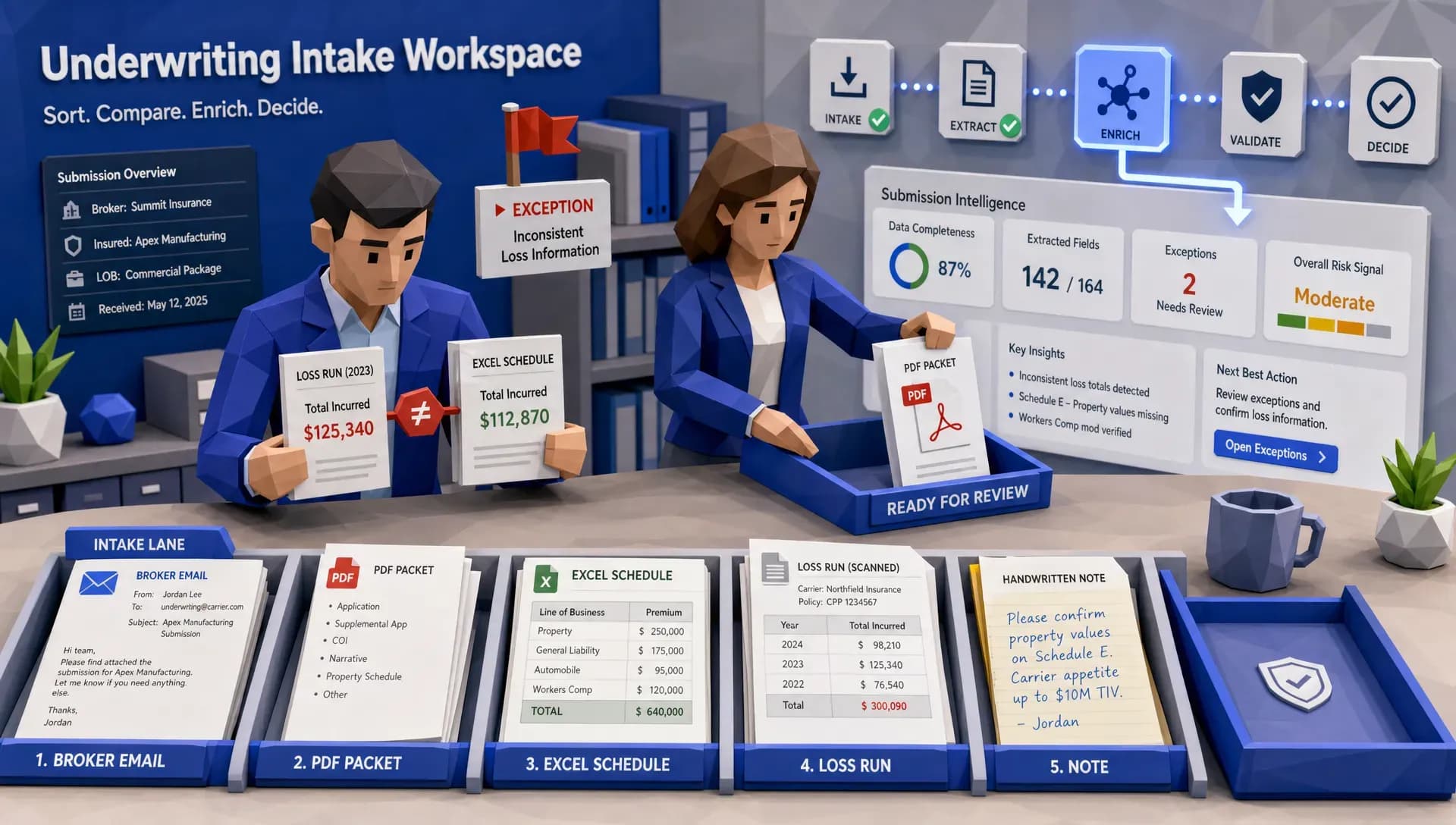
The trick is that these changes rarely live in one system. They hide in endorsements, emails, claims notes, billing records, broker submissions, customer service conversations, third-party data, and loss runs. Renewal analytics should pull those clues together early enough to matter.
One of my favorite renewal surprises, if favorite is the word, was a delivery fleet that had quietly expanded weekend operations. The account still looked clean in the policy admin system, but the claims notes told a different story. More night driving. More rear-end incidents. More minor bodily injury allegations. Nothing looked catastrophic on its own, but together it was a neon sign.
A renewal dashboard should surface that pattern without making an underwriter read 80 pages of notes.
Is the premium still adequate?
Premium adequacy is where renewal analytics gets serious. Loss ratio matters, but it is not enough.
A 42% loss ratio with several open bodily injury claims can be more dangerous than an 82% loss ratio driven by one closed event that is already understood and priced. Paid losses, incurred losses, open reserves, reserve development, subrogation potential, claim age, and claim type all need to be viewed together.
This is especially true in auto. J.D. Power's 2024 U.S. Auto Claims Satisfaction Study highlighted how claims cycle time remains a major pain point, with auto claims often stretching beyond 30 days. If you are heading into renewal while several claims are still moving through the process, you need analytics that distinguishes settled facts from developing risk.
The premium adequacy view should answer practical questions:
- Is current premium aligned with expected loss cost, expenses, commission, and target margin?
- Are severity trends outpacing filed or planned rate changes?
- Are open reserves changing the renewal recommendation?
- Is the risk profitable because it is good, or because the ugly claims have not matured yet?
- Are we pricing the account, the segment, or last year's luck?
That last question stings a bit, which is why I like it.
Is premium leakage hiding in the basement?
Premium leakage at renewal is boring until you add zeros.
It is usually not one giant mistake. It is a missed surcharge here, a stale driver record there, a discount that should have expired, a VIN that was decoded but never enriched, a garaging address nobody validated, or an eligibility rule that changed quietly in the background.
The best renewal price in the world does not help if the inputs are wrong. Analytics should flag leakage before terms go out, especially around discounts, driver eligibility, vehicle use, prior coverage, location, claims history, and rating factors that depend on external data.
Deloitte's insurance outlook makes the broader point that insurers are under pressure to modernize operations, improve data quality, and protect margins. Renewal leakage sits right at the intersection of those problems. If your team is still manually checking the same fields every term, leakage is not a possibility. It is a recurring subscription.
Are the claims telling you about risk, behavior, or process?
Every renewal has a claims story. The analytics should tell you which story you are reading.
Sometimes claims reveal genuine risk deterioration. Frequency is rising, causes of loss are clustered, severity is drifting upward, and claim timing matches exposure growth. In that case, underwriting action may be warranted.
Sometimes the issue is behavior. Late FNOL, inconsistent documentation, repeated minor losses, attorney involvement, or unusual medical billing patterns can point to a policyholder, provider, or claimant ecosystem that needs closer review.
Sometimes the problem is internal process. Slow triage, weak fraud checks, delayed reserve updates, or poor claim coding can make a book look worse, or better, than it really is. That is a dangerous way to renew business.
Fraud deserves its own sentence. The FBI estimates insurance fraud costs the U.S. hundreds of billions of dollars annually. Before renewal, analytics should show whether claims experience reflects true exposure or whether fraud controls, documentation checks, image verification, or invoice review need tightening.
This does not mean punishing policyholders for every suspicious-looking claim. It means knowing when a clean renewal is actually clean.
Will the customer renew, and do we want them to?
Renewal analytics should not stop at risk selection. It should also tell you whether the account is likely to stay.
A profitable policyholder who has called six times about a glass claim, waited weeks for a response, and received three conflicting emails is not a retention win waiting to happen. They are a churn risk with paperwork.
Retention signals matter: payment behavior, complaint history, broker engagement, quote response times, claims satisfaction, contact center activity, and renewal offer timing. Analytics should show which accounts need proactive outreach, which brokers need earlier support, and which renewal offers are likely to be challenged.
This is where underwriting and customer service need to share data. If one team sees margin and the other sees frustration, the renewal conversation will be half-blind.
Can your operation handle the renewal without tripping over itself?
Operational analytics rarely gets invited to the renewal committee. That is a mistake.
A renewal that takes 22 touches, four re-keys, three referral loops, and two broker follow-ups has already lost margin before anyone argues about rate. Worse, slow operations create behavior that looks like underwriting discipline but is really backlog management. Teams decline borderline risks because they do not have time to understand them. They renew weak accounts because they are easy. That is not strategy. That is fatigue wearing a tie.
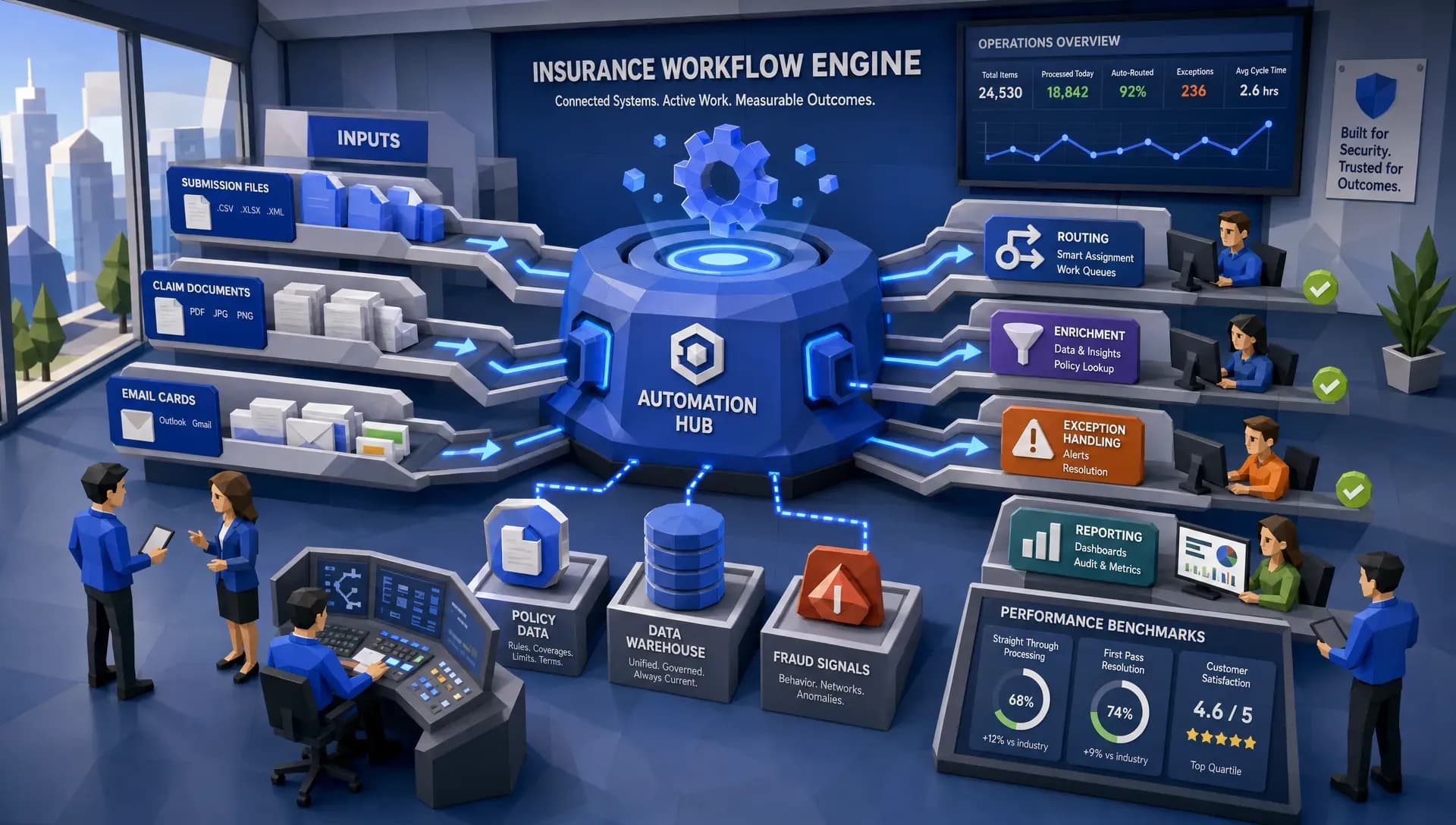
Before renewals, analytics should show cycle time, exception rates, referral reasons, manual touchpoints, data quality failures, SLA performance, and bottlenecks by workflow. If every fleet renewal gets stuck at schedule extraction, fix the intake. If every bodily injury claim file creates pricing uncertainty, fix the claims data flow. If every broker email triggers manual triage, fix the mailbox.
Insurers are not alone in needing better control over production workflows. Other industries are moving toward operating layers that govern work across teams and models, such as Virtuall's operating layer for creative AI. Insurance needs the same discipline around renewal workflows: controlled inputs, governed outputs, and visibility into what happens in between.

The benchmark problem: are we bad, or is the market bad?
One of the most useful things analytics can do before renewals is answer a deceptively simple question: is this account underperforming, or is the whole market moving?
If hail severity is up across a region, that is a market trend. If your hail severity is up in counties where peer data looks stable, that is a portfolio problem. If attorney representation is rising everywhere, your renewal narrative is different than if it is rising only in one book, one producer channel, or one claims unit.
Benchmarking matters for underwriting, but it also matters for reinsurance. Reinsurance conversations are easier when you can explain your portfolio in context: where it is outperforming, where it is exposed, where you have taken corrective action, and where market movement supports your assumptions.
This is one reason I like renewal analytics that includes external benchmarks rather than only internal history. Inaza, for example, includes industry benchmarks from sources such as Aon, Munich Re, Howden, and others, which can help insurers frame portfolio performance and policyholder narratives against the broader market.
The pre-renewal analytics pack I would want on my desk
If I were running renewal prep, I would want a short pack that an underwriter can read over coffee and an executive can understand without calling three analysts.
It should include:
- Renewal recommendation and rationale: Clear action, supported by the strongest evidence, with no mystery math.
- Change log since last term: Exposure, policy, claims, customer, and external data changes that affect risk.
- Premium adequacy view: Current premium against expected losses, expense load, trend, margin, and reserve uncertainty.
- Claims signal summary: Frequency, severity, open claims, litigation, fraud indicators, and claim handling issues.
- Leakage and eligibility checks: Discounts, surcharges, driver data, VIN data, garaging, prior coverage, and rule exceptions.
- Retention and broker signals: Service issues, complaint history, payment behavior, quote timing, and relationship risk.
- Operational readiness: Backlogs, manual touchpoints, referral causes, cycle time, and workflow exceptions.
- Benchmark context: How the account, segment, or portfolio compares with internal targets and market indicators.
Notice what is missing: a 47-tab spreadsheet where every tab is technically important and practically unreadable.
Timing matters more than most teams admit
The best renewal analytics runs early. If the first serious review happens two weeks before expiration, the team is already negotiating with the calendar.
At 90 to 60 days out, analytics should focus on data completeness, exposure change, claims maturity, and third-party enrichment. This is when you find missing schedules, stale records, unclear endorsements, and unresolved claim questions.
At 45 days, the focus should shift to action: pricing, terms, referrals, non-renewal considerations, broker communication, and any underwriting exceptions that need approval.
At 30 days, analytics should support execution. Are offers out? Are responses coming back? Are high-value accounts getting attention? Are operational bottlenecks threatening bind dates?
After renewal, the analytics should not disappear. Track what you changed, what bound, what churned, what needed manual handling, and what surprised you. Next year's renewal quality depends on this year's feedback loop.
Where Inaza fits into renewal analytics
Renewal analytics only works if the underlying data is captured, structured, and connected. That is the unglamorous truth. Dashboards are easy to admire. Clean renewal data is harder.
Inaza's insurance automation platform is built around that problem. It helps insurers, MGAs, and brokers automate data capture across underwriting, claims, customer service, and operations, while integrating with existing systems. The platform supports all file types, offers customizable workflows and more than 250 workflow templates, and uses a unified data warehouse so the information captured through automation can become reporting and business intelligence.
That matters because renewals are not only an underwriting event. They are the product of every claim, endorsement, email, payment, document, and service interaction that happened during the term.
Inaza also offers pre-built API templates, including integrations for data sources such as Verisk, LexisNexis, HazardHub, and more. For renewal teams, that means external enrichment can be built into the workflow instead of becoming another manual tab in Final_v8_actual_final.xlsx.
The hot take, if you have not guessed it by now, is this: renewal analytics should feel less like archaeology and more like air traffic control. You need to know what is moving, what is delayed, what is risky, and what needs human attention before the runway gets crowded.
Frequently Asked Questions
What is insurance analytics for renewals? Insurance analytics for renewals is the use of underwriting, claims, customer, operational, and external data to decide whether to renew a policy, adjust pricing, change terms, investigate leakage, or take retention action before expiration.
How early should insurers run renewal analytics? Ideally, insurers should start 90 to 60 days before expiration. That gives teams enough time to enrich data, review open claims, resolve missing information, prepare pricing actions, and communicate with brokers or policyholders.
Which renewal metrics matter most? The most useful metrics include premium adequacy, loss ratio, reserve development, claims frequency and severity, exposure changes, leakage checks, retention risk, operational cycle time, referral rates, and benchmark comparisons.
Can insurance analytics reduce premium leakage? Yes. Analytics can flag stale rating factors, misapplied discounts, missing surcharges, outdated driver or vehicle data, garaging issues, and eligibility problems before renewal terms are issued.
How does renewal analytics help reinsurance conversations? Strong analytics helps insurers explain portfolio performance, exposure trends, corrective actions, and market context. That makes reinsurance discussions more evidence-based and less dependent on broad narrative alone.
Make renewals less reactive
If your renewal process still depends on scattered spreadsheets, manual checks, and last-minute claims reviews, the issue is not your people. Your people are probably doing heroic work with a messy operating model.
Better insurance analytics gives them a cleaner view before decisions get expensive.
If you want to see how connected data, automated workflows, enrichment, dashboards, and benchmarks can improve renewal decisions, take a look at Inaza's AI-powered insurance automation platform. We help insurers, MGAs, and brokers turn renewal data into action before terms go out, which is exactly when it matters most.