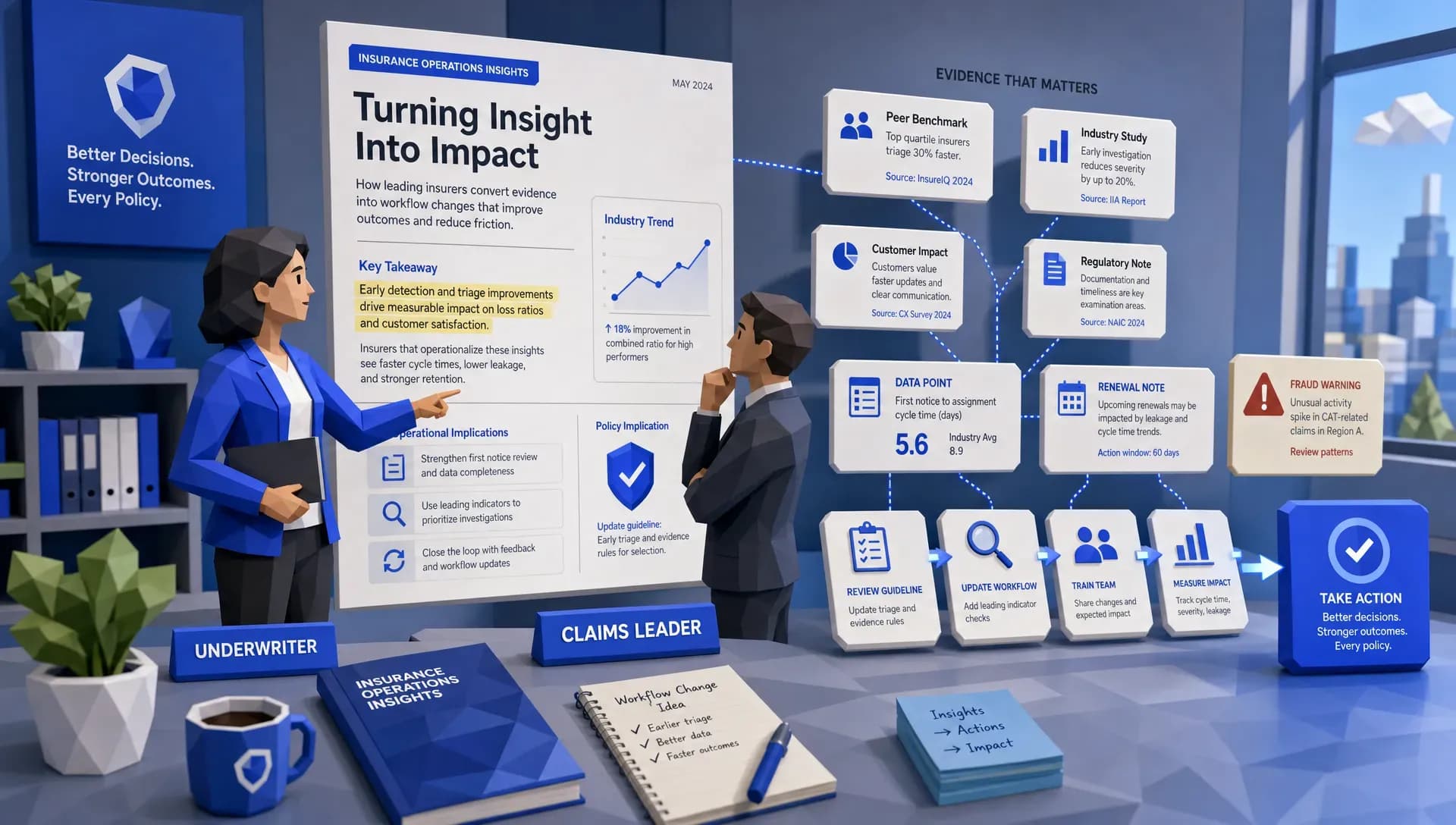
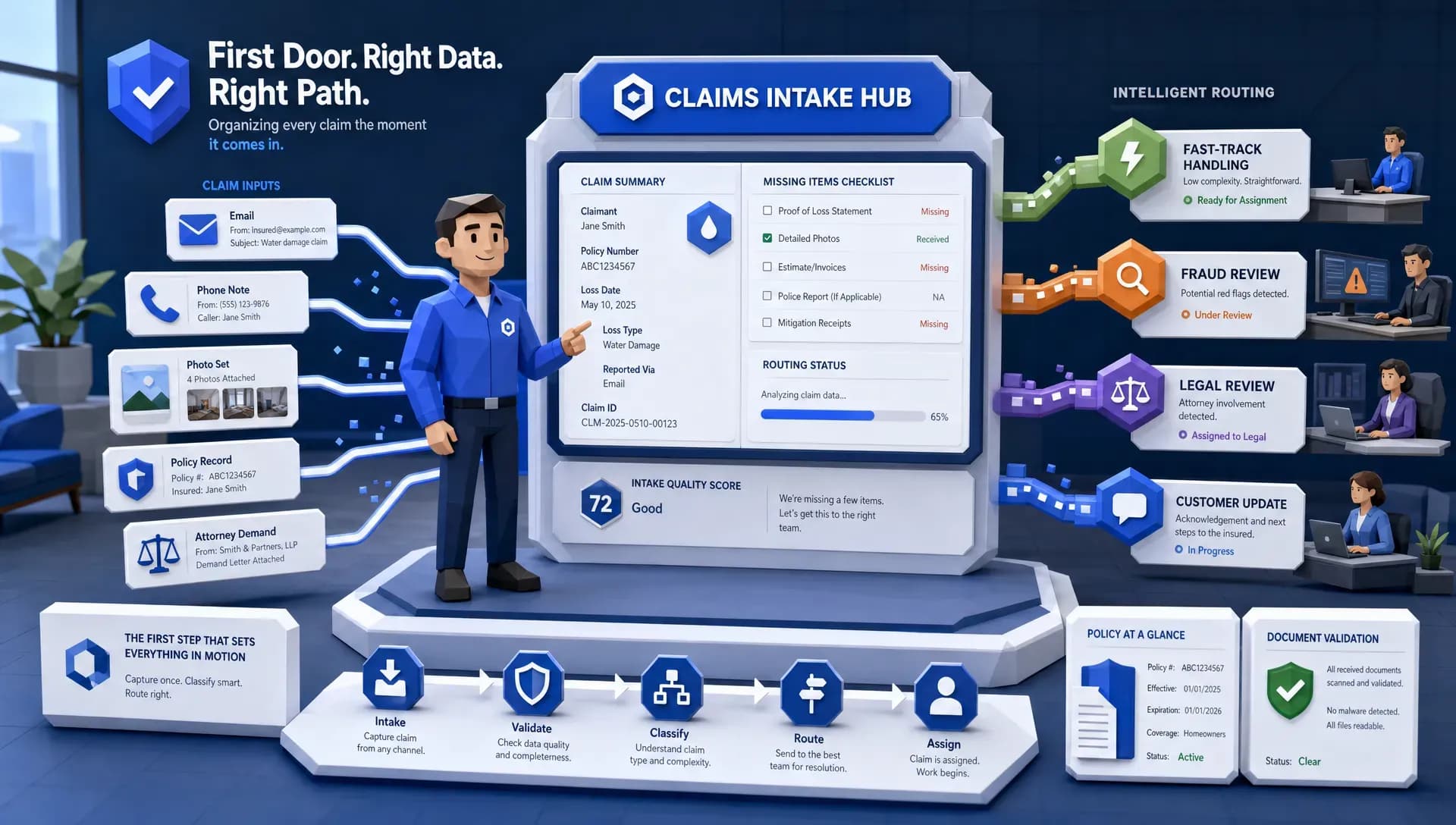
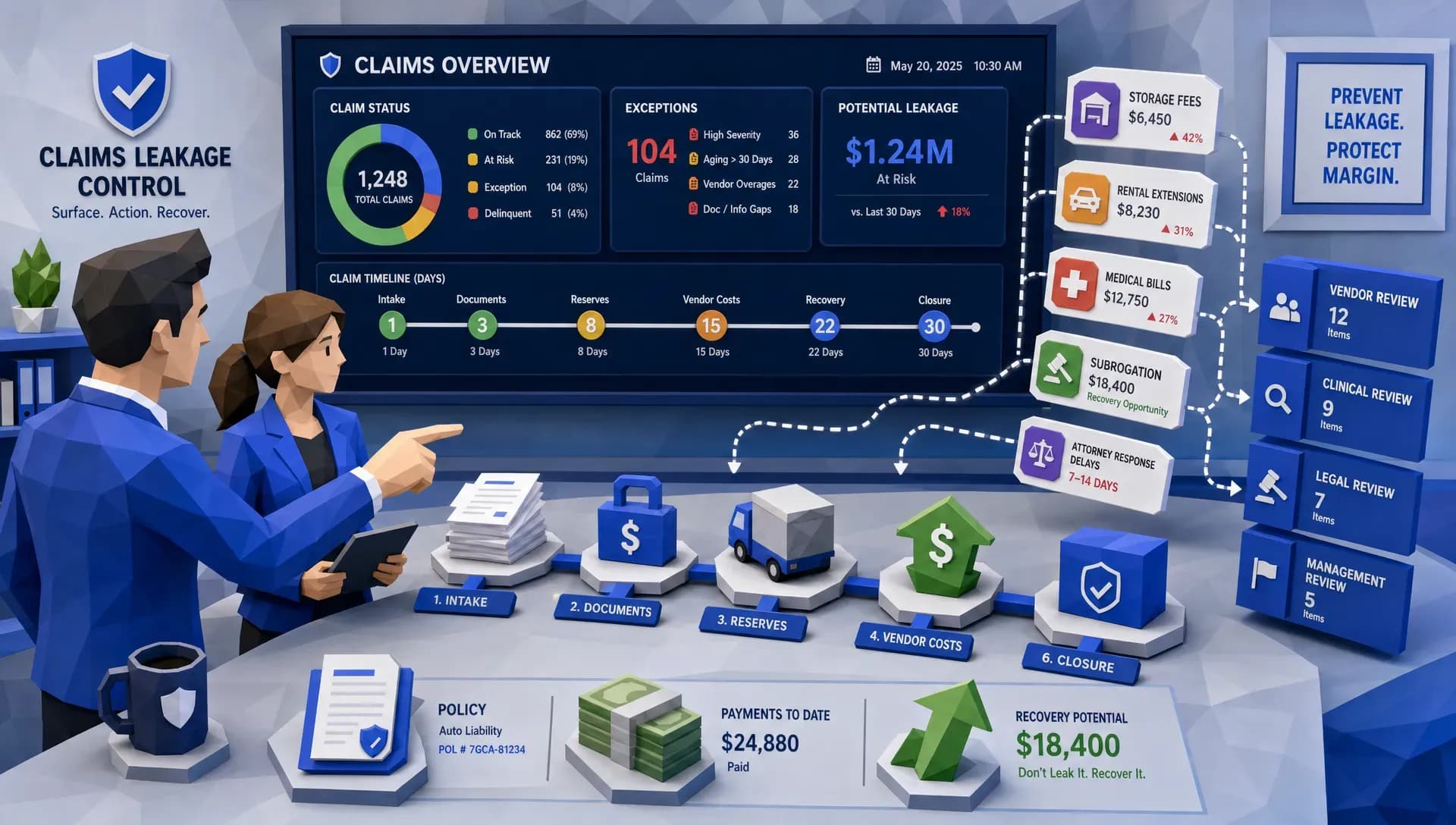
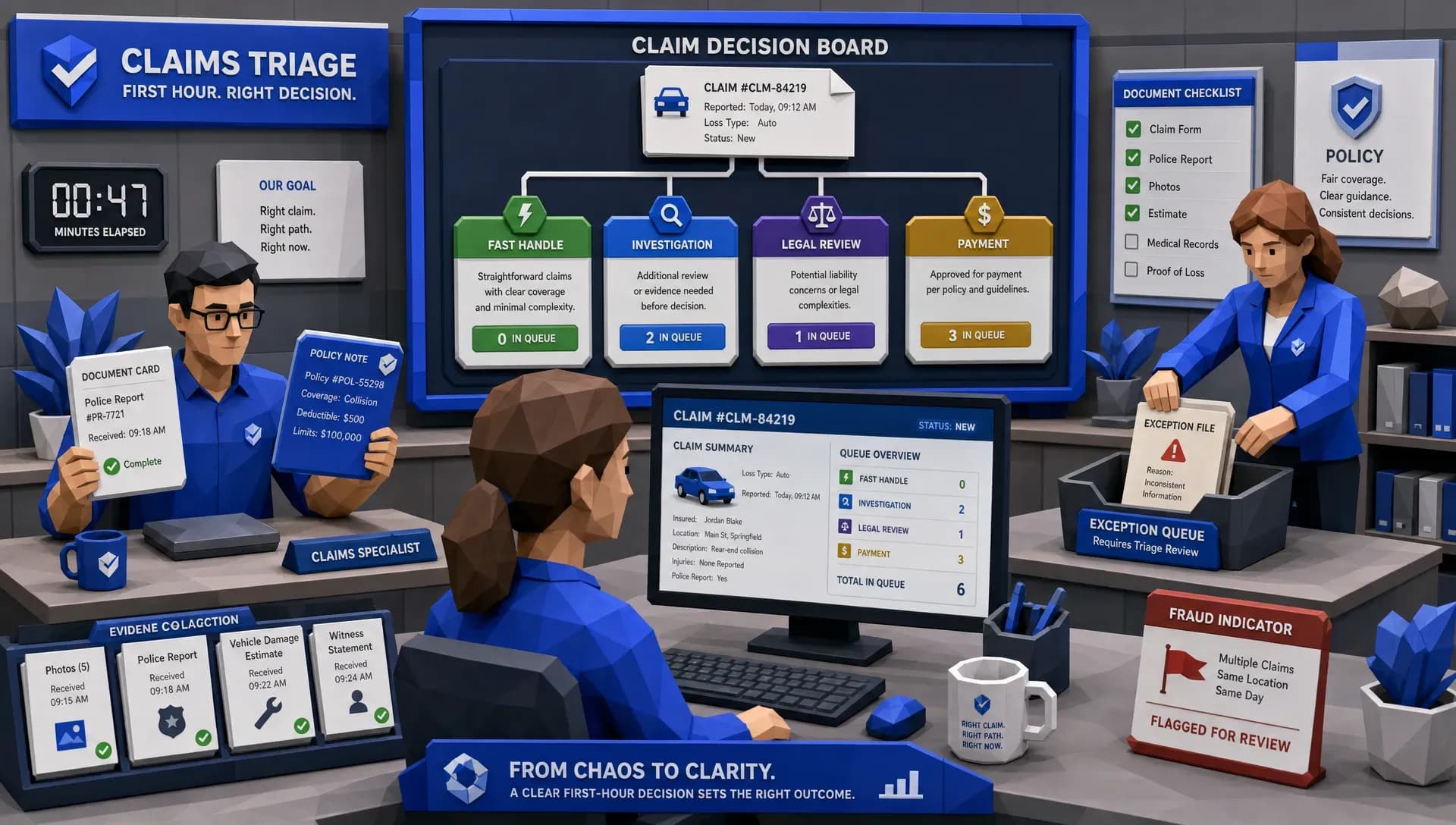
Most insurance articles read like they were assembled in a spotless conference room by someone who has never watched a claims inbox hit 1,000 unread emails before lunch.
That is my hot take, and I will defend it over bad coffee at any industry event.
If you run P&C ops, you do not need more vague trend pieces telling you that automation matters, customers are impatient, or fraud is getting clever. You already know. You need insurance articles that help you change something by Friday: a queue, a handoff, a data capture step, a claims note, a renewal narrative, or the way your team decides which file deserves human attention first.
I have spent enough time around underwriters, claims adjusters, fraud teams, brokers, and ops leads to know the difference between a useful article and a polished shrug. The useful ones make you slightly uncomfortable. They point to the work hiding in plain sight.
My test for whether an insurance article is worth reading
When I skim insurance articles, I ask one simple question: could this help an ops leader reduce friction, leakage, rework, or decision lag?
If the answer is no, I move on. Life is short, and bordereaux do not reconcile themselves.
The best articles for P&C operations usually do one of five things. They reveal where time is actually going. They explain why claims or underwriting decisions slow down. They connect data quality to financial outcomes. They show how fraud patterns are changing. Or they help you tell a better portfolio story to executives, reinsurers, brokers, or capacity providers.
That last one matters more than people admit. P&C ops teams are often treated like the plumbing of the business. Nobody praises the pipes until water comes through the ceiling. Good reading helps ops leaders prove that operational discipline is not back office housekeeping. It is margin protection.
Read underwriting articles that talk about admin, not just appetite
The underwriting articles worth reading are rarely the ones with the shiniest predictions. I prefer the ones that get into the dull, expensive middle of the process: submission intake, document chasing, field extraction, referral routing, and data rekeying.
Why? Because this is where underwriting capacity quietly disappears.
McKinsey has noted that underwriters can spend a large share of their time on administrative and sales support rather than actual risk assessment. Anyone who has sat with a commercial lines team during a busy renewal season has seen this movie. Highly paid people are hunting through PDFs, copying values into core systems, checking prior loss runs, and asking the same three follow-up questions by email.
I once watched an underwriter spend nearly 20 minutes finding a named insured across three attachments, two email threads, and one spreadsheet that looked like it had survived a minor fire. The risk itself was not especially complex. The file was.
So, if you run P&C ops, read articles that explain how submission work gets standardized before an underwriter touches it. Read pieces that ask whether the file is complete, whether the data is trustworthy, and whether the team has a consistent triage model. That is where operational lift lives.
If intake is your daily bottleneck, our deeper breakdown of submission intake automation for P&C insurers is a practical next stop because it focuses on the messy front door of underwriting, not just the final quote.
Read claims articles that measure time like customers do
Claims articles often get trapped in soft language about experience. I am all for better customer experience, but an insured with a damaged car or leaking roof is not grading your brand adjectives. They are counting days.
That is why I pay attention to claims articles that talk about cycle time, communication gaps, payment delays, and avoidable touches. J.D. Power’s 2024 U.S. Auto Claims Satisfaction Study highlighted how long auto claims can take and how much process speed matters to satisfaction. You do not need a PhD in behavioral science to understand this. If my car is in the shop for a month, my patience has a very low deductible.
The best claims reads do not simply say claims should be faster. They show where speed gets lost. First notice of loss gets captured, but documents arrive later. Photos get uploaded, but no one trusts them. Coverage review waits on a missing endorsement. A simple claim becomes a scavenger hunt.
Here is the kitchen analogy I use with non-insurance friends. A restaurant can have a great chef, but if tickets are printed in the wrong place, ingredients are missing, and waiters keep asking the kitchen for status updates, dinner will still be late. Claims ops works the same way. The adjuster may be excellent. The process can still make them look slow.
So read claims articles that focus on the operational plumbing: intake quality, document classification, reserve changes, litigation triggers, payment approvals, and the quality of claim notes. That is where claims leaders find real improvement.
Read fraud articles before the fraud arrives in your book
Fraud articles are worth reading because fraud is an operations problem before it becomes a courtroom problem.
The FBI has long warned that insurance fraud imposes major costs on the industry and consumers, estimating non-health insurance fraud at more than $40 billion annually. That is the kind of number that gets repeated at conferences, but the more useful question is smaller: how does fraud enter your workflow?
Often, it enters through ordinary-looking documents. A repair invoice. A photo. A medical bill. A slightly too-perfect narrative. A claim that arrives with just enough urgency to discourage a second look.
Verisk’s 2025 fraud report is the kind of reading I would put in front of claims and SIU leaders because it connects digital tools, claimant behavior, and carrier concern. Whether you are dealing with staged accidents, inflated damage, synthetic documents, or attorney-driven demand packages, the core lesson is the same: your controls need to evolve faster than your backlog.
My view is that fraud content is most valuable when it avoids the spy-thriller tone. Real fraud detection is usually less cinematic. It is pattern recognition, data consistency, referral discipline, and knowing when a claim smells funny without sending every odd file into a black hole.
Read legal content outside the insurance bubble
This is the category many ops leaders skip, which is a mistake.
Insurance teams tend to read insurance publications. That makes sense, but claims and policy operations are constantly shaped by the legal world around them. Attorney demand letters, foreclosure timelines, landlord-tenant disputes, bankruptcy filings, civil litigation, and consumer debt issues can all affect how files move, what documentation matters, and where delays appear.
If your book touches property exposure in New York or Connecticut, even a quick look at how Westchester civil litigation and real estate attorneys describe practice areas such as foreclosure defense, bankruptcy, landlord-tenant matters, and civil litigation can give your team a better feel for the disputes that eventually show up as documents, demands, or coverage questions.
The point is not that every ops leader needs to become a lawyer. Please do not. We have enough meetings already. The point is that legal context helps claims and operations teams anticipate friction. When you understand how disputes are framed outside the carrier, you build better intake questions, cleaner document checklists, and smarter escalation rules.
Read data quality articles, even if the title sounds boring
I know. Data quality is not the topic that makes people sprint into a ballroom session.
Still, if you run P&C ops, this may be the most profitable reading category of all. Every operational argument eventually becomes a data argument. Why is this segment unprofitable? Why are reserves moving late? Why did quote abandonment spike? Why are adjusters touching the same claim too many times? Why did one MGA’s loss ratio drift while another stayed stable?
Someone will eventually ask for the data. If the data is incomplete, inconsistent, or trapped in email attachments, the conversation becomes opinion wrestling.
The articles worth your time explain how data quality fails in real life. Not as a grand technical failure, but as tiny daily compromises. A field left blank. A coverage code entered differently by two teams. A loss run valuation date ignored. A claim note written in prose when the next system needs structure. A broker email with the crucial exposure detail buried in paragraph five.
This is why I like reading about data observability in claims. It gives ops leaders a way to talk about whether data is complete, timely, accurate, and usable before a reporting problem turns into a board-level surprise. We have covered that angle in more detail in why data observability matters in P&C insurance claims.
Here is another hot take: many carriers do not have a reporting problem. They have a capture problem. The dashboard is only telling you what the workflow bothered to collect.
Read articles that connect operations to reinsurance and capacity
P&C ops leaders should read more content about reinsurance, portfolio performance, and market benchmarks. Not because everyone needs to negotiate treaty wording, but because operational quality increasingly affects the story a carrier or MGA can tell about its book.
Reinsurers and capacity providers care about profitability, volatility, controls, data credibility, and management discipline. If your operations team can show clean submission data, consistent underwriting referrals, reliable claims development tracking, and credible benchmarks, you are not just running a smoother shop. You are giving leadership better ammunition for renewals and market conversations.
This is where many insurance articles miss the plot. They talk about automation as if the only prize is fewer keystrokes. Fewer keystrokes are nice. I have nothing against rescuing humans from copy-paste purgatory. But the larger prize is a business that can explain itself clearly.
What changed in the portfolio? Which segments are improving? Where are claims closing faster? Which brokers send cleaner submissions? Which policyholders require more service touches? Which attorney demands create the highest leakage risk? These are operational questions with strategic consequences.
Read newsletters for signal, but save the serious thinking for articles
Newsletters are excellent for staying current, especially if you do not want to spend your morning bouncing between LinkedIn, carrier press releases, and whatever headline says the industry is at an inflection point this week.
But I treat newsletters as radar, not strategy. They tell me what to investigate. Longer insurance articles, research reports, and case-driven pieces are where I look for operational lessons.
If you want a curated feed, our roundup of insurance industry newsletters worth reading pairs well with this approach. Use newsletters to spot the issue. Use deeper articles to decide whether the issue deserves budget, workflow change, or a polite nod before moving on.
How I would build a P&C ops reading habit
If I were running an MGA, carrier ops team, claims unit, or underwriting operations function, I would not try to read everything. That way lies 47 open browser tabs and no decisions.
I would build a weekly habit around one operational question. For example: where did we lose the most time this week? Then I would read one article on that topic and ask whether it confirms, challenges, or sharpens what the team already suspects.
One week might be submission completeness. Another might be claims cycle time. Another might be attorney involvement. Another might be fraud indicators in photo evidence. Another might be why a certain broker’s accounts require too many touches.
The magic is not in reading more. It is in reading with a live operational problem in mind.
A good insurance article should leave you with a question you can take into your next ops meeting. Something like: why are we manually entering that? Why do we not capture that field earlier? Why do we only notice missing documents after assignment? Why are we measuring closure but not avoidable reopenings? Why are our dashboards silent on the thing everyone complains about?
That is the reading that pays rent.
Frequently Asked Questions
What types of insurance articles should P&C ops leaders prioritize? P&C ops leaders should prioritize articles about underwriting intake, claims cycle time, fraud trends, data quality, legal friction, and portfolio performance. These topics connect directly to operational cost, leakage, service quality, and decision speed.
Are insurance trend articles useful for operations teams? They can be, but only if they translate into workflow decisions. A trend article is useful when it helps you change a process, measure a risk, improve triage, or explain performance. If it only offers broad predictions, it is less valuable for day-to-day ops.
How often should an insurance operations leader read industry content? A practical cadence is one focused article per week, tied to a current operational problem. The goal is not to consume everything. The goal is to bring one sharper question or improvement idea into the business each week.
Should claims and underwriting teams read the same insurance articles? Sometimes, yes. Claims and underwriting share more operational DNA than people admit. Both depend on clean intake, accurate data, timely decisions, and disciplined escalation. Shared reading can help teams spot upstream and downstream effects.
Turn good reading into better workflows
Reading the right insurance articles is useful. Turning the lesson into an operating model is where the money is.
That is the gap Inaza is built to close for insurers, MGAs, and brokers. Inaza helps teams automate underwriting, claims, customer service, and operations workflows while capturing the data needed for reporting and analytics. With customizable workflows, pre-built templates, integrations, and a unified data warehouse underneath, the goal is practical: reduce manual work, improve visibility, and help teams move faster without forcing everyone to relearn their jobs.
If your latest great article led to an uncomfortable question about your own workflows, that is probably a sign worth following. See how Inaza helps P&C teams automate insurance operations.