If your inbox is anything like mine, it already has enough unread messages to qualify as an emerging risk. So let me start with a slightly uncomfortable opinion: most insurance industry newsletters are procrastination dressed up as professional development.
The good ones are different. They help you spot appetite shifts, regulatory trouble, fraud patterns, capacity changes, legal trends, technology moves, and competitor behavior before they show up as ugly surprises in your combined ratio.
That matters more in 2026 because the insurance operating environment is moving faster than our committee calendars. McKinsey has estimated that underwriters can spend as much as 60 percent of their time on administrative work instead of risk assessment. Meanwhile, Verisk’s 2025 fraud report points to how digital tools are changing the fraud playbook. In other words, we do not need more noise. We need better signal.
Below is my opinionated, field-tested list of insurance industry newsletters worth reading in 2026. I’ve picked these for people actually doing the work: P&C MGAs, carriers, brokers, reinsurance teams, claims leaders, fraud analysts, and underwriters who have exactly seven minutes before the next submission hits.

My rules for choosing insurance industry newsletters
A newsletter earns its place in my inbox if it does one of three things: it warns me about a risk, explains why the market is behaving strangely, or gives me an idea I can test inside the business.
I am less interested in newsletters that simply repackage press releases. We all know the type. New partnership announced. Innovative platform launched. Executive thrilled. Market transformed. Coffee still cold.
The newsletters below make the cut because they are useful in real insurance conversations. They help you walk into a pricing meeting, claims review, bordereau discussion, reinsurance renewal, or broker call with something sharper than vibes.
Best insurance industry newsletters for 2026
1. Insurance Journal
Insurance Journal is the old reliable. If I had to recommend one broad P&C newsletter to a new analyst, broker, or operations leader, this would probably be it.
It covers state-level regulation, agency news, litigation, catastrophe events, carrier updates, market conduct issues, and coverage trends. That breadth is the point. You will not get a deep treaty analysis or a 40-page capital markets breakdown, but you will get a daily sense of what is moving across the U.S. insurance market.
Best for: P&C brokers, MGAs, carrier leaders, underwriters, and anyone who needs a practical daily market scan.
My take: read it for the questions it raises. If you see three stories in a month about litigation pressure in a state where you are growing, that should trigger a portfolio conversation.
2. Carrier Management
Carrier Management is where I go when I want the carrier executive view without needing to decode a 200-slide consulting deck.
The coverage tends to sit at the intersection of leadership, operations, underwriting performance, claims strategy, distribution, talent, and technology. For carriers and MGAs, that makes it especially useful. It is less about breaking news and more about how leadership teams think through change.
Best for: carrier executives, MGA leadership, COOs, underwriting leaders, and strategy teams.
A personal example: I once watched a meeting about quote turnaround go from vague frustration to actual action because someone brought in a Carrier Management article about operational bottlenecks. Not magical. Just enough outside perspective to stop everyone blaming the portal.
3. AM Best
AM Best is essential if you care about financial strength, carrier stability, ratings movement, market segments, and capital pressure.
It is not the flashiest read on this list, and that is a compliment. AM Best content is useful because it gives you the sober view. For brokers, reinsurance teams, and carrier executives, ratings context can change the tone of a conversation very quickly.
Best for: carrier executives, brokers, reinsurance brokers, finance teams, and anyone evaluating insurer strength.
My take: AM Best is the newsletter equivalent of checking the weather before leaving the house. You may not talk about it every day, but when conditions change, you are very glad you looked.
4. Insurance Insider and The Insurer
For deeper market intelligence, Insurance Insider and The Insurer belong on the radar.
These are especially useful for senior leaders who need to understand capital flows, specialty market behavior, M&A, reinsurance negotiations, executive moves, and competitive positioning. Some of the best material may sit behind subscriptions, but for teams operating in competitive or specialty markets, that can be money well spent.
Best for: reinsurance brokers, carrier executives, specialty underwriters, investors, and market strategy teams.
My take: these are not casual inbox reads. They are for when you need to know what the market is really doing, not what everyone says it is doing at conferences.
5. Artemis
If your world touches reinsurance, catastrophe risk, insurance-linked securities, or alternative capital, Artemis is a must-read.
Artemis has carved out a very specific lane around cat bonds, ILS, collateralized reinsurance, and risk transfer capital. That niche focus makes it valuable. The more volatile the catastrophe and reinsurance environment gets, the more important it becomes to understand where capital is moving and why.
Best for: reinsurance brokers, cat modelers, portfolio managers, carrier executives, and specialty underwriters.
My take: if you only pay attention to reinsurance at renewal time, you are already late. Artemis helps you follow the pressure building before the negotiation starts.
6. Reinsurance News
Reinsurance News is another strong option for tracking global reinsurance developments, capacity updates, renewal commentary, catastrophe impacts, and strategic moves by reinsurers.
It is accessible, frequent, and practical. I like it because it does not assume every reader has three hours to analyze capital markets before breakfast.
Best for: reinsurance brokers, carriers, MGAs with delegated authority, portfolio managers, and anyone tracking capacity.
For MGAs, this kind of reading is not optional. Capacity does not disappear overnight, even if it sometimes feels that way. The signals usually show up first in market commentary, treaty behavior, and reinsurer appetite.
7. NAIC news and regulatory updates
Yes, I am putting NAIC news on a best newsletters list. No, it will not be the most entertaining email you receive.
But regulatory updates matter. If you operate across states, write personal auto, manage claims, use external data, or rely on automated workflows, you need to know where regulators are focusing. Model bulletins, consumer protection activity, data governance discussions, and market conduct themes can all become operating constraints.
Best for: compliance teams, carrier executives, underwriting leaders, claims leaders, and product managers.
My take: regulatory reading is like flossing. Everyone claims they do it. The people who actually do have fewer painful surprises.
8. PropertyCasualty360
PropertyCasualty360 sits in a useful middle ground between news, analysis, distribution, legal developments, and carrier trends.
It is particularly helpful for people who want to understand how market trends affect brokers, agents, claims teams, and policyholders. It also does a good job of surfacing legal and coverage developments in a way that is accessible to non-lawyers.
Best for: brokers, claims leaders, underwriters, agency teams, and P&C executives.
My take: this is a good newsletter for connecting front-office reality with carrier strategy. If the field is seeing friction, this is one place it may show up.
9. Claims Journal
For claims professionals, Claims Journal is one of the more practical reads.
It covers claims trends, litigation, fraud, catastrophe response, court decisions, adjuster issues, and operational developments. If you work in claims, you know the job is part investigation, part service, part negotiation, part documentation marathon. Claims Journal reflects that messy reality.
Best for: claims adjusters, claims managers, SIU teams, litigation managers, and fraud analysts.
My take: claims is where the promises made in underwriting meet the facts on the ground. A strong claims newsletter helps you see where those facts are changing.
10. Coalition Against Insurance Fraud
Fraud analysts should follow the Coalition Against Insurance Fraud for fraud trends, public policy, education, and enforcement-related updates.
Fraud is not static. It changes with economic pressure, technology, claim types, and consumer behavior. A newsletter focused on fraud helps SIU teams and claims leaders avoid relying on stale assumptions.
Best for: fraud analysts, SIU teams, claims leaders, compliance teams, and executives concerned with claim leakage.
My take: every insurer says it cares about fraud. The serious ones treat fraud intelligence as a living feed, not an annual training module.
11. Coverager
Coverager is one of the best reads for insurtech, distribution, partnerships, embedded insurance, product launches, and strategic moves.
It has a distinct voice, which I appreciate. Insurance can get painfully formal. Coverager often gets to the point quickly, and it is useful for understanding who is building what, who is partnering with whom, and which ideas are gaining traction.
Best for: innovation teams, MGAs, brokers, product leaders, distribution teams, and executives tracking insurtech.
My take: do not read Coverager just to chase shiny objects. Read it to understand where customer experience, distribution, and product design may be heading.
12. Digital Insurance
Digital Insurance is a strong source for insurance technology, customer experience, core systems, data strategy, and operational transformation.
For carriers and MGAs trying to modernize without blowing up the business, this is a useful read. It gives you a view into technology strategy and market adoption without requiring you to become a systems architect.
Best for: CIOs, COOs, operations leaders, customer service teams, transformation leaders, and technology buyers.
My take: the best technology coverage is not about tools. It is about operational consequences. Digital Insurance is useful because it often points back to how work actually changes.
13. Insurance Thought Leadership
Insurance Thought Leadership is where I go for longer-form ideas, arguments, and executive perspective.
It is not always a quick skim. That is fine. Sometimes you need a newsletter that makes you think beyond today’s backlog. It covers leadership, risk, innovation, data, claims, underwriting, and the future of insurance work.
Best for: executives, strategy teams, underwriting leaders, claims leaders, and anyone building a board memo.
My take: read one longer piece a week. Not ten. One. Then ask what it means for your own workflows, loss ratio, service standards, or distribution strategy.
14. Risk and Insurance
Risk and Insurance is especially useful for commercial risk, employer exposures, claims issues, workplace safety, brokers, and risk management trends.
For underwriters and brokers, it helps connect insurance products to the business realities insureds are facing. That matters. The best underwriting conversations I’ve been part of were not only about class codes and prior losses. They were about what was actually happening inside the insured’s operation.
Best for: commercial brokers, underwriters, risk managers, claims teams, and specialty insurance professionals.
My take: if you want to talk to insureds like you understand their world, read something that is not only written for insurers.
How I would build a 2026 reading stack by role
Here is the part where I save you from subscribing to all of them and declaring inbox bankruptcy by February.
- P&C MGAs: Insurance Journal, Carrier Management, Coverager, AM Best, and Reinsurance News give you a good mix of market, operations, distribution, carrier strength, and capacity.
- Insurance carriers: Carrier Management, Digital Insurance, NAIC updates, AM Best, and Insurance Insider or The Insurer create a strong executive and operating view.
- Insurance brokers: Insurance Journal, PropertyCasualty360, Risk and Insurance, AM Best, and Artemis help you advise clients and understand market appetite.
- Reinsurance brokers: Artemis, Reinsurance News, The Insurer, Insurance Insider, and AM Best should be in regular rotation.
- Claims and fraud teams: Claims Journal, Coalition Against Insurance Fraud, Insurance Journal, PropertyCasualty360, and selected Verisk research give you a sharper claims integrity lens.
One practical note from too many conference weeks: the best newsletter insights often surface around industry events, when everyone is suddenly discussing the same market shift in hallways, boardrooms, and airport lounges. If your team is moving between major meetings, client dinners, and airport transfers, a reliable nationwide luxury black car and limo service can be more useful than another branded notebook. Ask the person who once tried to get six executives into two rideshares during a thunderstorm. I still hear about it.
My hot take: your best newsletter may be your own data
External newsletters tell you what is happening in the market. Your internal data tells you whether it is happening to you.
That distinction matters. A newsletter might tell you that attorney involvement is rising, but your claims data should tell you which venues, injury types, adjuster queues, and policy segments are driving the change. A market update might warn about reinsurance pressure, but your own portfolio data should show whether your book is improving or deteriorating against benchmarks.
This is where many insurers still struggle. They read about the market every morning, then run the business from spreadsheets, shared inboxes, disconnected systems, and heroic manual effort. I say that with love, because I have seen very smart teams operate this way for years.
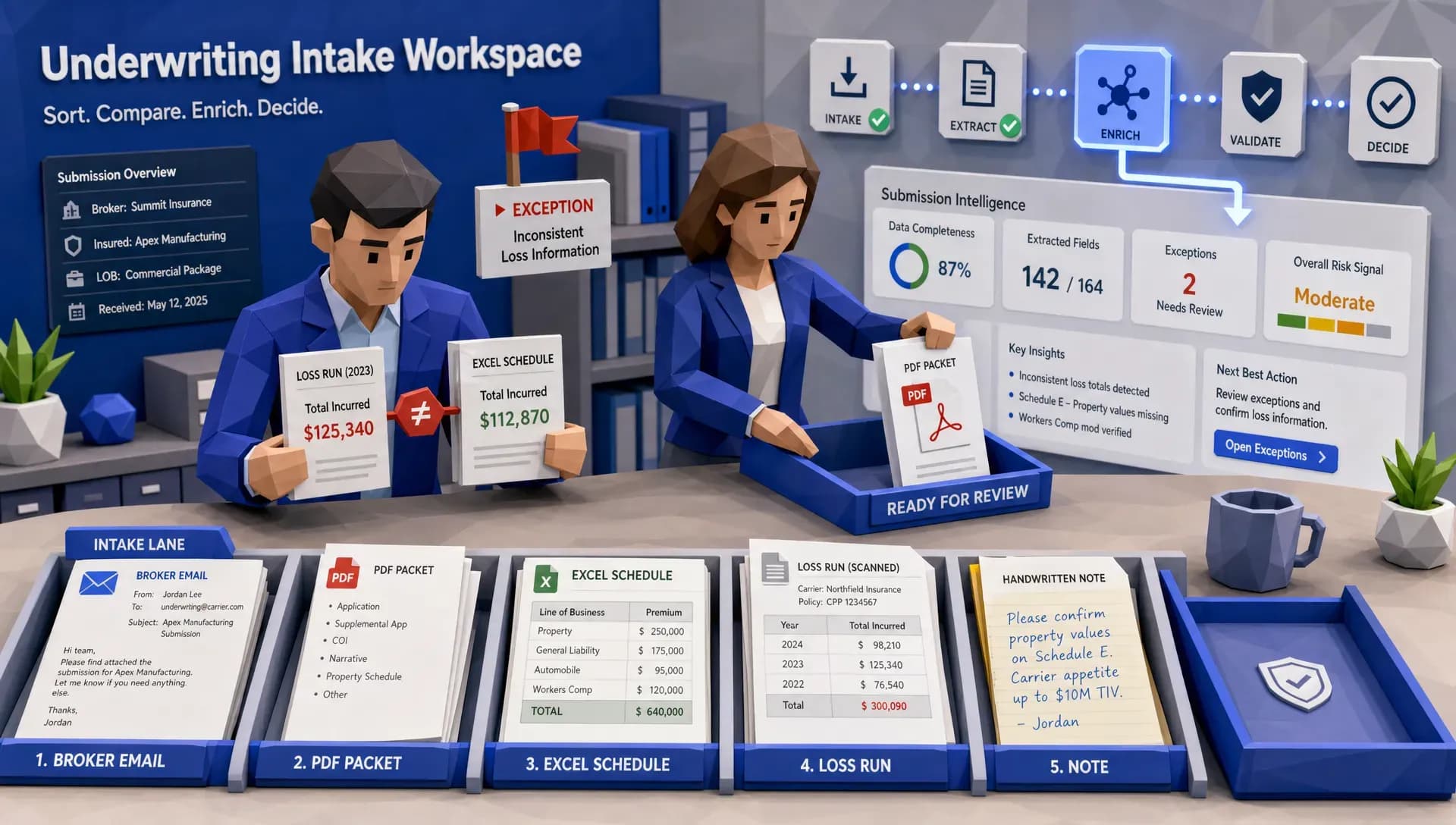
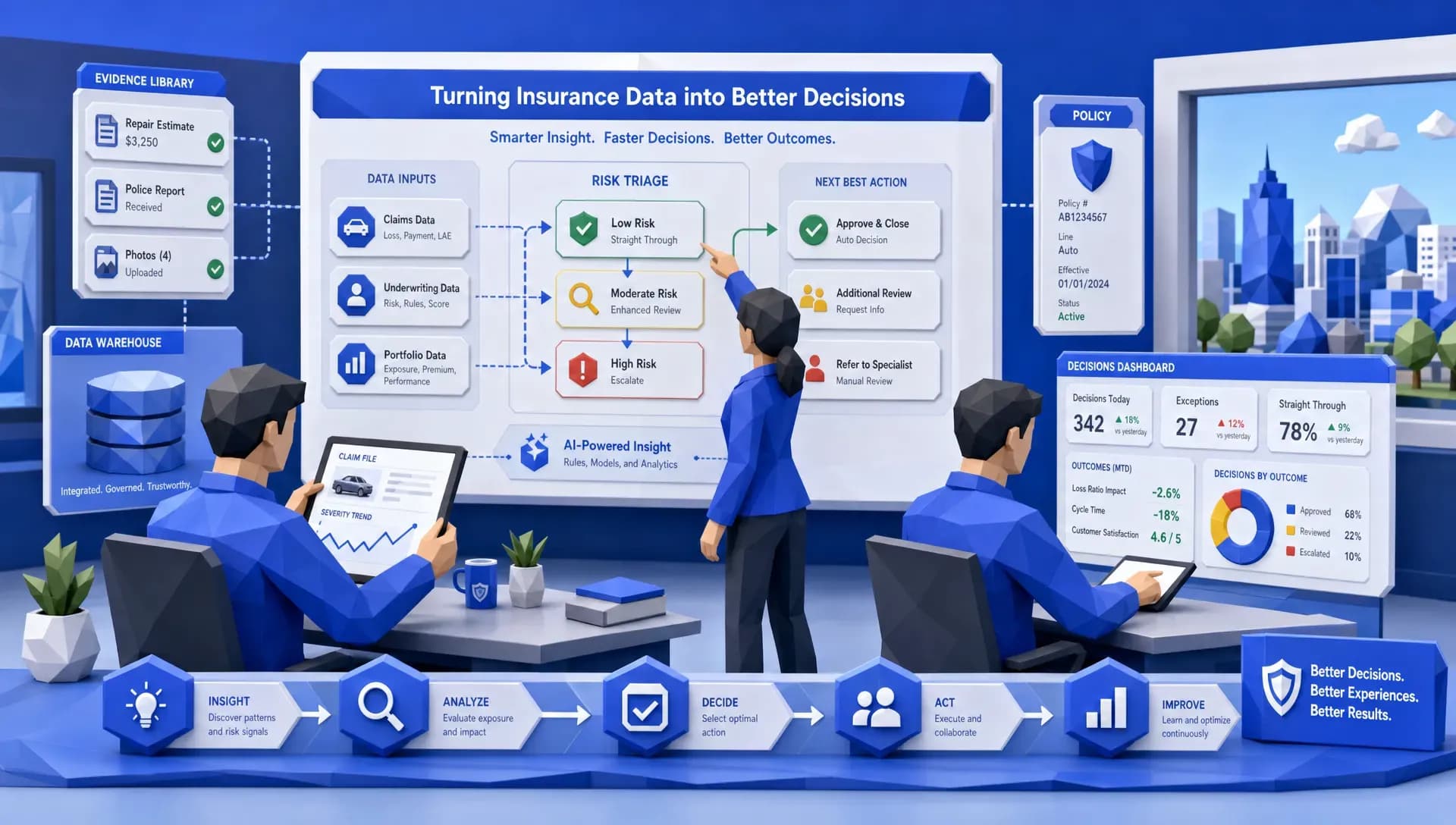
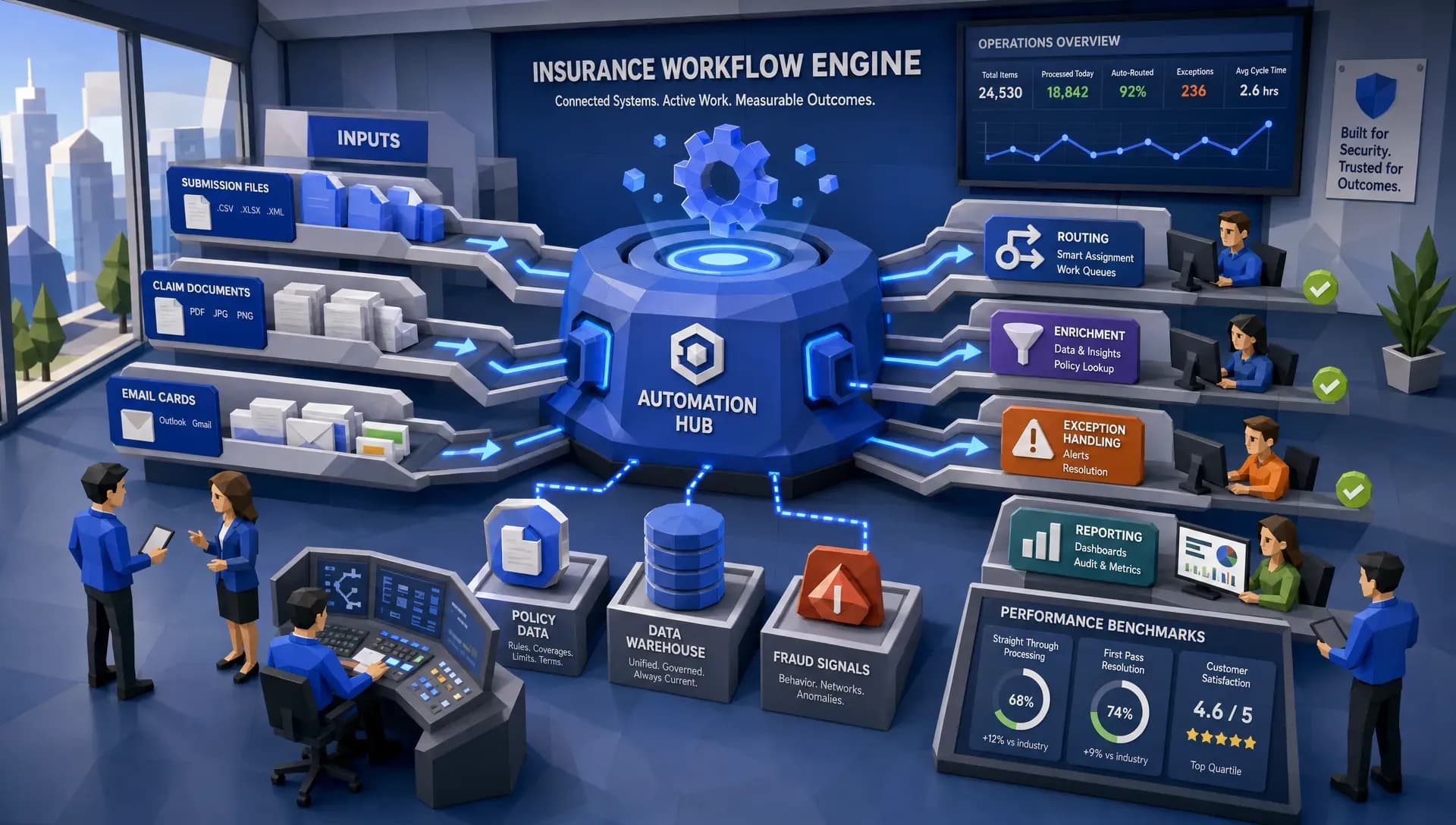
At Inaza, we look at this problem from the operational side. Inaza helps insurers, MGAs, and brokers automate workflows across underwriting, claims, customer service, and operations while capturing the data those workflows create. The platform integrates with existing systems, supports many file types, uses a unified data warehouse, and provides real-time analytics dashboards. It also includes workflow templates, API templates for data enrichment, and market benchmarks that can help teams compare performance against broader industry context.
That is the missing link. Read the newsletters, absolutely. But then ask: can we see the same issue in our own book? Can we route it? Measure it? Escalate it? Fix it without another six-month project?
If the answer is no, the newsletter did its job, but your operating model did not.
A simple reading routine that actually works
The trick is to give each newsletter a job.
I like a weekly rhythm. Monday is for broad market and regulatory scanning. Tuesday is for operations and technology. Wednesday is for claims and fraud. Thursday is for capital, reinsurance, and ratings. Friday is for one long strategic read, preferably before the calendar turns into a crime scene.
Do not forward every article to everyone. That is how newsletters become inbox confetti. Instead, forward only when there is a decision attached: review appetite, update a claims script, validate a fraud rule, pressure-test a renewal assumption, or investigate a workflow bottleneck.
Years ago, a senior underwriter told me her rule was simple: if an article does not change a question I ask, a risk I flag, or a process I challenge, I archive it. That is still the best advice I’ve heard on industry reading.
Frequently Asked Questions
What are the best insurance industry newsletters for 2026? The best insurance industry newsletters for 2026 include Insurance Journal, Carrier Management, AM Best, Artemis, Reinsurance News, Claims Journal, Coverager, Digital Insurance, Insurance Thought Leadership, and Risk and Insurance. The right mix depends on your role and market focus.
Are paid insurance newsletters worth it? Paid newsletters can be worth it for executives, reinsurance teams, specialty underwriters, and market strategy leaders who need deeper intelligence on capital, M&A, capacity, and competitive positioning. For many teams, a blend of free and paid sources works best.
Which newsletters should underwriters read? Underwriters should start with Insurance Journal, AM Best, Carrier Management, Risk and Insurance, and whichever niche source fits their line of business. Commercial auto underwriters, for example, should also follow claims, fleet, litigation, and reinsurance signals.
Which newsletters are most useful for claims and fraud teams? Claims Journal, Coalition Against Insurance Fraud, Insurance Journal, PropertyCasualty360, and relevant Verisk research are all useful for claims and SIU teams. The goal is to spot legal trends, fraud patterns, and operational issues early.
How many insurance newsletters should I subscribe to? Most professionals only need three to five core newsletters. Senior leaders and strategy teams may need more, but only if someone is responsible for turning insights into action. Reading without operational follow-through is just expensive scrolling.
Turn market reading into operating advantage
The right newsletters help you see what is changing in insurance. The right operating platform helps you respond before the change becomes leakage, backlog, churn, or avoidable loss.
If you are ready to connect market intelligence with workflow automation, cleaner data, and real-time operational visibility, explore Inaza’s AI-powered insurance automation platform. You can also read more about building a connected insurance data platform or creating a measurable AI roadmap for your team.