If you read enough insurtech news, you start to notice a pattern: half of it is written for investors, a quarter is written for conference panels, and the remaining quarter might actually help an underwriter or claims manager get home before dinner.
After roughly a decade around insurance operations, I have developed a fairly simple filter. If a piece of insurtech news does not change how risk is selected, how claims are triaged, how fraud is caught, or how data moves between systems, I file it under “interesting, but not Monday morning useful.”
That may sound harsh. It is also how real insurance teams survive. Underwriters do not need another shiny demo. Claims teams do not need another dashboard that tells them yesterday was busy. We need technology that removes low-value work, improves judgment, and gives us better evidence before a bad decision becomes expensive.
My hot take: the useful news is usually the least glamorous
The most important insurtech news rarely has the loudest headline. A new fraud model sounds exciting. A data ingestion workflow that quietly eliminates re-keying from 400 loss runs sounds boring. Guess which one usually has the faster ROI?
I once sat with a commercial auto underwriter who had three browser tabs open, two spreadsheets, one email thread with seven attachments, and a coffee that had clearly given up hope. The actual underwriting judgment took maybe 12 minutes. The hunt for complete, consistent information took most of the morning. That is the problem worth solving.
McKinsey has reported that underwriters can spend around 60% of their time on administrative work rather than risk assessment. For P&C carriers and MGAs, that is not a workflow inconvenience. That is expensive expertise being used as a search function.
So when I see insurtech news about underwriting automation, I ask one question first: does it give underwriters more time to underwrite?
Underwriting news that matters: better intake, not prettier portals
A lot of underwriting technology is sold like a front door. Faster submissions. Cleaner portals. Better broker experience. All good. But the real value sits behind the door.
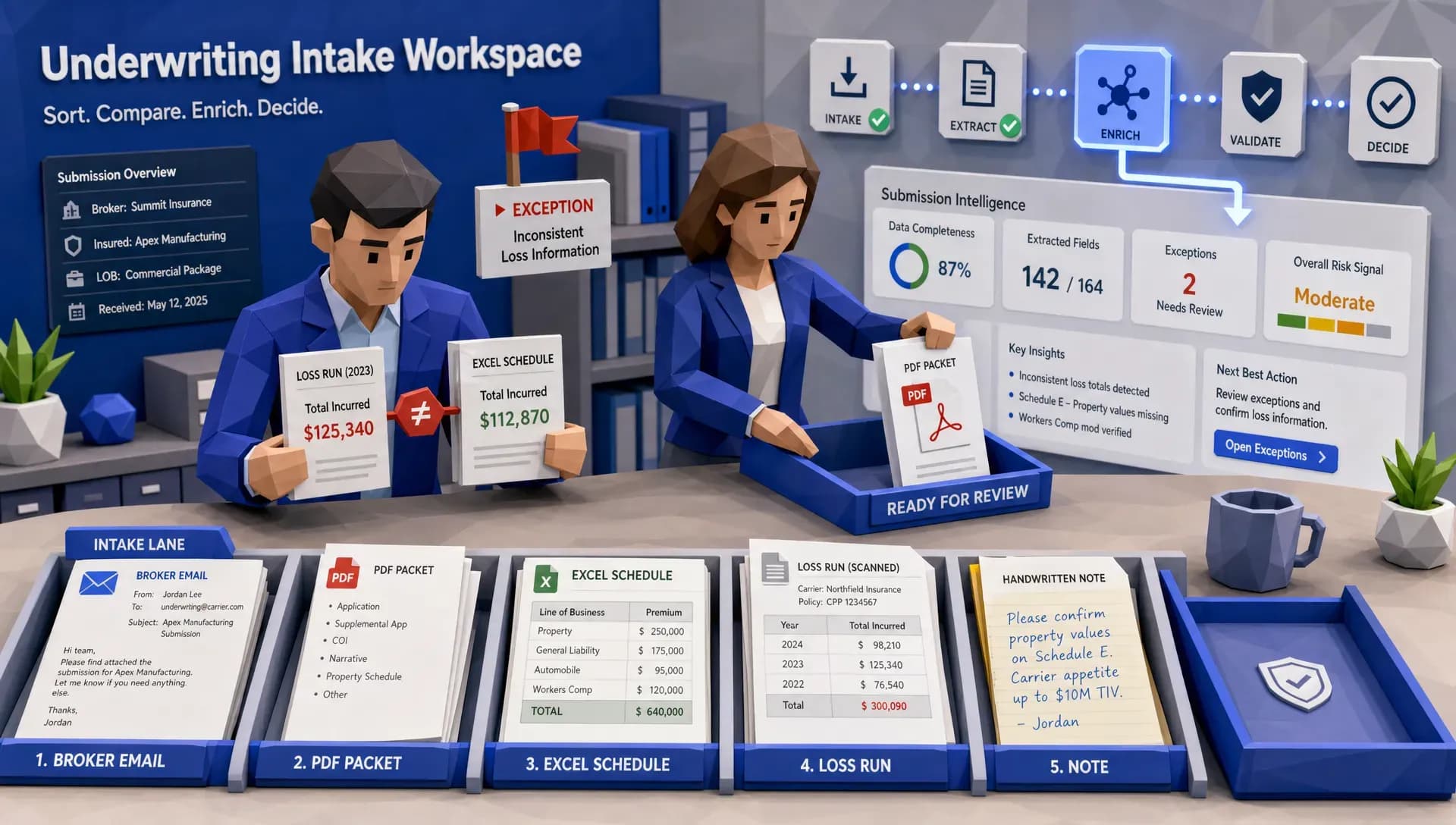
For underwriters, the breakthrough is not simply receiving a submission digitally. It is receiving usable data from whatever format the broker sends, whether that is a PDF, spreadsheet, email body, bordereau, loss run, image, or all of the above in one delightful little chaos bundle.
The news worth paying attention to usually involves three operational improvements. First, automated extraction that turns unstructured submissions into structured data. Second, validation that catches missing VINs, inconsistent driver records, prior coverage gaps, or suspicious discount eligibility before the quote goes out. Third, enrichment that brings in trusted third-party sources without forcing the underwriter to bounce between systems.
This is where modern underwriting automation becomes practical. Not futuristic. Practical. The difference matters.
If a submission can be parsed, checked, enriched, and routed before the underwriter touches it, the human can focus on exposure, pricing adequacy, appetite fit, and exceptions. That is the job. Nobody became an underwriter because they dreamed of correcting column headers in Excel.
Claims news that matters: cycle time is still the customer experience
Claims teams live in a different kind of pressure cooker. Underwriting errors are often discovered later. Claims delays are discovered immediately, usually by a policyholder who is already having a bad week.
J.D. Power’s 2024 U.S. Auto Claims Satisfaction Study highlighted that auto claims can still take more than 30 days to settle on average. For customers, that number does not feel like a metric. It feels like missed work, rental car stress, and the creeping suspicion that their insurer has vanished into a beige filing cabinet.
The claims-related insurtech news I care about is therefore very specific. Does it accelerate FNOL intake? Does it reduce back-and-forth for documents and photos? Does it help triage severity early? Does it flag fraud without turning every honest claimant into a suspect? Does it route the right claim to the right adjuster with the right context?
I once watched a simple glass claim take longer than it should have because the intake notes, photos, vendor invoice, and coverage details were scattered across systems. Nobody was incompetent. The process was. That distinction matters because insurers often blame teams for what are actually data-flow problems.
Claims automation that matters should remove dead air from the claim lifecycle. By dead air, I mean the time when nobody is making a decision because someone is waiting for a file, checking a policy, chasing a photo, or confirming whether the invoice matches the damage. Every claims leader knows that dead air is where cycle time goes to retire.
Fraud news that matters: fake evidence is now cheap
Fraud has always been part of insurance. What has changed is the price of producing believable fake evidence. It has dropped dramatically.
The FBI estimates insurance fraud costs the U.S. more than $300 billion each year, excluding health insurance. That is already a painful number. Now add cheap image manipulation, synthetic documents, voice spoofing, and online-sourced claim photos. The old fraud playbook got a smartphone and a fake photo app.
Verisk’s 2025 fraud research reported that 98% of carriers say AI is fueling digital fraud, while also noting concerning consumer attitudes toward fake claims. In the UK, the BBC reported that Admiral saw a 71% rise in fraudulent claims involving AI-generated fake images. Different markets, same warning light.
Here is my slightly unpopular view: fraud detection that starts at the SIU desk is already late.
The better trend is fraud screening embedded earlier in everyday workflows. At FNOL, image checks can inspect metadata, timestamps, reuse signals, and tampering indicators. During underwriting, automated validation can catch mismatched identities, questionable vehicle histories, suspicious prior coverage patterns, or application inconsistencies. During payment review, invoice checks can identify duplicates, inflated amounts, or vendor anomalies.
This does not mean every claim or submission should be treated like a crime scene. Good fraud tooling should reduce noise, not create it. False positives burn adjuster time, frustrate honest customers, and eventually teach teams to ignore the alerts. The best systems improve precision and escalate only when there is enough signal to justify a closer look.
The integration story is bigger than the model story
Here is another hot take: the best insurtech news in 2026 is not about smarter models. It is about better integration.
I know, that sentence will not get me invited to many cocktail receptions. But it is true.
Insurance carriers, MGAs, brokers, and claims organizations already have systems of record, rating engines, document repositories, call centers, email inboxes, fraud tools, and reporting environments. New technology only helps if it can work with that messy reality. If it requires a full-system replacement before producing value, most teams will still be discussing the steering committee agenda while competitors are already improving turnaround times.
Accenture has said that insurance CEOs are investing heavily in AI for underwriting and claims. Investment is not the scarce resource anymore. Operational adoption is.
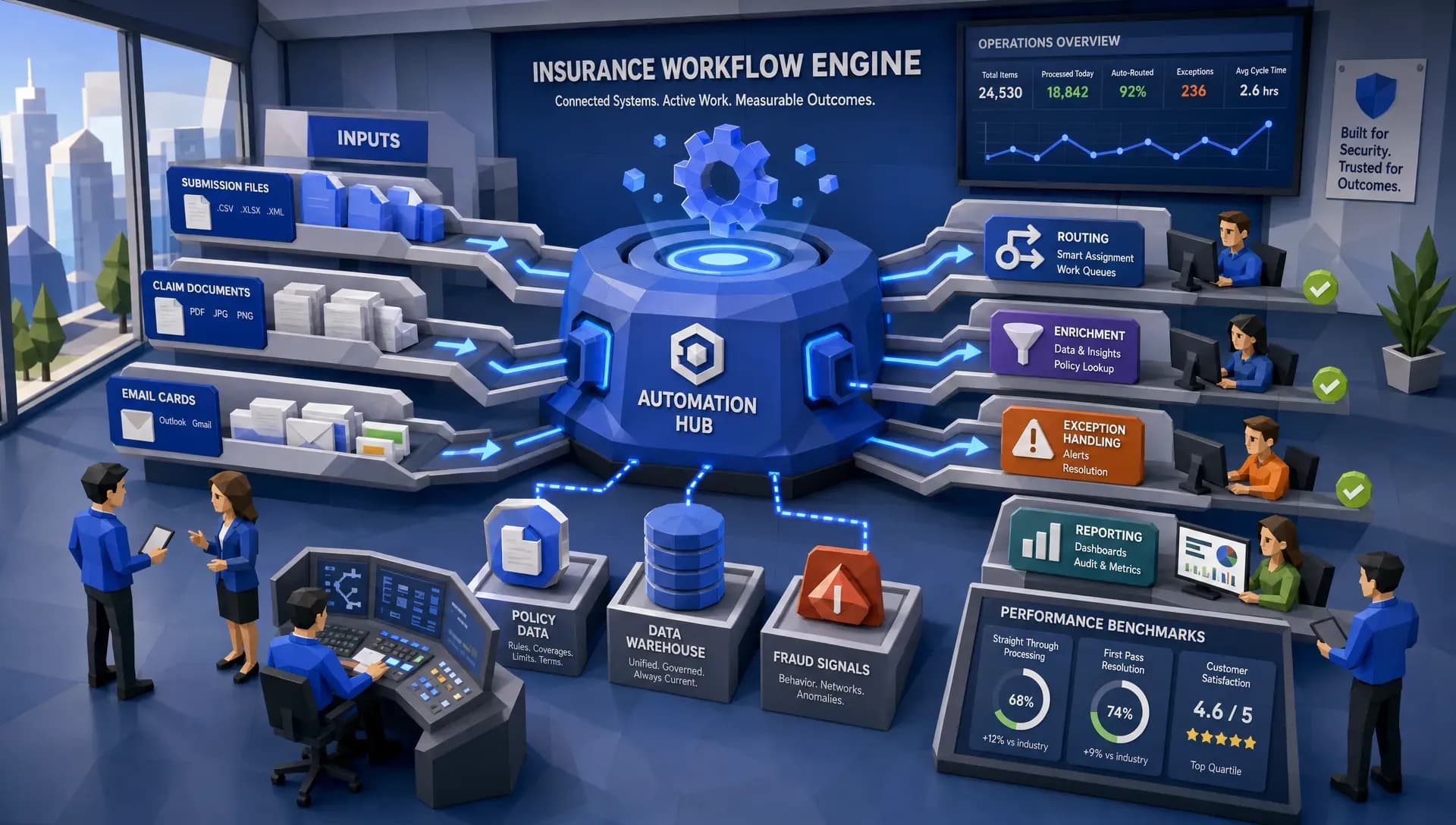
This is why I look for insurtech news that mentions APIs, workflow deployment, data capture, audit trails, and business intelligence. The unglamorous plumbing determines whether the technology becomes part of production or another pilot with a commemorative slide deck.
I sometimes compare this to household budgeting. People who follow personal finance and FIRE planning learn quickly that small leaks compound. Insurance operations are similar, except the leaky subscriptions are stale VINs, missed surcharges, duplicate invoices, incomplete loss runs, and adjuster rework. Visibility beats vibes.
Dashboards matter when they show what to change next
Insurance leaders love dashboards. Some dashboards deserve the affection. Others are decorative wall art with filters.
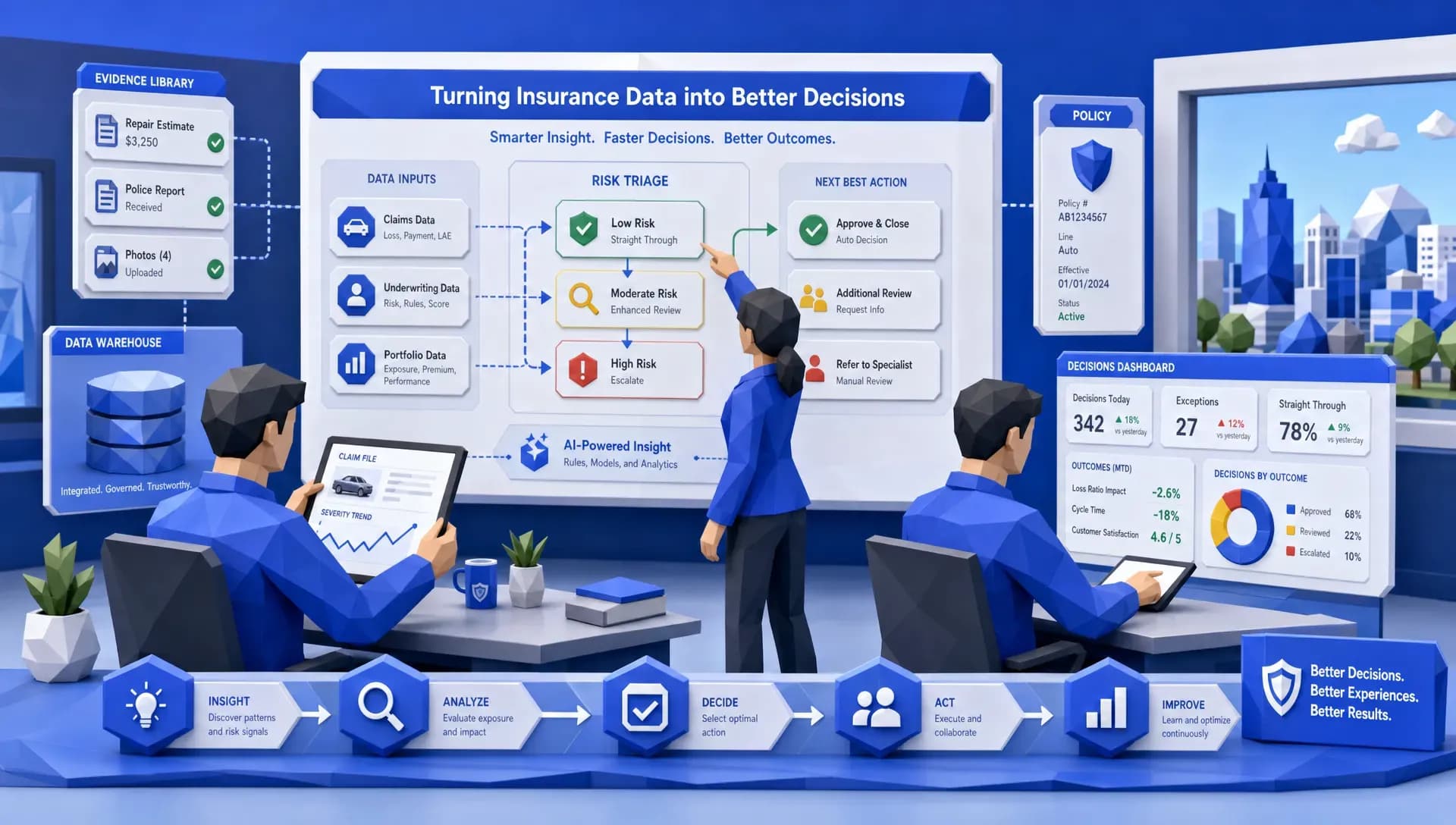
The dashboard trend that matters is not simply real-time reporting. It is operational observability: seeing every input, every decision point, every exception, and every output across underwriting and claims. That kind of visibility helps leaders answer practical questions.
Where are submissions stalling? Which brokers send the most incomplete data? Which claim types create the most rework? Are fraud flags concentrated by geography, vendor, vehicle type, injury pattern, or attorney involvement? Are underwriters overriding the same rule because the appetite logic is outdated? Are claims teams escalating cases too late?
This is also where underwriting and claims finally start speaking the same data language. Claims history should feed underwriting strategy. Underwriting assumptions should be tested against claims outcomes. Renewal decisions should reflect actual loss behavior, not just last year’s premium and a hopeful nod.
The most useful platforms do more than automate tasks. They capture the data created by those tasks and turn it into intelligence. That is how carriers and MGAs move from “we processed more” to “we understand where margin is leaking.”
What I look for before forwarding insurtech news to a team
When someone sends me a big insurtech announcement, I run it through a simple test before forwarding it to an underwriting or claims lead.
Does it reduce a real operational bottleneck? If the answer is vague, I move on. The best announcements point to a specific workflow, such as loss run extraction, FNOL triage, image fraud review, policy issuance, eligibility checks, attorney demands, or invoice validation.
Does it work with existing systems? Insurance transformation cannot depend on pretending legacy systems do not exist. The most useful tools integrate with what teams already use, then improve the process step by step.
Does it improve data quality at the point of capture? Fixing data later is expensive. Capturing clean, structured, validated data at intake is where the margin improvement starts.
Does it preserve human judgment where it matters? Underwriters and adjusters should not be removed from complex decisions. They should be spared from low-value clerical work so their judgment is used where it actually changes the outcome.
Does it create measurable intelligence? If automation does not leave behind usable data for reporting, audit, benchmarking, and portfolio analysis, it is only solving half the problem.
That last point is becoming more important. The winners will not be the insurers with the most tools. They will be the insurers whose tools create a better operating memory.
Where Inaza fits into the useful side of insurtech news
At Inaza, we tend to care about the kind of insurtech news that survives contact with the real insurance floor. Underwriting desks, claims queues, shared inboxes, messy files, legacy systems, compliance needs, the whole circus.
Inaza’s AI-powered insurance automation platform is built to streamline underwriting, claims, customer service, and operations while integrating with existing systems. The platform supports all file types, offers 250+ workflow templates, and allows customizable automation workflows without requiring teams to retrain from scratch.
The part I personally find most important is the data layer underneath the workflows. Automation is useful, but capturing key data points from those workflows is what gives insurers better reporting, dashboards, analytics, and business intelligence. Inaza also provides pre-built API templates for enrichment sources such as Verisk, LexisNexis, HazardHub, and others, along with industry benchmarks that can support portfolio reviews, renewals, and reinsurance conversations.
And yes, speed matters. One of Inaza’s differentiators is the ability to deploy production-ready workflows quickly, without the usual proof-of-concept back-and-forth that can turn a good idea into a six-month calendar invitation.
Frequently Asked Questions
What insurtech news should underwriters pay attention to? Underwriters should focus on news about data intake, loss run extraction, real-time validation, data enrichment, pricing accuracy, eligibility checks, and workflow automation. Anything that reduces admin work and improves risk selection is worth a closer look.
What insurtech news matters most for claims teams? Claims teams should watch developments in FNOL automation, image damage assessment, fraud detection, invoice validation, bodily injury triage, attorney demand workflows, and customer communication. The key test is whether the technology reduces cycle time without reducing decision quality.
Is automation replacing underwriters and claims adjusters? No, not in any sensible insurance operation. The stronger use case is removing repetitive work so underwriters and adjusters can focus on judgment, negotiation, coverage analysis, fraud review, and complex exceptions.
Why is fraud such a major theme in insurtech news? Fraud is becoming more digital, more scalable, and harder to spot manually. Fake photos, manipulated documents, identity issues, and invoice anomalies require faster, more consistent screening across underwriting and claims workflows.
How can insurers avoid buying into insurtech hype? Start with a workflow problem, define the metric that should improve, and test whether the solution integrates with existing systems. If a vendor cannot explain time-to-value, data capture, auditability, and exception handling, keep asking questions.
Turn the news into measurable workflow improvement
Reading insurtech news is useful. Turning it into faster underwriting, cleaner claims, better fraud controls, and stronger portfolio intelligence is where the money is.
If your team is trying to reduce manual work, improve data quality, automate underwriting or claims workflows, or build better operational dashboards, Inaza can help you move from interesting ideas to production-ready automation. The headlines will keep coming. The real advantage goes to the teams that operationalize the right ones first.