If you have worked in insurance operations long enough, you have seen the same scene play out in slightly different costumes.
An underwriter is waiting on a missing MVR. A claims adjuster is hunting through an email thread for one photo. A broker is asking for quote status for the third time. A manager is building a report in Excel at 7:18 p.m. with the optimism of someone who has forgotten how last month went.
I have spent about a decade around carriers, MGAs, brokers, claims teams, and operations leaders. My hot take is this: most insurance industry software does not fail because the technology is weak. It fails because it solves the wrong problem beautifully.
The real problem is rarely the big, dramatic one on the transformation deck. The real problem is usually a bottleneck hiding between two systems, two teams, or two inboxes. That is where quote turnaround gets slow, claims leak money, fraud reviews pile up, and customers start wondering why their insurer still behaves like a fax machine with a logo.
Hot take: your bottleneck is probably not where your org chart says it is
Insurance leaders often talk about underwriting, claims, customer service, and operations as separate departments. Fair enough. We need structure. But bottlenecks do not respect org charts.
A quote delay might look like an underwriting issue, but the actual choke point is a messy fleet schedule attached to a broker email. A claims delay might look like an adjuster capacity issue, but the real culprit is unstructured documents arriving across five channels with no clean way to triage them. A fraud problem might look like an SIU workload issue, but the damage started at intake when data was never checked, enriched, or compared properly.
That is why good insurance industry software needs to start with the actual work. Not the department. Not the buzzword. The work.
McKinsey has estimated that underwriters can spend around 60 percent of their time on administrative tasks, rather than risk assessment. If you have ever watched a senior underwriter copy data from a PDF into a policy system, you know that statistic does not feel exaggerated. It feels polite.
The first bottleneck: intake that arrives like a junk drawer
Insurance intake is where many good processes go to lose their shoes.
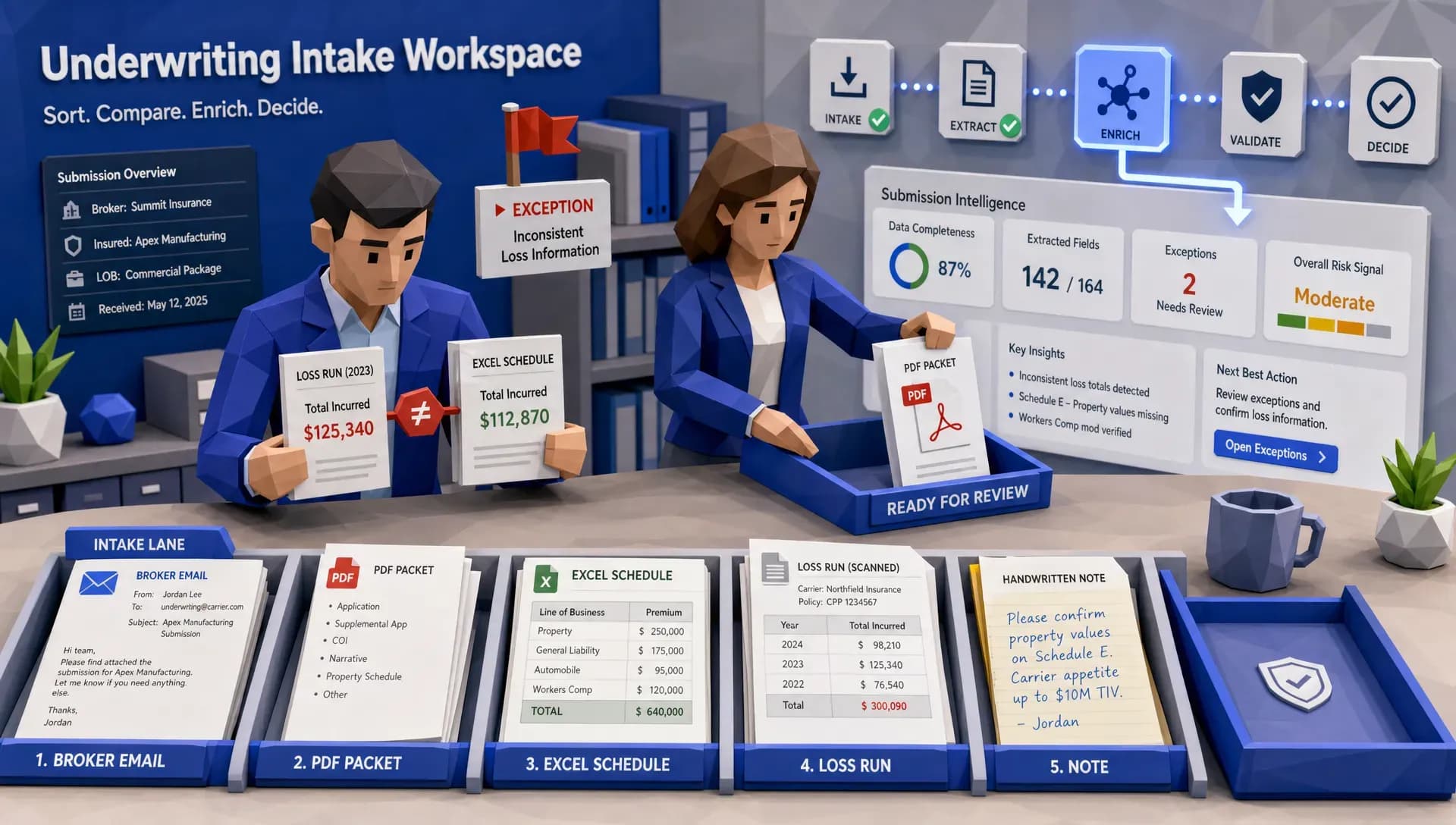
Submissions arrive as ACORD forms, spreadsheets, PDFs, emails, images, broker notes, loss runs, scanned IDs, certificates, medical bills, police reports, repair estimates, and sometimes a photo that appears to have been taken during an earthquake. The problem is not volume alone. The problem is variety.
When intake is manual, every downstream process becomes suspiciously expensive. Underwriting cannot assess risk until data is structured. Claims cannot move until documents are classified. Fraud teams cannot act until signals are visible. Customer service cannot answer simple questions because the answer is buried in a file nobody has opened yet.
The right software should handle all file types, extract what matters, validate the data, and route work without asking staff to become part-time archaeologists. This is the first place I would look before buying anything shiny.
I once sat with a team that had three people manually renaming and sorting incoming claim files every morning. They were good at it, oddly proud of it, and completely trapped by it. Automating that step did not require a grand digital transformation speech. It required admitting that grown professionals should not spend Tuesday morning naming PDFs.
The second bottleneck: verification that depends on swivel-chair heroics
Insurance has a strange habit of calling data checks simple, then making people perform them across six portals.
Need to confirm a VIN, MVR, prior coverage, address risk, property hazard, litigation history, or loss run detail? In many teams, that means opening one system, copying data into another, checking a third-party source, saving a screenshot, updating a note, then hoping the next person trusts what happened.
That is not a workflow. That is a scavenger hunt.
Modern insurance industry software should enrich workflows through connected data sources and API templates. This is where pre-built integrations matter. If a platform can connect to sources like Verisk, LexisNexis, HazardHub, and other third-party data providers, teams can make faster decisions without treating every verification like a special project.
The trick is not to drown underwriters or adjusters in more data. The trick is to bring in the right data at the right moment, then show the reason it matters.
The third bottleneck: handoffs where context goes to die
Most insurance processes do not break in the obvious steps. They break at the handoffs.
A broker submission moves from intake to underwriting. A claim moves from FNOL to coverage review to appraisal to payment. A suspicious file moves from claims to SIU. An attorney demand moves from adjuster to litigation management. Every handoff creates a chance for context to vanish.
The customer does not care that the claim changed queues. The broker does not care that a submission is waiting on operations. The reinsurer does not care that the data lived in three systems. They care about speed, accuracy, and whether the answer makes sense.
I have seen teams build heroic workarounds with shared inboxes, color-coded spreadsheets, and Slack messages that read like air traffic control. It works until volume spikes, someone goes on vacation, or an audit asks who approved what and when.
This is where workflow automation earns its keep. It should assign work, preserve context, record decisions, and create a clean audit trail. If it cannot show what happened, when it happened, and why it happened, it is not fixing the bottleneck. It is decorating the queue.
The fourth bottleneck: claims fraud moving faster than review capacity
Claims fraud is not some abstract boardroom concern. It is a daily tax on honest policyholders, adjusters, and carriers.
The FBI has estimated that insurance fraud costs the US more than $300 billion annually. In auto claims, property claims, bodily injury demands, invoice reviews, and image submissions, the pressure is only rising. Fraud teams are asked to catch more with the same number of people, often while customer expectations keep shrinking the acceptable response window.
That is a brutal combination.
Good claims software does not send every file into manual review. That would punish honest customers and bury adjusters. It should separate routine claims from suspicious ones, flag mismatches early, and give fraud analysts a cleaner starting point. The routine windshield claim should not wait behind a complex bodily injury file with inconsistent records and questionable images.
J.D. Power has reported that auto claim cycle times can stretch beyond 30 days. Customers feel every day of that delay. In my experience, they are surprisingly patient when the claim is complicated. They are far less patient when the delay is caused by silence, duplicate requests, or someone asking for a document they already sent.
Core replacement is often the expensive detour
Here is another opinion that occasionally gets me fewer dinner invitations: many insurers do not need to replace their core system first.
Sometimes they do, of course. Some systems are held together by luck and a retired developer who still answers emails. But plenty of carriers and MGAs can fix their worst bottlenecks faster by layering automation around existing systems, rather than trying to rip everything out at once.
The same lesson appears outside insurance. In large operational sectors, teams often discover that transformation depends less on buying tools and more on governing the work properly. Firms focused on enterprise construction transformation make this point in a different industry: repeatable execution comes from operating design, governance, and technology working together. Insurance has the same problem in a different suit.
If your workflow is unclear, a new platform will make the confusion faster. If your data is messy, a new dashboard will make the mess more visible. If your teams do not agree on exception rules, automation will expose that disagreement before lunch.
That is why I like software that can be deployed around specific bottlenecks first, then expanded. Fix intake. Fix verification. Fix claims triage. Fix reporting. Build momentum before announcing a three-year transformation program that everyone secretly fears.
What insurance industry software should actually do
If I were evaluating insurance industry software today, I would ignore half the demo polish and ask practical questions. Can it handle the files we really receive? Can it work with the systems we already use? Can our operations team change a workflow without waiting for a long development cycle? Can we see the data afterward, not just the completed task?
The best platforms tend to do a few things well:
- Capture data from messy documents, emails, spreadsheets, images, and forms without forcing staff to re-key it.
- Connect with existing policy, claims, CRM, data, and third-party systems instead of demanding a full operational reset.
- Automate routine decisions while escalating exceptions to the right human with the right context.
- Enrich underwriting and claims workflows with external data through pre-built API templates.
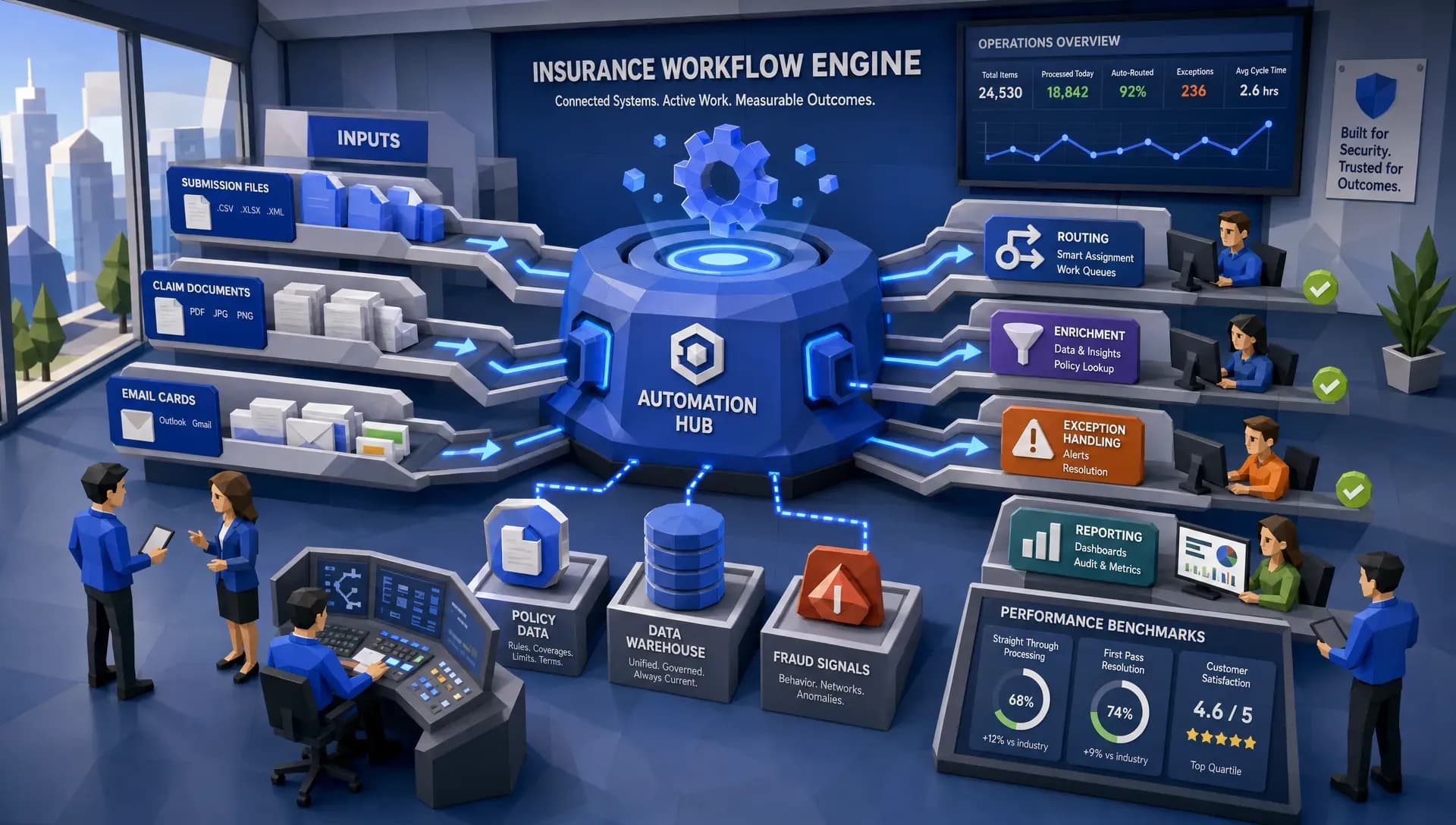
- Feed a unified data warehouse so leaders can monitor cycle times, leakage, workloads, exceptions, and outcomes.
- Provide dashboards and benchmarks that help teams compare performance against internal goals and market reference points.
That last point matters more than people think. Workflow automation without business intelligence is like installing a faster engine with no dashboard. You may be moving faster. You may also be overheating.
The data warehouse is the unsexy superpower
I know, data warehouse is not the phrase that gets people leaning forward at conferences. But in insurance operations, it is often where the real value compounds.
Every automated workflow creates useful operational data. How many submissions arrived incomplete? Which brokers send the cleanest files? Which claims trigger fraud review most often? Which attorney demand types cause deadline risk? Which underwriting checks create the longest delay? Which branch is improving, and which one is quietly surviving on manual overtime?
If that data disappears after the task is complete, leadership is still flying with fogged-up windows.
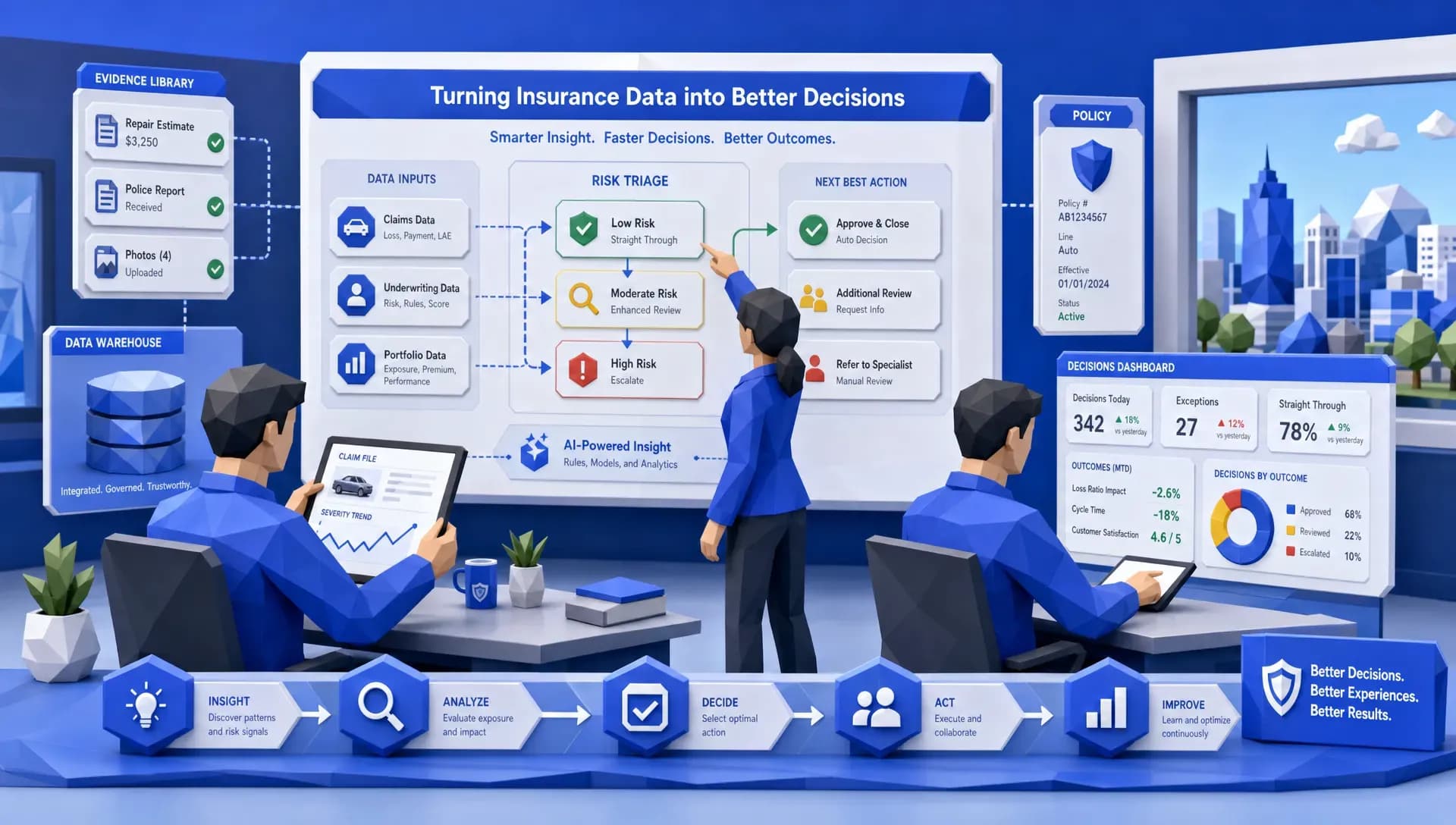
This is one of Inaza’s important differentiators. The platform uses automation to capture key data points into a unified data warehouse, then supports real-time analytics dashboards. That means the insurer can see more than completed work. It can see the shape of the operation.
Inaza also includes industry benchmark references, including sources such as Aon, Munich Re, Howden, and others, which can help insurers understand how their business compares with broader market indicators. For carriers, MGAs, and reinsurance brokers, that can become useful when preparing portfolio narratives, renewal discussions, or reinsurance negotiations.
The practical benefit is simple. You stop arguing from anecdotes. You start managing from evidence.
Where Inaza fits
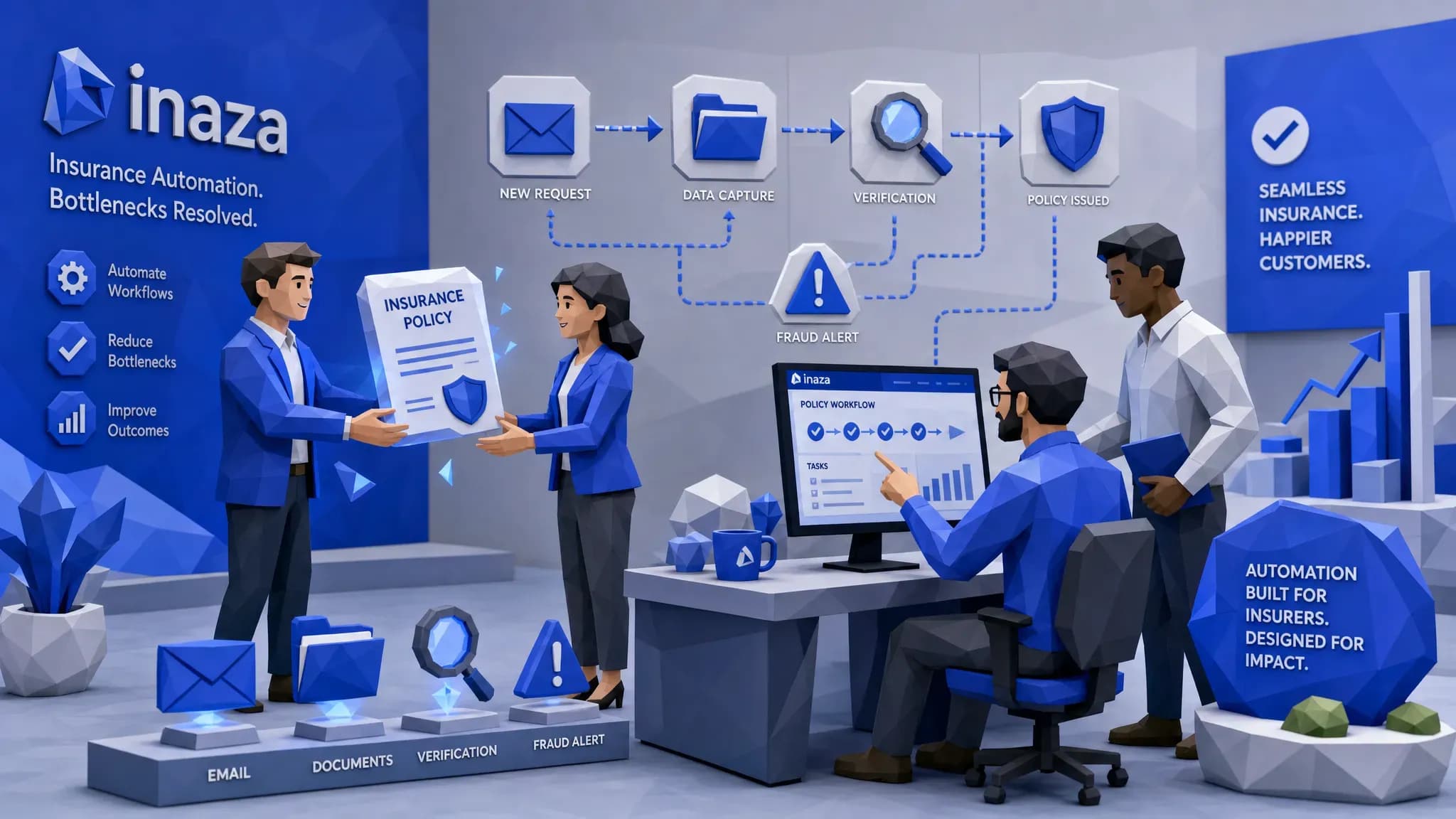
Inaza is built for insurers, MGAs, brokers, claims teams, fraud analysts, and underwriters who want to fix real bottlenecks without making the whole organization relearn how to work.
The platform supports underwriting automation, claims process automation, customer service automation, data capture, reporting, analytics, and customizable workflows. It integrates with existing systems, supports all file types, and includes more than 250 workflow templates. The goal is not to replace expertise. The goal is to stop wasting expert time on tasks software can handle consistently.
One point I particularly like is the deployment model. Inaza can help users deploy their own workflows without the usual endless proof-of-concept loop. In practical terms, that means a production-ready workflow can be shaped quickly, often on a single call with a user. For an operations leader who has sat through months of discovery meetings, that sentence has a calming effect.
The platform also has pre-built API templates, which means workflows can be enriched without forcing every data connection to become a custom build. That matters because the bottleneck is often not one big process. It is a chain of small delays that add up to missed quotes, slower claims, and avoidable cost.
A better buying test: follow the stuck file
If you want to know whether software will help, do not start with the vendor deck. Start with one stuck file.
Pick a submission that took too long. Pick a claim that bounced between teams. Pick an attorney demand that created deadline panic. Pick a report that required manual cleanup every month. Then walk the file from arrival to outcome.
Where did data get re-keyed? Where did someone wait for verification? Where did a handoff lose context? Where did a manager lack visibility? Where did the customer or broker ask for an update because the system could not provide one?
That stuck file will tell you more than a strategy workshop.
The insurance industry software worth buying should make that file move faster, cleaner, and with a better audit trail. If it cannot do that, it may still be impressive. It just may not be useful.
Frequently Asked Questions
What is insurance industry software? Insurance industry software refers to platforms and tools that help insurers, MGAs, brokers, and claims teams manage underwriting, claims, customer service, reporting, compliance, data capture, and workflow automation.
Which insurance bottleneck should we automate first? Start where work is high-volume, rules-based, and painful. Intake, document extraction, verification checks, claims triage, broker email handling, and routine reporting usually produce faster value than broad system replacement.
Can insurance automation work with legacy systems? Yes, if the software is designed to integrate with existing systems. Many insurers get value by connecting automation to current policy, claims, CRM, and data platforms instead of replacing everything at once.
Will automation replace underwriters or adjusters? No. The better goal is to remove administrative drag so underwriters can focus on risk and adjusters can focus on judgment, negotiation, empathy, and complex claims.
How should insurers measure success? Track cycle time, quote turnaround, straight-through processing rates, manual touches, error rates, claim leakage, fraud referral quality, customer satisfaction, and cost per transaction.
Fix the bottleneck before it becomes your operating model
Insurance teams do not need more software that creates another place to check. They need software that removes the reason they were checking in the first place.
If your team is buried in manual intake, slow verification, messy handoffs, delayed claims, or reporting that arrives too late to matter, it may be time to look at automation differently. Start with the stuck file. Follow the bottleneck. Then fix the work.
To see how Inaza helps insurers automate underwriting, claims, customer service, and operations while building a stronger data foundation, visit Inaza.