Here is my hot take after a decade around insurance operations: most insurers do not have a growth problem. They have a throughput problem.
I have sat with teams that had plenty of submissions, plenty of broker interest, and plenty of appetite. On paper, they were ready to grow. In practice, their underwriters were buried in PDFs, their claims teams were chasing missing documents, and their managers were making portfolio decisions from spreadsheets that had been “temporarily” maintained since the Obama administration.
That is where insurance industry software solutions become more than an IT line item. Done properly, they create operating leverage. They help insurers, MGAs, and brokers quote faster, service better, reduce leakage, catch fraud earlier, and understand the business with enough clarity to make bolder decisions.
Growth in insurance is not just about selling more policies. It is about handling more volume without losing control.
Growth stalls when operations cannot keep up
Every insurance executive has seen some version of this story. A new distribution partner starts sending more business. Marketing improves. Brokers are engaged. Then the back office starts groaning.
Submission queues get longer. Quote turnaround slips from hours to days. Endorsements pile up. Claims adjusters spend too much time gathering files instead of resolving claims. Underwriters begin making calls with partial information because waiting for the “perfect file” means losing the account.
That is not sustainable growth. That is operational debt with a nicer suit.
McKinsey has written about the heavy administrative burden in insurance, including how much time can be consumed by manual, repetitive work instead of higher-value judgment. Anyone who has watched an experienced underwriter copy values from a fleet schedule into a core system knows the feeling. It is like using a racehorse to pull a shopping cart.
Insurance software supports growth by removing that drag. It captures data once, routes work automatically, validates information earlier, and gives teams cleaner inputs before a human ever has to make a decision.
Faster workflows create more profitable capacity
The most obvious growth benefit is speed. Faster underwriting means more quotes out the door. Faster claims handling means happier policyholders and lower adjustment expense. Faster policy servicing means fewer broker escalations and fewer awkward “just checking in again” emails.
But speed by itself is not the prize. Controlled speed is.
A carrier can process more new business only if the information being used is accurate. An MGA can enter a new state only if its underwriting rules, eligibility checks, and document workflows are consistent. A broker can win more accounts only if quotes come back quickly enough to keep the client engaged.
Modern insurance software helps by automating the parts of the workflow that should not require manual effort, such as document intake, data extraction, field validation, routing, reporting, and repeat communications. That leaves underwriters, adjusters, and operations leaders to focus on the calls that actually need judgment.
One example I still use with non-insurance friends is the restaurant host stand. If the host has to take reservations, answer phones, clean tables, check IDs, and cook fries, the restaurant slows down no matter how good the chef is. Insurance teams often operate the same way. Highly skilled people are doing too many low-skill tasks, and growth suffers because of it.
Better data means better decisions
Insurance is a data business that has somehow tolerated bad data for far too long. We ask for schedules, applications, loss runs, photos, invoices, statements, prior coverage documents, and then we let the information scatter across inboxes, portals, PDFs, spreadsheets, and legacy systems.
That makes growth risky. If you cannot trust your data, you cannot confidently price risk, spot trends, negotiate reinsurance, or identify which brokers and segments are truly profitable.
This is where the best insurance industry software solutions separate themselves from basic workflow tools. Automation is useful, but the data created by automation is where the long-term value lives.
For example, Inaza’s platform is built with a unified data warehouse underneath its automation layer. That matters because every workflow can capture useful data points along the way. Over time, underwriting, claims, policy servicing, and customer service activity become measurable instead of anecdotal.
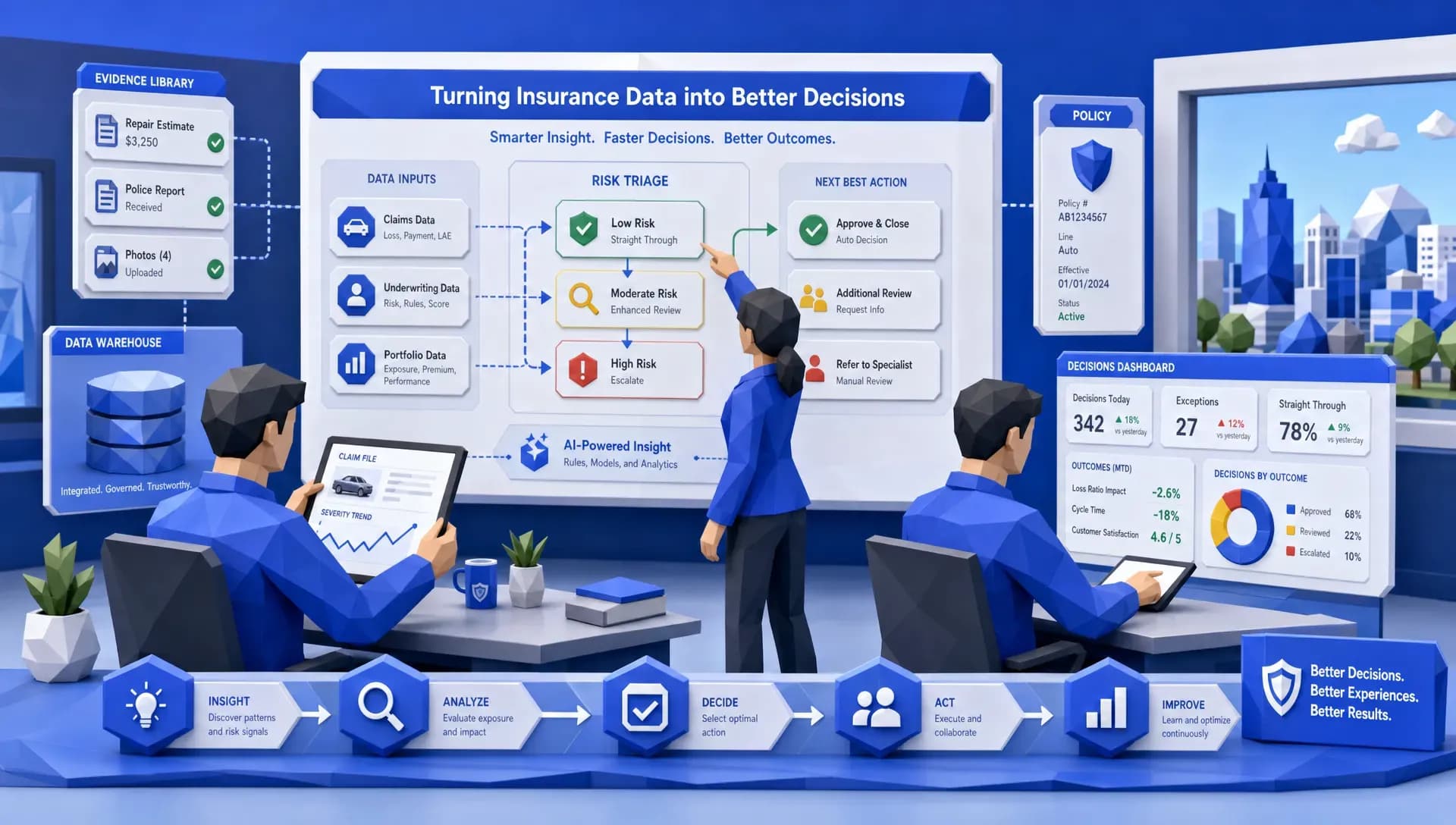
For executives, that means real-time analytics dashboards can move conversations from “I think this is happening” to “we can prove this is happening.” For underwriters, it means cleaner risk inputs. For claims leaders, it means earlier visibility into bottlenecks and severity trends. For reinsurance brokers, it means better narratives around portfolio performance, renewal strategy, and market positioning.
And yes, better narratives matter. I have seen reinsurance meetings where one side had a polished, data-backed portfolio story and the other had a spreadsheet named “final_final_v7.” Guess which side looked more credible?
Growth without leakage is the real game
Writing more business is not automatically good news. If new premium comes with inaccurate pricing, missed surcharges, poor eligibility checks, or weak fraud controls, growth can quietly damage the loss ratio.
Premium leakage is one of those problems that rarely appears as a single dramatic event. It shows up as small errors repeated thousands of times. A missed driver. A wrong vehicle use class. A discount that should have been removed. A loss history that was not fully reviewed. By the time anyone notices, the portfolio has already absorbed the damage.
Claims leakage works the same way. Small overpayments, duplicate invoices, inflated repair costs, and poorly triaged injury claims can add up quickly.
Fraud adds another layer. The FBI describes insurance fraud as a costly crime that affects insurers and policyholders alike. Verisk’s 2025 fraud report also points to rising concern among carriers around digitally enabled fraud, including manipulated materials and AI-assisted schemes.
Good software does not eliminate fraud on its own. Anyone promising that should probably also be selling magic beans. But it can make fraud harder to miss. It can flag suspicious claims, compare submitted data against external sources, detect image manipulation, validate invoices, and route questionable files to the right fraud analysts sooner.
That supports growth because the organization can expand without letting control standards erode.
Integration is what makes software usable
Here is another hot take: insurers do not need another beautiful portal that creates more swivel-chair work.
A software solution only supports growth if it fits into the operating reality of the business. Most carriers, MGAs, and brokers already have policy admin systems, claims systems, rating engines, document repositories, CRMs, and reporting tools. Some are modern. Some are held together by institutional memory and a few brave operations people.
The point is not to rip everything out for the sake of looking innovative. The point is to connect the pieces so data flows where it needs to go.
That is why integrations and API templates matter. Inaza includes pre-built API templates with providers such as Verisk, LexisNexis, HazardHub, and others, making it easier to enrich automated workflows with external data. For insurers, that means less custom plumbing every time a workflow needs a third-party check.
The practical growth benefit is simple: teams can launch improvements faster. They can automate a submission workflow, enrich the data, validate key fields, and push outputs into existing systems without asking the business to relearn everything from scratch.
No team retraining needed is not just a convenience. It is a growth strategy. Change fatigue is real, and the best software respects the people who have to use it on a Tuesday afternoon when the queue is full.
Workflow templates help insurers move before the market moves
Insurance growth often depends on timing. A new product window opens. A competitor exits a segment. A weather event changes claims volume overnight. A broker partner wants a custom flow. A state-specific underwriting check becomes urgent.
If every change requires months of discovery, configuration, testing, and hand-holding, the opportunity may be gone before the workflow is ready.
This is why configurable workflow templates matter. Inaza offers 250+ workflow templates and customizable automation workflows across areas like underwriting, claims, customer service, and operations. That gives insurers a starting point instead of a blank page.
The strongest platforms also let insurers deploy their own workflows quickly, without the endless proof-of-concept loop that kills momentum. Inaza’s ability to deploy production-ready workflows rapidly, including on a single call with a user, is a meaningful differentiator for growth-minded teams.
I have seen teams spend longer debating the color of a dashboard than it should take to automate a claims intake step. Templates help everyone get out of their own way.
Software supports growth across the whole insurance lifecycle
The biggest mistake I see is treating software as a departmental fix. Underwriting buys a tool. Claims buys a tool. Customer service buys a tool. Finance builds its own reports. Then leadership wonders why the business still feels fragmented.
Growth happens across the lifecycle, so the software should support the lifecycle.
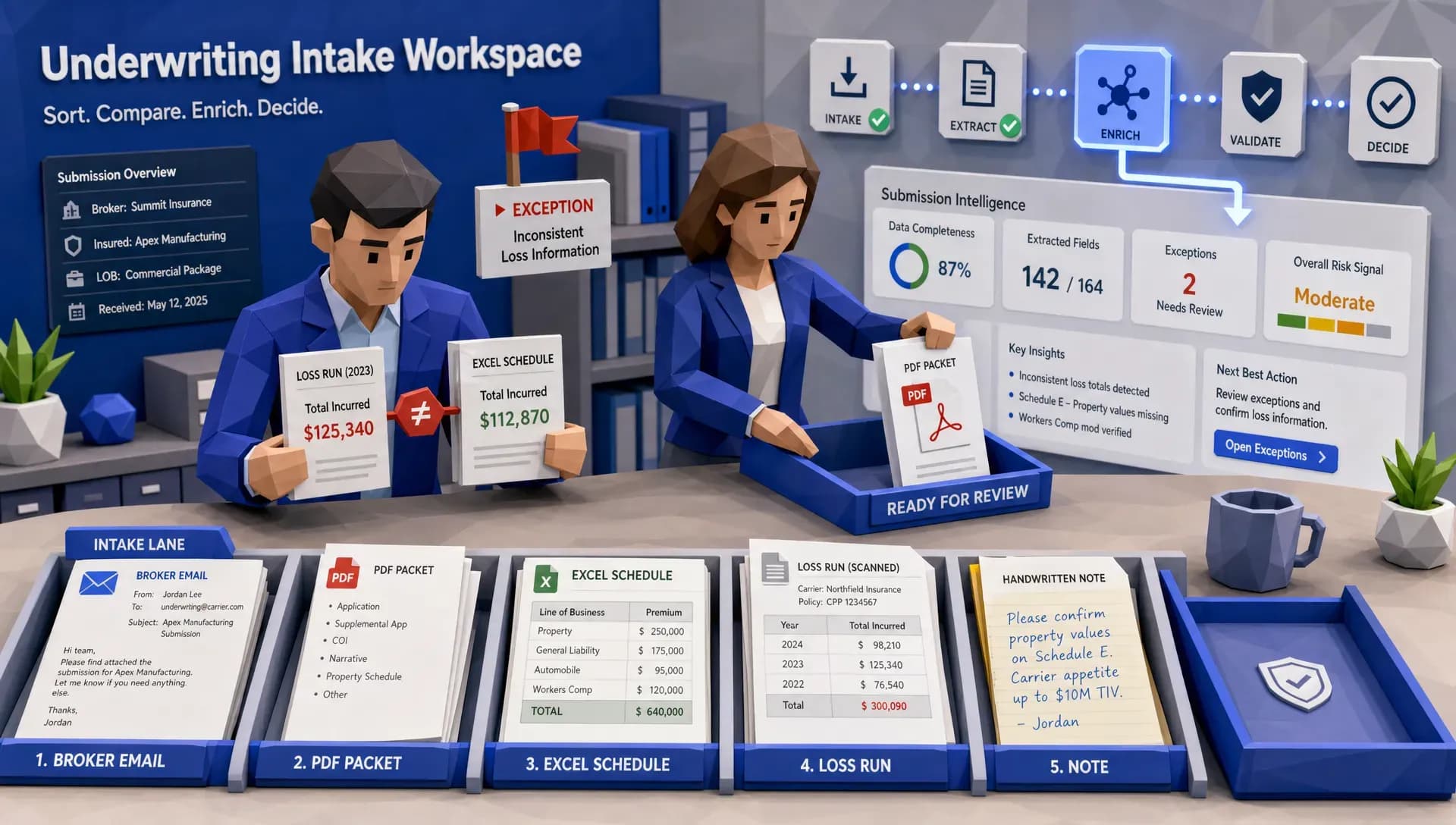
In underwriting, automation helps teams capture broker submissions, structure loss runs, validate fleet schedules, run eligibility checks, enrich risk data, and move cleaner files to decision. That means faster quotes and fewer preventable errors.
In claims, automation helps with FNOL intake, document gathering, image review, invoice validation, fraud flags, routing, and reporting. That means shorter cycle times, better customer communication, and stronger leakage control.
In customer service, automation helps answer routine questions, route complex issues, trigger follow-ups, and keep policyholders informed. That means fewer avoidable escalations and a better experience when customers are already stressed.
In operations, automation creates visibility. Leaders can see inputs, outputs, exceptions, turnaround times, SLA performance, and workload trends. That is the difference between managing by anecdote and managing by evidence.
Growth teams should also remember that discovery is changing outside the policy lifecycle. Brokers, partners, and buyers increasingly research vendors through search engines, review sites, and AI assistants. Tools like CapstonAI’s AI visibility platform can help companies understand how their brand appears in AI search environments, which is becoming another measurable part of growth strategy.
One underrated benefit of insurance software is benchmarking. Internal dashboards are useful, but internal data alone can become a hall of mirrors. You may know your quote turnaround improved by 18 percent, but is that good? Is your loss ratio trend market-driven or company-specific? Are your servicing SLAs competitive, or merely better than last quarter?
Inaza includes industry benchmarks from sources such as Aon, Munich Re, Howden, and more. That allows users to compare performance against broader market indicators and create stronger portfolio narratives.
For carriers and MGAs, this helps with strategic planning. For reinsurance brokers, it supports clearer renewal discussions. For executives, it helps identify where operational performance is genuinely strong and where the business is simply grading its own homework.
Benchmarks also help teams prioritize. If underwriting speed is ahead of market but claims leakage is lagging, you know where to focus. If quote abandonment is high despite strong pricing, customer communication may be the bottleneck. Growth gets easier when the data points to the next best move.
What to look for in insurance software that supports growth
If I were evaluating insurance software today, I would care less about buzzwords and more about operational fit. The right solution should help the business move faster, make cleaner decisions, and scale without creating a second layer of manual work.
A few questions are worth asking before signing anything:
- Can it integrate with the systems we already use?
- Can it handle the messy file types our brokers, claimants, and partners actually send?
- Can business users configure workflows without months of back and forth?
- Does it create usable data and analytics, or only automate tasks?
- Can it support underwriting, claims, service, and operations rather than one isolated process?
- Does it provide enough auditability and reporting for compliance, governance, and leadership visibility?
The best insurance industry software solutions do not force the business to choose between speed and control. They give teams a way to scale both.
Frequently Asked Questions
What are insurance industry software solutions? Insurance industry software solutions are platforms and tools that help insurers, MGAs, brokers, and claims teams manage workflows such as underwriting, claims, policy servicing, customer support, data enrichment, fraud detection, reporting, and analytics.
How do insurance software solutions support growth? They support growth by increasing operational capacity, reducing manual work, improving data accuracy, speeding up quotes and claims, lowering leakage, and giving leaders better visibility into performance across the business.
Do insurers need to replace legacy systems to benefit from automation? Not necessarily. Many modern platforms are designed to integrate with existing systems through APIs and connectors. A phased approach often works better than full-system replacement because it lowers disruption and delivers value faster.
Can software help MGAs grow without increasing headcount? Yes, especially when it automates repetitive tasks like data extraction, submission triage, eligibility checks, document handling, and reporting. Human experts still make key decisions, but they spend less time on administrative work.
What metrics should insurers track after implementing automation software? Useful metrics include quote turnaround time, claim cycle time, touchless processing rate, referral rate, error rate, cost per transaction, SLA performance, quote abandonment, leakage reduction, and customer satisfaction.
The bottom line: growth needs an operating system
Insurance growth is not won only in the boardroom, the broker meeting, or the rate filing. It is won in the everyday workflows that determine whether teams can handle more business with confidence.
If your underwriters are re-keying data, your adjusters are chasing documents, your fraud analysts are buried in false positives, and your executives are waiting for month-end reports, growth will always feel heavier than it should.
Inaza helps insurers, MGAs, and brokers automate underwriting, claims, customer service, and operations through configurable workflows, seamless system integration, support for all file types, real-time analytics dashboards, a unified data warehouse, and pre-built enrichment templates.
If you are ready to grow without adding operational chaos to the balance sheet, connect with Inaza and see how faster, cleaner insurance automation can support your next stage of growth.