I have a small confession from my underwriting days: I have spent more time than I care to admit hunting for one missing ZIP code on an ACORD form while a perfectly good submission sat in limbo.
Not a glamorous story. No dramatic boardroom. Just a PDF, a half-complete fleet schedule, and a broker email that said, “Please rush.” If you work in P&C, you know the feeling. Everyone wants speed, yet the submission arrives as a bundle of ACORD forms, spreadsheets, loss runs, screenshots, and the occasional document that looks like it was scanned through a potato.
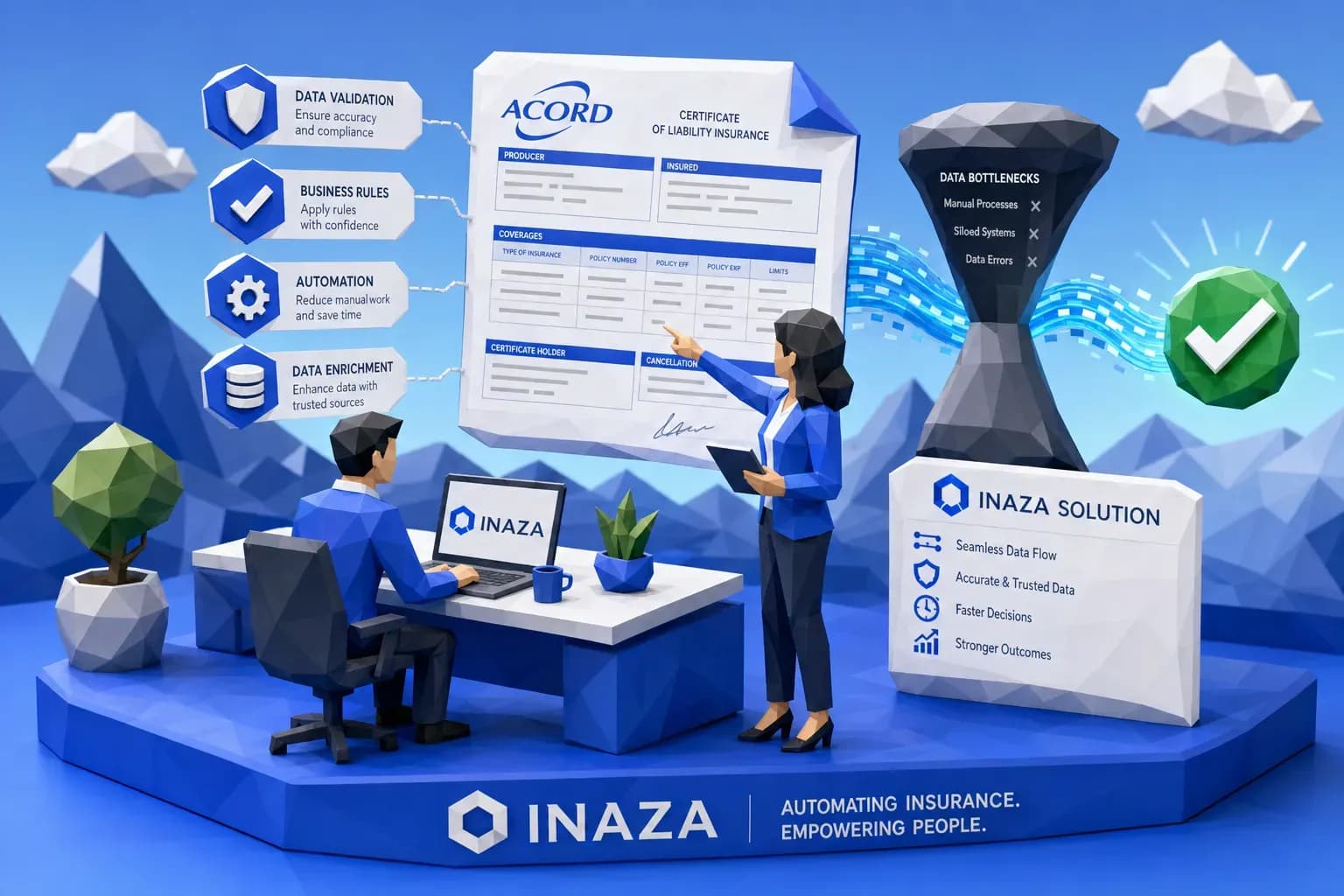
Here is my hot take: ACORD form automation fails when insurers treat the PDF as the destination. The real goal is not to fill or read an ACORD form faster. The real goal is to move clean, validated, enriched submission data into underwriting without making brokers, underwriters, or ops teams re-key the same information three times.
That is where ACORD form automation can actually speed submissions. Not in theory. Not in a “look, we extracted three fields” demo. In the messy reality of commercial auto, property, GL, workers’ comp, and specialty submissions.
Why ACORD submissions still slow everyone down
ACORD forms were created to standardize insurance data collection, and frankly, the industry would be far worse without them. They give brokers, MGAs, and carriers a common language for applicants, locations, vehicles, drivers, prior coverage, limits, losses, and exposures.
But standardization on paper does not automatically mean efficiency in operations.
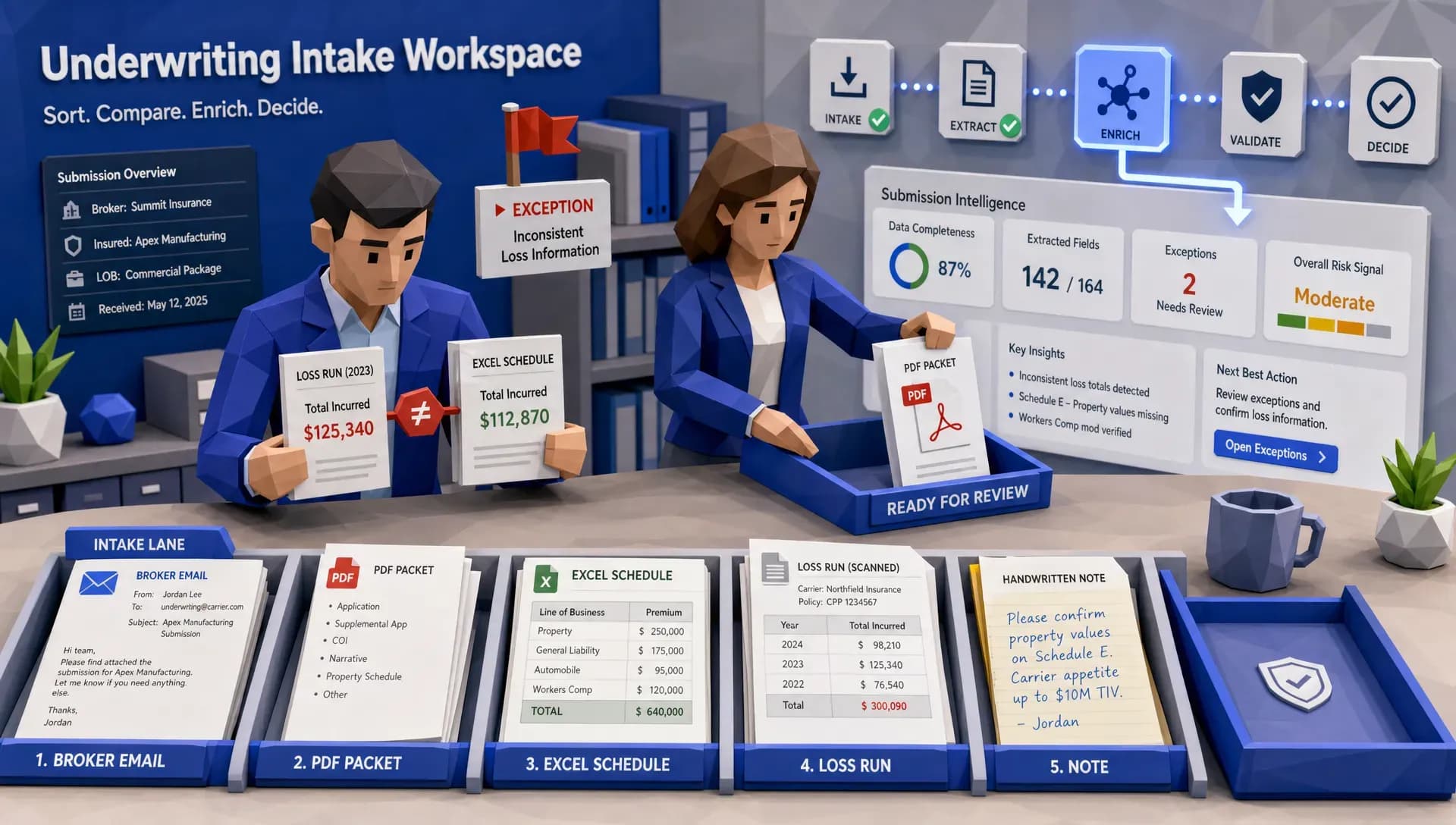
Most submission teams are not receiving one pristine form through one tidy channel. They are getting ACORD 125s, 126s, 127s, 130s, supplements, schedules, loss runs, prior policies, and email notes. Sometimes the broker fills out every field. Sometimes the answer is “see attached,” which is insurance’s version of “good luck.”
This matters because underwriting time is already under pressure. McKinsey has noted that underwriters can spend a large share of their time on administrative work rather than risk assessment. I have seen that play out on the ground. The underwriter wants to think about appetite, pricing, limits, loss trends, and portfolio fit. Instead, they are checking whether the named insured matches across documents.
That is not underwriting. That is clerical archaeology.
The PDF-filler trap
A lot of “ACORD automation” projects start with a reasonable idea: let’s auto-fill the forms. That can help brokers and internal teams, especially when the same customer data appears across multiple forms.
But auto-filling is only one slice of the problem.
If an insurer simply creates a nicer PDF faster, the submission may still be stuck. Why? Because the receiving team still has to validate the data, compare it against schedules and loss runs, enrich it with third-party sources, check appetite rules, and push it into rating or policy systems.
A faster PDF can still produce a slow quote.
I once reviewed a commercial auto submission where the ACORD 127 showed 43 vehicles, the attached spreadsheet showed 47, and the loss run appeared to reference 46. Nobody was being sneaky. It was just a mid-market account with moving parts, multiple locations, and a broker trying to pull everything together before lunch. But that mismatch triggered emails, follow-ups, and manual review.
The lesson was simple: the form was not the bottleneck. The unverified data was.
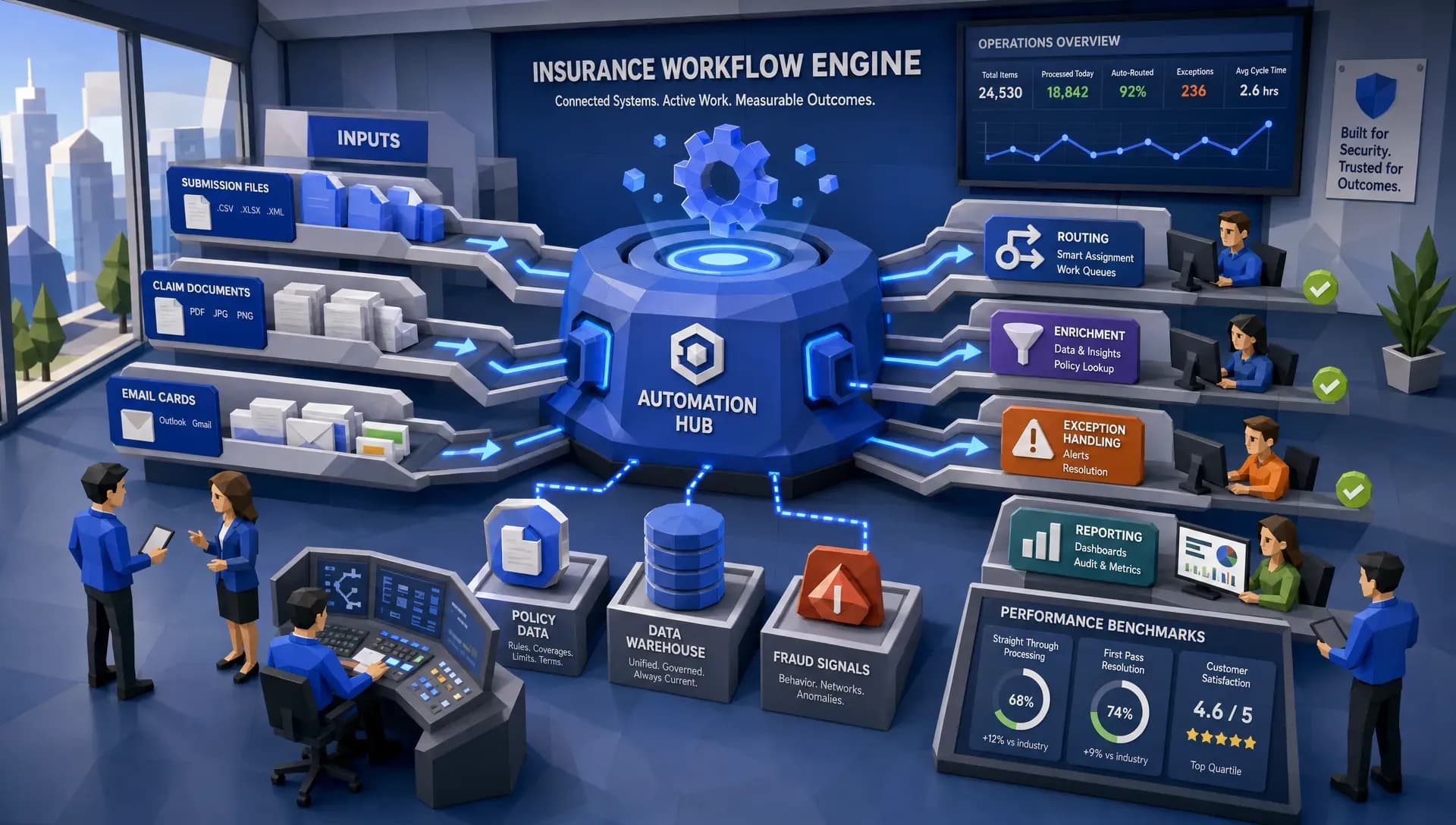
Good ACORD form automation should behave less like a PDF reader and more like a submission control tower.
That means it should handle the full intake journey, from document arrival to underwriting-ready data. In practice, that includes receiving files from the channels teams already use, identifying the document types, extracting the relevant fields, checking for missing or inconsistent information, enriching the submission where appropriate, and routing it to the right workflow.
The highest-performing workflows usually include a few core capabilities:
- Intake from email, portals, APIs, shared folders, and broker uploads
- Support for PDFs, spreadsheets, images, documents, and mixed submission packages
- Extraction from common ACORD forms and supporting schedules
- Validation across forms, attachments, and internal rules
- Data enrichment through approved external sources
- Routing based on appetite, completeness, risk signals, and authority levels
- Structured output into underwriting, rating, CRM, or policy administration systems
- Reporting on bottlenecks, missing data, and submission quality
Notice what is missing from that list: forcing everyone to abandon their existing process on day one.
That is important. Brokers do not want another portal login with a password reset every second Tuesday. Underwriters do not want to learn a new dance step while trying to clear a backlog. Ops teams do not want a six-month science project. The automation has to meet the business where it already works, then quietly remove the friction.
There is a lesson here from digital growth teams too. Every extra step in a customer or broker journey creates drop-off. Agencies focused on marketing automation and conversion-focused digital experiences have been saying this for years, and insurance distribution should pay attention. If submission intake feels like a maze, people will work around it.
The speed is in pre-validation
If I could wave one magic wand over submission operations, I would not start with “instant quote.” I would start with “instant completeness check.” Less flashy, far more useful.
Pre-validation is where ACORD form automation starts paying for itself. Before an underwriter touches the file, the system should identify obvious issues such as missing FEINs, inconsistent named insureds, blank garaging locations, invalid VIN lengths, mismatched driver counts, incomplete prior carrier details, or loss runs that do not cover the requested period.
This is the work that clogs queues.
A clean submission can move quickly. A dirty submission creates a ping-pong match between broker, assistant underwriter, underwriter, and sometimes the insured. I have seen a single missing driver date of birth delay an otherwise straightforward account by two days. Not because anyone was incompetent. Because the process depended on humans noticing, emailing, waiting, and remembering.
Automation should catch that kind of issue immediately.
And here is the slightly uncomfortable truth: a fast “incomplete” response is better than a slow “maybe.” Brokers would rather know what is missing while the account is still fresh than discover the problem after the market has gone quiet.
ACORD data becomes more valuable when enriched
An ACORD form is a starting point. The data becomes much more useful when it is enriched and checked against reliable sources.
Take commercial auto. A broker may provide vehicle details, garaging information, drivers, prior coverage, and loss history. That is helpful. But underwriting often needs more context: VIN characteristics, driver record indicators, hazard data, vehicle history, territory signals, prior insurance validation, and other approved sources depending on the product and jurisdiction.
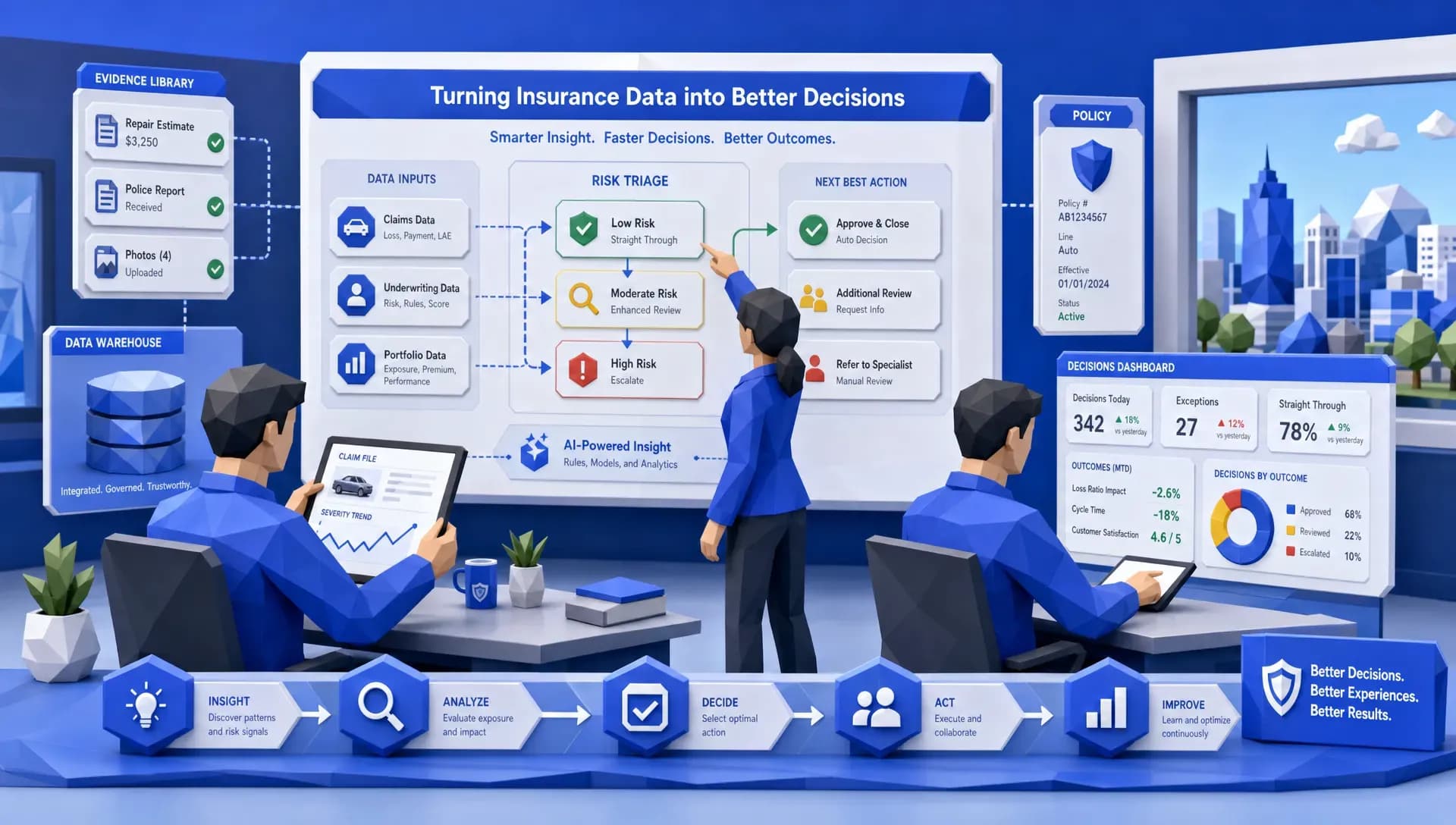
This is where automation moves from data entry to decision support.
At Inaza, our platform includes pre-built API templates for data sources such as Verisk, LexisNexis, HazardHub, and others. The point is not to bury underwriters in more data. They already have enough tabs open to heat a small apartment. The point is to bring the relevant data into the workflow at the moment it is needed.
That matters for submission speed because underwriters should not have to leave their queue to chase basic verification. If enrichment reveals a clean fit, the submission can move forward faster. If enrichment flags an issue, the file can be routed for review with context already attached.
Brokers care about speed, but they really care about certainty
When brokers ask for faster submissions, they are often asking for something more specific: fewer black holes.
They want to know whether the market received the submission, whether it is complete, whether it fits appetite, whether additional information is needed, and when they can expect a response. Speed helps, obviously. But visibility is what keeps relationships healthy.
This is where ACORD form automation can improve the broker experience without turning the insurer into a 24-hour concierge desk.
A good automated workflow can acknowledge receipt, identify missing information, route eligible submissions, and produce status updates. It can also help teams avoid duplicated work, such as two assistants reviewing the same form or an underwriter asking for information already buried in an attachment.
That kind of operational hygiene sounds boring until you measure it. Then it becomes beautiful.
The hidden advantage: submission intelligence
Most insurers think about ACORD form automation as a way to reduce manual work. That is a good reason. But the bigger opportunity is data visibility.
Every submission contains operational signals. Which brokers send complete packages? Which forms are most often missing key fields? Which lines of business create the most rework? Which appetite rules are generating the most referrals? Where do quote delays actually happen?
If automation extracts data but throws away the process intelligence, you miss half the value.
This is one of the reasons Inaza has a data warehouse underpinning the platform. Workflow automation is the start. Capturing key data points from those workflows lets insurers build dashboards for submission quality, turnaround time, triage outcomes, and operational performance. Over time, that creates a much clearer picture of what is happening across underwriting operations.
For carriers, MGAs, and brokers, that visibility is gold. It supports capacity planning, broker management, portfolio analysis, audit readiness, and even reinsurance narratives. When you can compare performance against industry benchmarks and show how portfolios are behaving, renewal and reinsurance conversations become far less painful.
Nobody ever complained because they had too much clean evidence.
Do not start by automating every ACORD form in the building. That is how good ideas become committee hobbies.
Start with a high-volume, high-friction submission path. Commercial auto is often a strong candidate because ACORD forms, vehicle schedules, driver lists, loss runs, and prior coverage documents create plenty of opportunities for mismatch. Workers’ comp, general liability, property, and package business can also make sense depending on where the backlog lives.
Before automating, establish a baseline. How long does a submission take from receipt to first review? How many touchpoints occur before quote? How often does the team ask for missing information? How many fields are re-keyed? How many submissions are declined only after manual review?
Then automate one workflow deeply enough to prove the point. Intake, extract, validate, enrich, route, and report. If the project stops at extraction, you will get some savings. If it reaches the workflow layer, you will feel the difference.
This is also where insurers should be honest about integration. A shiny tool that does not connect to the systems of record will eventually become another system to babysit. The better path is to connect automation into the existing underwriting and policy operations stack, then improve from there.
For a deeper view of why data quality matters before automation, I recommend reading Inaza’s article on fixing the underwriting data quality problem. It pairs well with this topic because poor data is where submission speed goes to die.
Inaza’s view is straightforward: ACORD form automation should reduce re-keying, speed submissions, and create better underwriting data without forcing teams through painful retraining.
The platform supports all file types and integrates with existing systems, so teams can automate around the workflows they already use. Inaza also offers customizable automation workflows and more than 250 workflow templates, which helps insurers and MGAs move quickly without starting from a blank page.
The workflow layer handles the practical jobs that matter: capturing submission data, structuring it, validating it, enriching it through connected sources, and routing it for underwriting or operations review. Behind that, the unified data warehouse gives teams reporting and analytics, so the business can see where work is flowing, where it is stuck, and where automation is improving outcomes.
One differentiator I like, especially as someone who has sat through too many “pilot planning” meetings, is the ability to deploy production-ready workflows quickly. Inaza is built to help insurers configure and launch useful workflows without the usual endless proof-of-concept shuffle.
That matters because submission backlogs do not wait politely while a steering committee finds a steering committee.
Frequently Asked Questions
What is ACORD form automation? ACORD form automation is the use of software to capture, extract, validate, enrich, and route data from ACORD forms and related submission documents. The best workflows go beyond reading PDFs and move structured data into underwriting and policy systems.
Does ACORD form automation replace underwriters? No. The point is to remove administrative work so underwriters can focus on risk selection, pricing, referrals, and broker relationships. Automation should handle repetitive checks and data movement, while underwriters stay in control of judgment-heavy decisions.
Which ACORD forms should insurers automate first? Start with the forms tied to your highest-volume or slowest submission workflows. For many P&C teams, that may include ACORD 125 for commercial applications, ACORD 127 for business auto, ACORD 126 for general liability, or ACORD 130 for workers’ compensation.
Can automation handle messy submissions with attachments? Modern automation can ingest mixed submission packages, including PDFs, spreadsheets, emails, and supporting documents. Accuracy improves when the workflow includes validation rules, cross-document checks, and human review paths for exceptions.
How quickly can insurers see value from ACORD form automation? Value depends on the complexity of the workflow and integrations, but many insurers can start by automating a specific high-friction submission path rather than waiting for a full-system replacement. The key is to measure baseline turnaround time, re-keying, missing data rates, and referral volume before rollout.
ACORD forms are not the enemy. Manual rework is.
If your automation strategy begins and ends with “read the PDF,” you will save a little time and still frustrate everyone downstream. If your strategy turns ACORD data into validated, enriched, workflow-ready information, submissions move faster, brokers get clearer answers, and underwriters spend more time underwriting.
That is the version of ACORD form automation worth building.
If you want to see how Inaza can help your team automate submissions, reduce re-keying, and create cleaner underwriting workflows, visit Inaza and let’s talk about the submission process that is slowing you down most.