Here is my slightly spicy view after 10 years around claims desks, underwriting referrals, broker renewal scrums, and the occasional “can we get this by Friday?” email: one claim rarely stalls an account because it is expensive. It stalls an account because nobody can explain it clearly enough.
That is the thing about a commercial insurance claim. It has tentacles. The loss may sit in the claims system, but the consequences wander into underwriting, renewal pricing, broker communication, risk engineering, legal review, finance, and sometimes reinsurance conversations. Like a coffee spill in the copy room, it somehow reaches every shoe.
I once watched a contractor account sit in renewal limbo for nearly two weeks because of one open auto liability claim. The claim was not catastrophic. Nobody was calling the CEO at midnight. But the reserve had moved twice, the liability note was vague, the police report was missing, and the broker needed a clean explanation before marketing the account. The underwriter was not being difficult. They were being asked to price a moving target with half the darts missing.
That is how one claim turns into an account-wide traffic jam.
A claim becomes an account event the moment it changes uncertainty
In personal lines, a claim often affects one policy and one customer relationship. In commercial lines, one claim can change the view of an entire account. A single loss can raise questions about management controls, fleet safety, premises maintenance, subcontractor oversight, hiring practices, documentation habits, and whether the original underwriting assumptions still hold.
For a commercial account, the claim is not only a payment question. It is a signal.
Did the claim happen because of bad luck, poor risk controls, or a pattern we failed to see? Is the reserve stable or wishful thinking? Is counsel involved? Are there coverage issues? Is the claimant represented? Does the loss match what we thought we were underwriting six months ago?
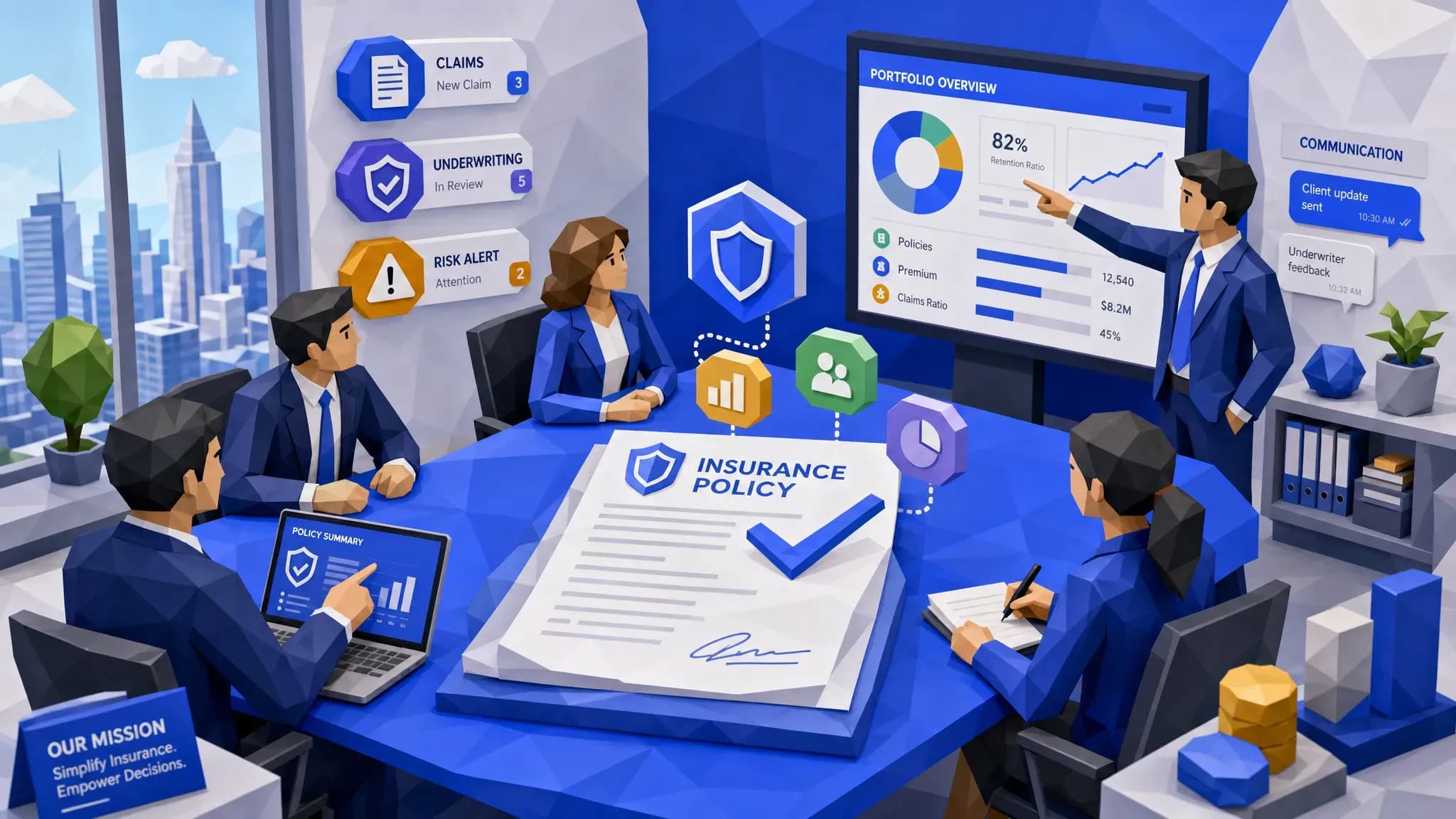
Those questions matter because underwriters, brokers, claims adjusters, and portfolio managers are all trying to protect different parts of the same relationship. The broker wants a clear story. The underwriter wants confidence. The adjuster wants the right outcome. The carrier wants a defensible file. The insured wants service without feeling like every renewal has become a courtroom drama.
When the answers live in different systems, emails, PDFs, notes, invoices, and third-party portals, the account stalls.
The bottleneck is usually ambiguity, not severity
Here is the hot take: a big claim with a clear story is often easier to manage than a small claim with messy facts.
A $250,000 property loss with a clean cause of loss, photos, adjuster notes, coverage position, reserve rationale, and remediation plan can be priced, explained, and negotiated. Nobody loves it, but people can work with it.
A $18,000 general liability claim with missing incident reports, unclear witness statements, shifting injury descriptions, and a reserve that nobody wants to defend can eat days. I have seen small claims do more damage to renewal momentum than large claims because they create doubt. Doubt is expensive.
Picture a small service business, maybe a local facial studio like Lumina Skin Sanctuary or a boutique fitness studio. A customer slips near the entrance. At first, it looks routine. Then the adjuster cannot find the floor maintenance log. The claimant mentions prior back pain. The location manager says there was a wet floor sign, but no one has a photo. The underwriter reviewing renewal now has to ask whether this was a one-off incident or evidence of weak premises procedures.
That is the moment a claim stops being “claims’ problem” and becomes an account question.
Why one commercial insurance claim can freeze renewal terms
Renewal underwriting is part art, part math, and part detective work with a deadline. An open claim with incomplete information makes all three harder.
Reserves are usually the first issue. If the reserve is moving, underwriters may hesitate to finalize pricing. A claim reserved at $25,000 today and $125,000 next month changes the account’s loss picture. If the account has a large deductible or collateral component, finance may also care. If the account is part of a program or delegated authority arrangement, referral thresholds may come into play.
Then comes the loss run problem. I have a personal grudge against loss runs that say something like “GL claim, open, $40,000” and then act like they have done their job. That is not a story. That is a fortune cookie with a dollar sign.
A useful claim summary explains what happened, why it matters, what has changed, and what is expected next. Without that, the broker cannot defend the account in market, the underwriter cannot distinguish risk from noise, and the insured may feel punished without understanding why.
This is where administrative drag gets very real. McKinsey has noted that underwriters can spend around 60 percent of their time on administrative tasks rather than risk assessment. That tracks with what I have seen. A messy claim does not only slow claims. It pulls underwriters into document chasing, claims staff into renewal explanations, and brokers into follow-up loops that should have been unnecessary.
The stall spreads across the account faster than people think
Once a claim is unclear, every function starts adding its own hold.
The claims team may be waiting on a police report, repair invoice, medical update, attorney demand, or expert review. The underwriter may be waiting on claims to confirm liability, reserve adequacy, or whether corrective action was taken. The broker may be waiting for a narrative they can put in front of markets. Operations may be waiting for data cleanup so the loss run does not misclassify the exposure. Fraud teams may be waiting to confirm whether red flags are meaningful or noise.
None of these teams are wrong. That is what makes this so frustrating. Everyone is asking fair questions. The problem is that the questions are asked sequentially, manually, and often from different versions of the truth.
Fraud indicators make the stall even more sensitive. The FBI has long warned that insurance fraud creates major costs across the insurance system, so carriers cannot simply wave suspicious claims through for the sake of speed. But a fraud flag without context can become a blunt instrument. It slows the account without telling anyone what needs to happen next.
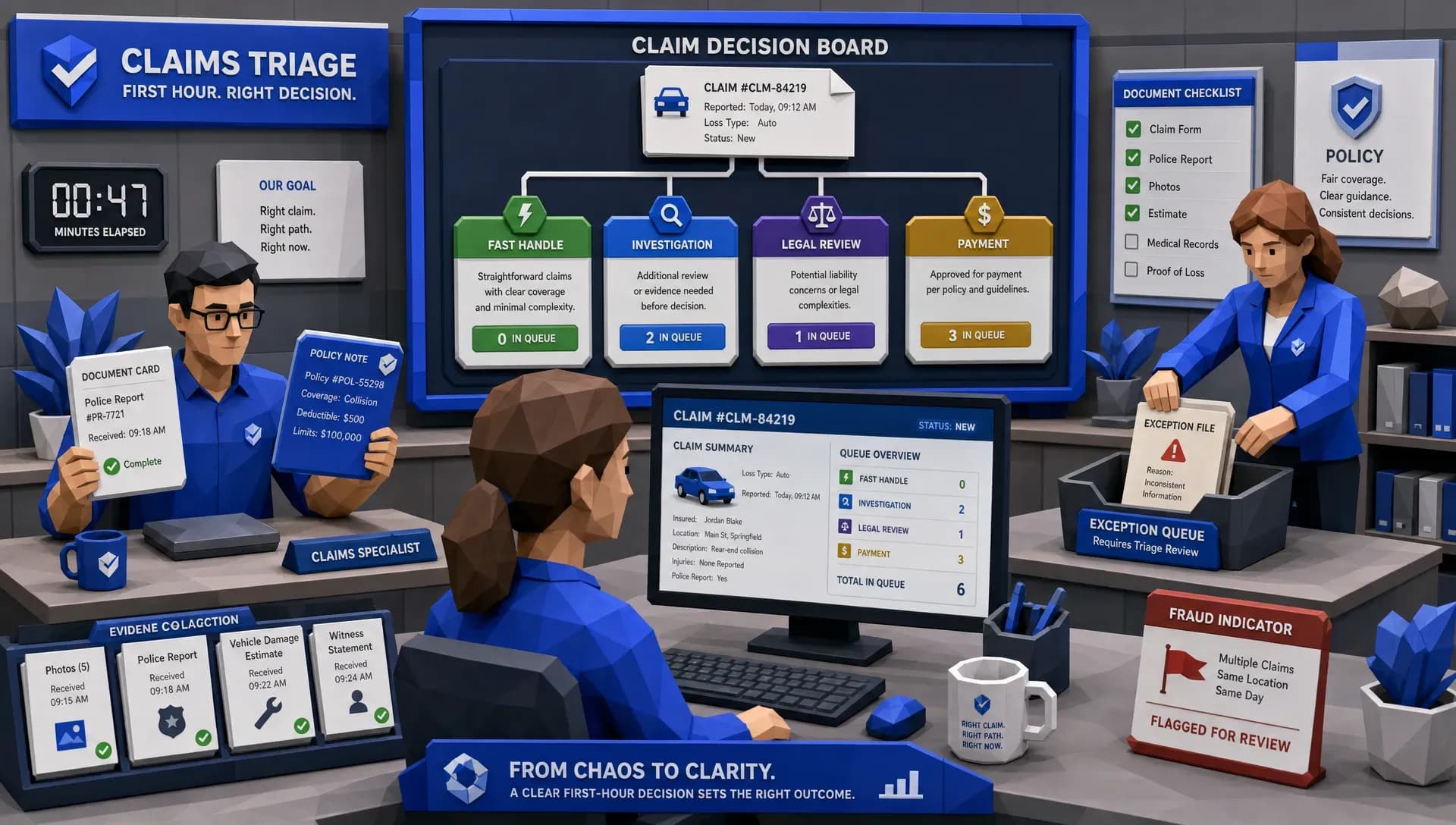
Good triage should separate “this needs investigation” from “this simply needs documentation.” Those are very different problems.
The missing piece is an account-ready claim narrative
In commercial insurance, a claim file and an account narrative are related, but they are not the same thing.
A claim file is built to manage the claim. It contains notes, documents, estimates, payments, reserves, correspondence, and legal activity. An account narrative is built to help the business make decisions. It translates claim activity into underwriting and relationship impact.
An account-ready claim narrative should answer a few practical questions quickly:
- What happened, and what exposure does it relate to?
- What is the current reserve, and why is it set there?
- Is liability accepted, disputed, or still under review?
- Are there coverage issues, litigation signals, or fraud concerns?
- What documents are missing, and who owns the next action?
- What risk control or operational change has the insured made?
- How should this claim affect renewal, pricing, terms, or referrals?
That list looks simple. In real life, those answers are usually scattered across adjuster notes, attachments, invoices, emails, image files, call transcripts, and broker updates. If you have ever searched three inboxes for “final demand.pdf,” you know the pain. If you have searched and found four versions of it, congratulations, you have met insurance operations.
The 24 to 48 hour window matters more than people admit
The first two days after a claim is reported often decide whether the account will glide or grind.
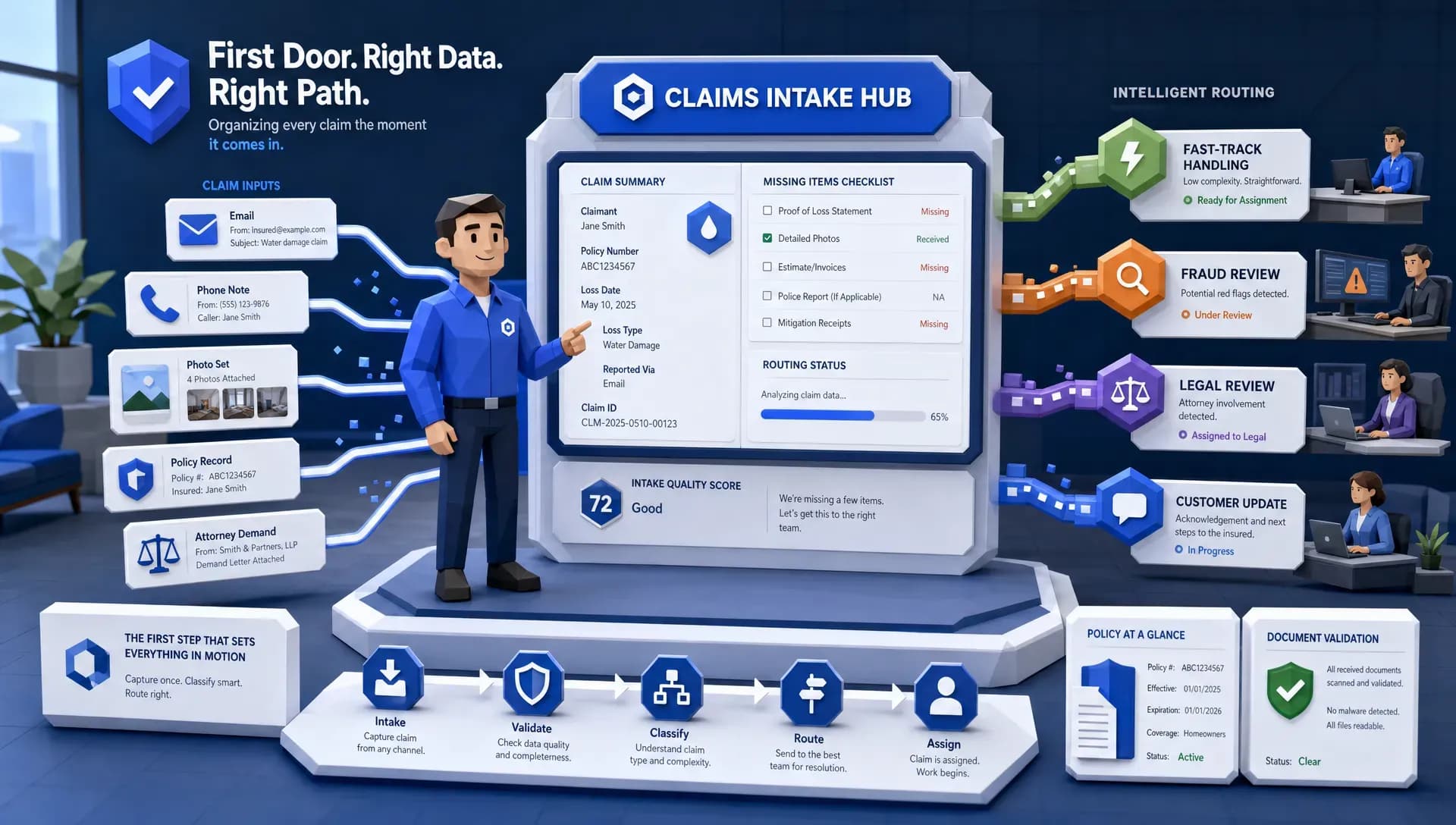
If the First Notice of Loss is clean, documents are collected, data is structured, and the claim is categorized correctly, downstream teams start with a decent map. If the intake is messy, the account inherits that mess. By renewal time, the original missing detail may have multiplied into five open questions and three “per my last email” threads.
This is especially true for MGAs and carriers managing commercial auto, premises liability, property, and package business. A fleet claim may affect driver acceptability, vehicle scheduling, garaging assumptions, and risk controls. A property claim may raise questions about maintenance, occupancy, protective safeguards, or catastrophe exposure. A liability claim may trigger concerns about contracts, waiver practices, incident reporting, or staff training.
The faster the claim can be connected back to the account, the faster teams can decide whether it is routine, concerning, or strategically important.
Automation should reduce the fog, not remove judgment
Let me be clear: I do not want software negotiating a complex liability case with all the bedside manner of a parking meter. Commercial claims need adjuster judgment, coverage expertise, legal sense, and sometimes a very patient human being on the phone.
But I also do not want experienced claims professionals spending their afternoon copying data from a PDF into a claim note so an underwriter can copy it again into a renewal worksheet. That is not judgment. That is expensive typing.
The right automation does the unglamorous work well. It captures data from documents, emails, images, invoices, loss runs, and claim notes. It standardizes key fields. It routes exceptions. It flags missing information. It enriches the file through connected data sources. It gives underwriters, adjusters, fraud teams, and brokers a shared view of what is known, what is missing, and what needs action.
This is where Inaza fits the problem. Inaza’s insurance automation platform helps insurers, MGAs, and brokers automate claims, underwriting, customer service, and operational workflows while integrating with existing systems. The important part, in my view, is the data layer underneath. When workflows capture clean claim and account data into a unified warehouse, the organization can produce dashboards, track bottlenecks, and build better renewal or portfolio narratives.
That matters because the goal is not only to close one claim faster. The goal is to stop one claim from freezing the whole account.
Three account-saving workflows I would prioritize
Treat every open claim as renewal data
If a claim is open within the renewal window, it should automatically feed an account review workflow. That does not mean every claim deserves senior referral. It means the basic facts should be visible without forcing the underwriter to chase claims for updates.
A clean workflow can show claim age, reserve movement, cause of loss, litigation status, missing documents, and next action. It can also show whether the claim changes eligibility rules, referral thresholds, pricing inputs, or risk control recommendations.
Build claim narratives before the broker asks
The best broker communication happens before the broker has to beg for it. When an account has a notable claim, the carrier or MGA should be able to produce a concise explanation: what happened, what is being done, why the reserve is reasonable, and what the insured has changed.
That narrative is especially useful when marketing the account, negotiating renewal terms, or explaining why a surcharge, deductible change, or coverage adjustment is appropriate. Nobody enjoys bad news, but clear bad news beats vague silence every time.
Separate true risk from operational noise
Not every claim should damage an account’s standing. Some losses are random. Some are well-managed. Some look ugly because the data is poor.
A connected workflow helps separate claims that reveal risk from claims that reveal documentation gaps. That distinction is huge. If an account has a real safety issue, act on it. If the problem is missing data, fix the workflow before penalizing the insured or frustrating the broker.
What leadership should measure
If you want to know whether claims are stalling accounts, do not only measure claim cycle time. Measure account impact.
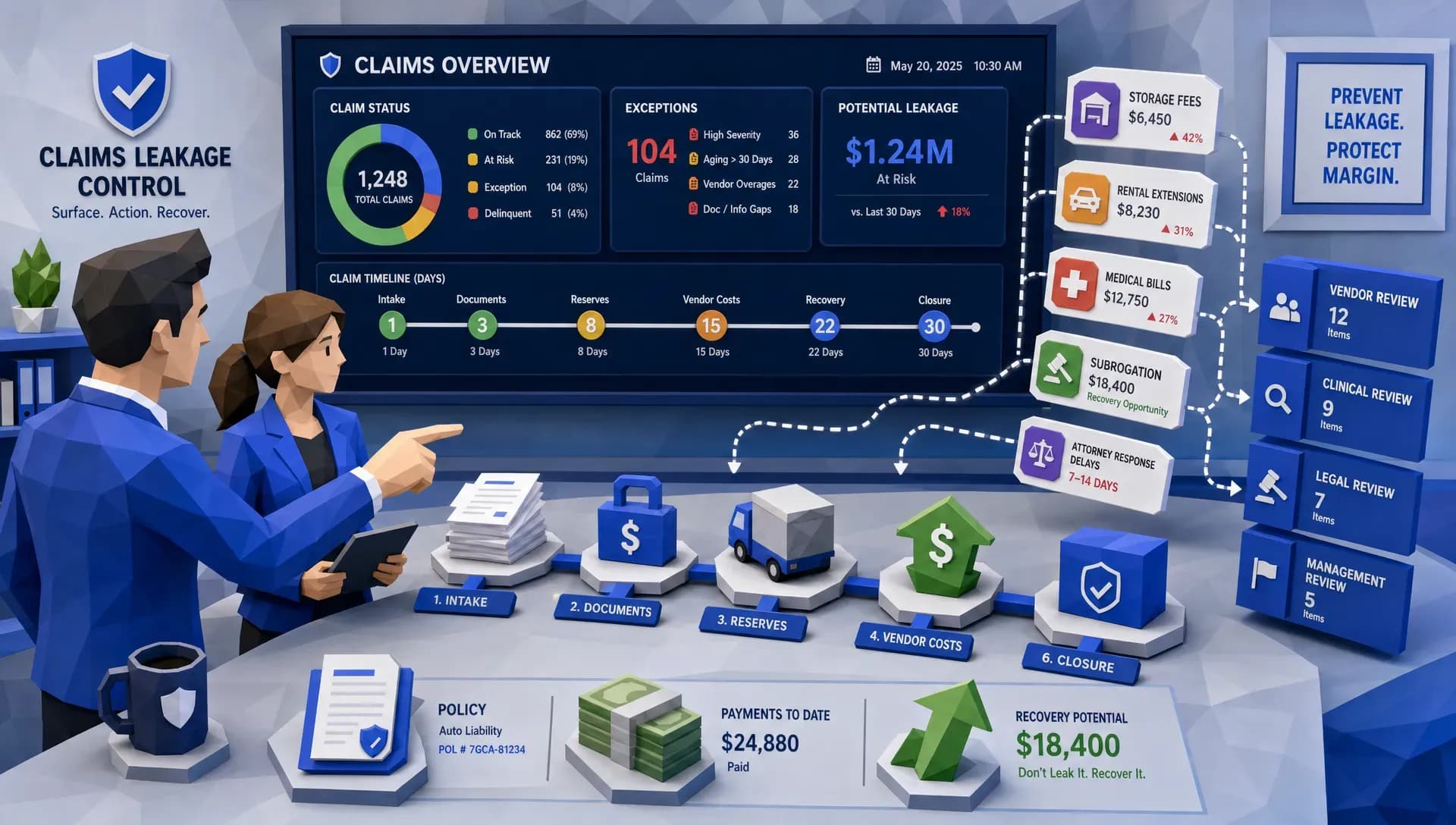
Look at how many renewals are delayed because claim data is incomplete. Track open claims within 90 days of renewal. Measure how often reserves change after terms are issued. Watch the time between broker request and claim narrative delivery. Track how many referrals are triggered by missing information rather than true risk concerns.
Those metrics tell you where the real friction lives.
This is also where industry benchmarks and portfolio dashboards become valuable. If you can compare claim patterns, reserve development, workflow cycle times, and operational performance against internal goals or market benchmarks, renewal and reinsurance discussions become more evidence-based. A reinsurer does not want vibes. They want a coherent story supported by data.
The real fix is connecting claims and underwriting sooner
A commercial account should not have to wait until renewal for claims information to matter. Claims and underwriting should be in a continuous feedback loop.
When a claim reveals a risk characteristic, underwriting should learn from it. When underwriting assumptions prove accurate, claims outcomes should validate them. When claim data shows a pattern across a book, portfolio managers should see it before loss ratio tells the story six months late.
That is the practical future of insurance operations: fewer handoffs, cleaner data, better timing, and more room for people to use judgment where judgment actually matters.
One commercial insurance claim can stall an entire account. But in most cases, the claim is only the spark. The real fire is fragmented information.
Frequently Asked Questions
What is a commercial insurance claim? A commercial insurance claim is a request for coverage under a business insurance policy, such as general liability, commercial auto, property, workers’ compensation, professional liability, or a package policy. The claim may involve damage, injury, legal liability, lost income, or another covered event.
Why can one commercial insurance claim delay an entire account renewal? One claim can delay renewal because it may affect pricing, reserves, eligibility, coverage terms, broker marketing, referral authority, and risk control requirements. If the facts are unclear or documents are missing, teams often pause account decisions until the claim is better understood.
Should every open claim be escalated to underwriting? No. Routine claims should not create unnecessary work. The better approach is to define triggers, such as reserve movement, litigation, coverage questions, fraud indicators, severe injury, repeat losses, or claims close to renewal. Those triggers help teams focus attention where it matters.
How can insurers prevent claims from stalling accounts? Insurers can prevent stalls by automating document intake, standardizing claim summaries, connecting claims and underwriting systems, tracking missing information, and creating account-ready claim narratives before renewal discussions begin.
Can automation replace claims adjusters or underwriters in this process? No, and it should not try to. Automation is best used to collect, structure, route, and summarize information so adjusters and underwriters can make faster, better-informed decisions.
Stop letting one claim freeze the account
If one claim can slow pricing, renewal, broker communication, and portfolio decisions, the answer is not another spreadsheet. The answer is a connected workflow that turns claim activity into usable account intelligence.
Inaza helps insurers, MGAs, and brokers automate claims and underwriting workflows, capture structured data, integrate with existing systems, and surface real-time operational insights. If your teams are still chasing claim updates across inboxes, PDFs, portals, and loss runs, it may be time to make the account view a lot less mysterious.
Explore Inaza to see how connected insurance automation can help keep commercial accounts moving.