A triage desk in insurance used to feel like an airport departure board after a thunderstorm. Everything was delayed, everyone had a reason to be first, and the poor adjuster or underwriter had to decide which blinking light mattered most.
I remember sitting near a claims team years ago where the unofficial priority system was a mix of reserve size, who called twice before lunch, and which file had the angriest subject line. Charming? In a sitcom, maybe. In a claims operation, it is how good people end up spending half the day on the wrong work.
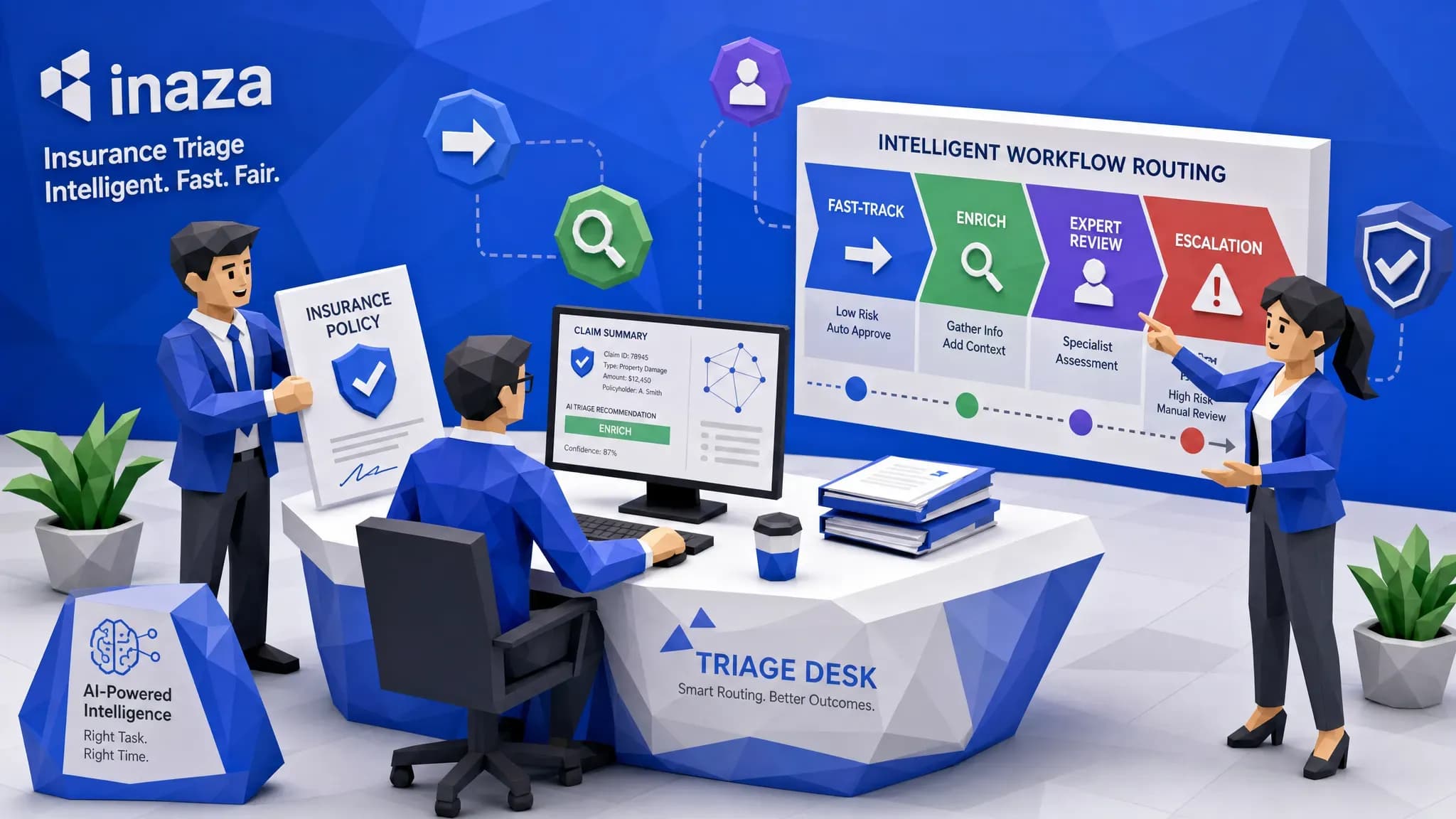
My hot take: the biggest benefit of predictive analytics is not the prediction itself. The real value is better triage. The best predictive analytics insurance teams use improves triage by turning messy intake into clear next actions: fast-track, enrich, assign to an expert, or escalate.
That sounds simple. It is not. But when it works, your experienced people stop digging through routine files and start spending their time where judgment actually changes the outcome.
What triage really means in insurance
In insurance, triage is the moment you decide what happens next.
For a claims team, it might mean deciding whether a fender bender can move toward straight-through handling, whether a bodily injury claim needs early senior adjuster review, or whether a suspicious invoice deserves fraud attention.
For underwriting, triage might mean deciding which submissions are complete enough to quote, which need enrichment, which should be declined, and which deserve a closer look because the surface story does not match the risk.
For customer service and operations, triage decides whether an email is an endorsement request, a cancellation threat, a coverage question, a complaint, or a policy event that should trigger a downstream workflow.
The old way relied on static rules and human sorting. Rules still matter, especially for compliance and appetite. But static rules struggle with the messy middle: the claim that looks ordinary until the medical notes arrive, the fleet submission where the VINs look fine but the garaging pattern is odd, or the attorney demand that seems routine until the deadline is two days away.
That messy middle is where predictive analytics earns its keep.
Why manual triage breaks under pressure
Insurance teams are not short on effort. They are short on usable signal at the exact moment they need to make a routing decision.
McKinsey has noted that underwriters can spend around 60 percent of their time on administrative work, rather than risk assessment. Anyone who has watched an underwriting assistant copy data from a PDF into a rating tool knows that number passes the smell test.
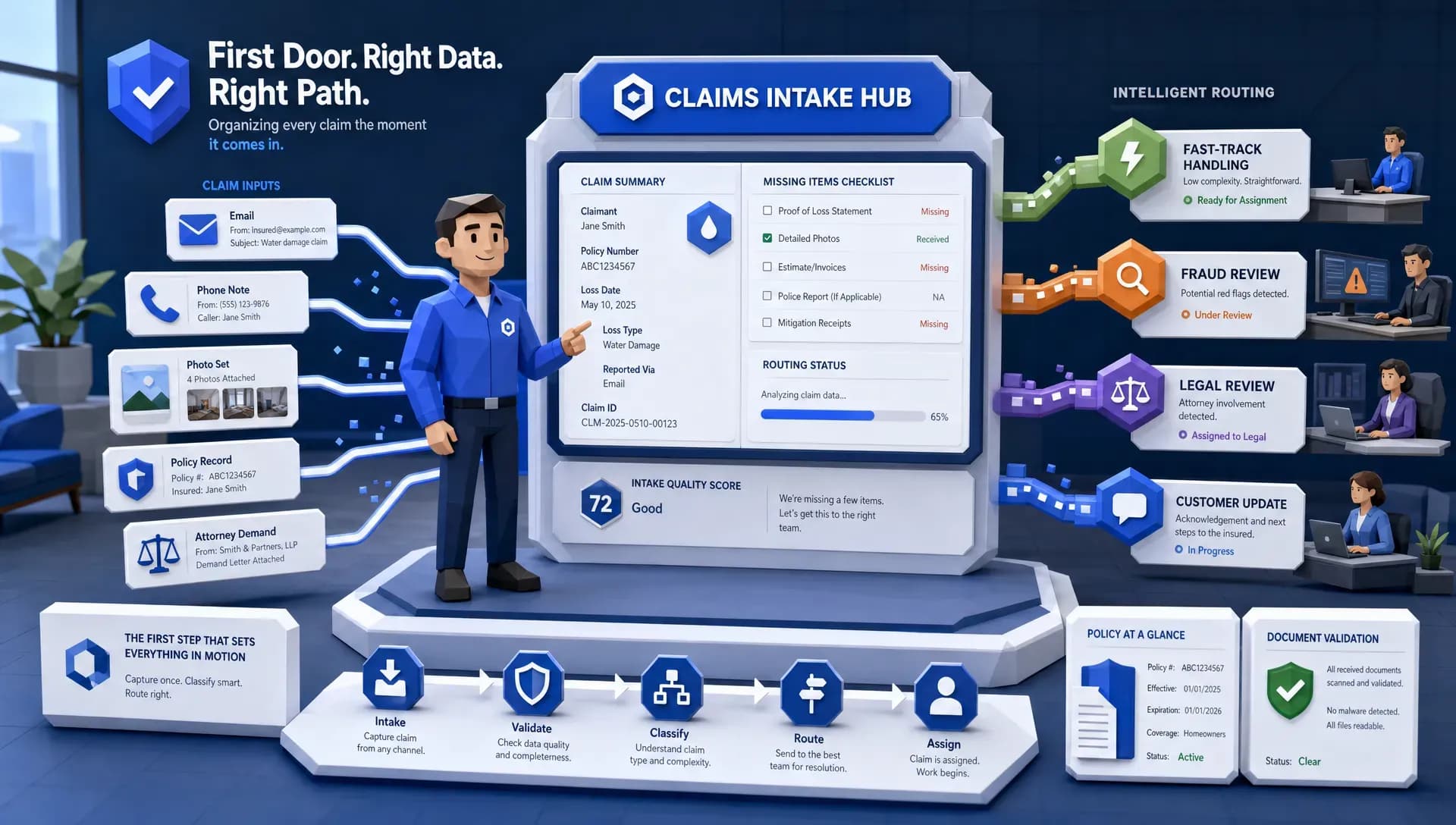
Claims has the same disease, different symptoms. Intake arrives through portals, emails, calls, PDFs, images, invoices, police reports, repair estimates, medical records, and sometimes a voicemail that sounds like it was recorded inside a washing machine. By the time a human sorts the file, validates the data, and chases missing context, the clock has already started to hurt the customer experience.
J.D. Power’s 2024 U.S. Auto Claims Satisfaction Study highlighted how auto claims cycle time and communication continue to shape satisfaction. That should surprise nobody. When a policyholder is waiting for a car repair, “we are reviewing your file” is not exactly poetry.
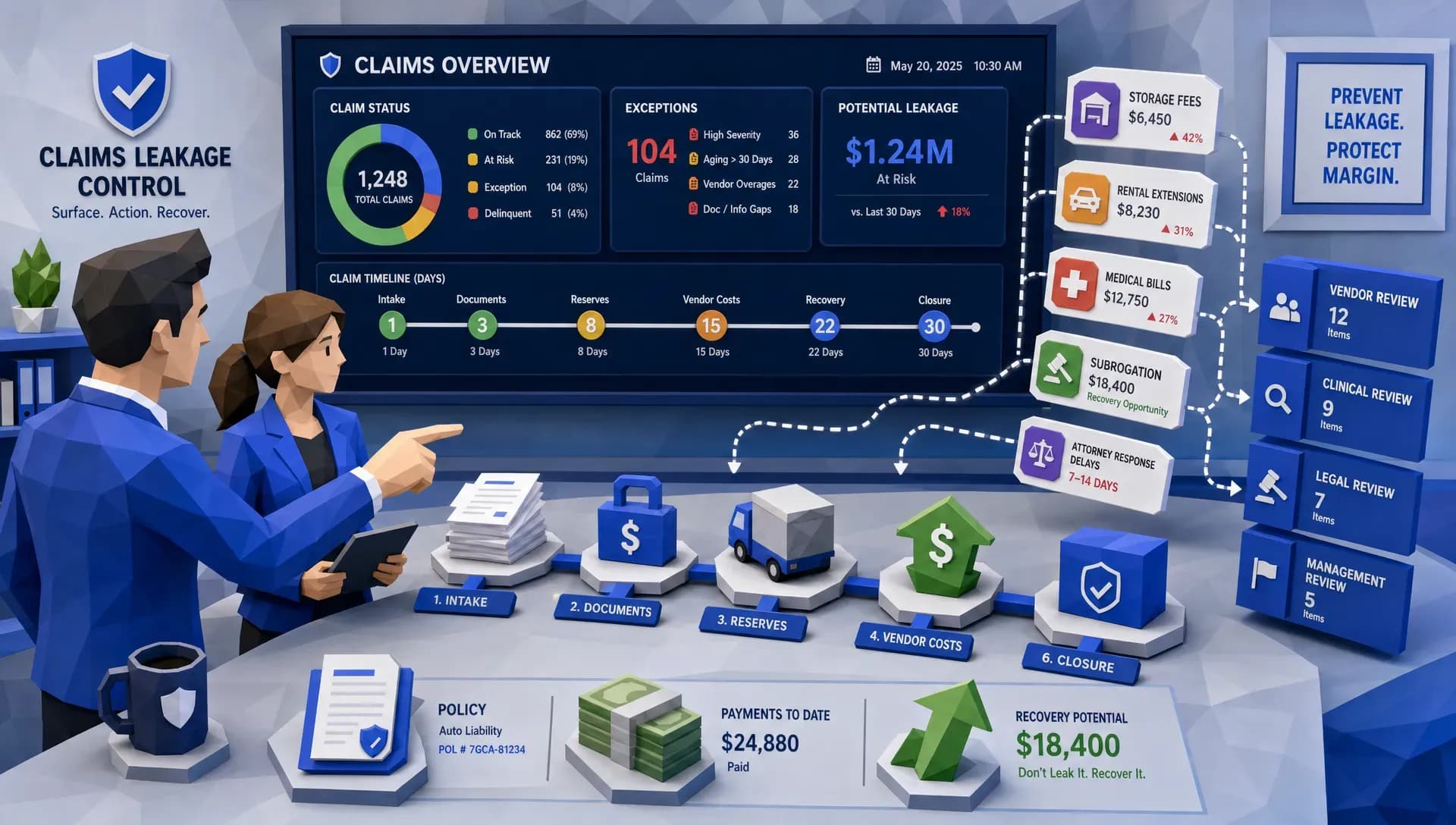
Fraud adds another layer. The FBI estimates insurance fraud costs the U.S. more than $300 billion each year. Meanwhile, digital fraud is getting easier to attempt. Verisk’s 2025 fraud report points to growing carrier concern around AI-enabled fraud, including manipulated documents and synthetic evidence.
So, yes, triage matters. A lot. It is the difference between letting low-risk work glide through and letting high-risk work hide in a queue until it becomes expensive.
How predictive analytics improves triage
Predictive analytics looks at patterns in historical and current data to estimate what is likely to happen next. In plain English, it helps your operation ask: “What does this file resemble, and what should we do with it?”
In an insurance triage workflow, that means the system evaluates incoming information, compares it to known patterns, and recommends a route. The route is the point. A score sitting on a dashboard is interesting. A score that moves the file to the right desk, triggers the right data enrichment, or asks the right follow-up question is useful.
It identifies simple files faster
Every insurer has work that should not require five human touches. A clean glass claim. A complete renewal with no adverse changes. A small auto physical damage claim with consistent photos, valid policy details, and no fraud indicators.
Predictive analytics helps separate these files from the queue early. That does not mean blindly paying or binding everything. It means using data to say, “This file has the characteristics of work we usually resolve quickly and safely.”
I once saw a minor collision claim delayed because one field in the intake form was blank. The missing field was not material. The customer had already uploaded clear photos, the policy was active, and the estimate was within a normal range. A human eventually fixed it in about 90 seconds, after the file sat for two days. That is the kind of operational comedy nobody laughs at.
Good triage prevents those delays by recognizing when missing information is harmless versus when it changes the decision.
It catches severity before it shouts
The expensive claims are not always loud on day one. A bodily injury claim may start as “sore neck, minor impact” and become a complex attorney-represented matter weeks later. A property claim may look routine until weather patterns, contractor behavior, or prior loss history suggest otherwise.
Predictive analytics can flag early severity signals that are easy to miss during manual review. These might include loss circumstances, claimant history, medical treatment patterns, attorney involvement, repair estimate anomalies, location trends, or gaps in documentation.
This does not replace adjuster judgment. It gives adjusters a better starting point. In my experience, senior adjusters do not want a machine telling them how to settle a claim. They do appreciate being told, “This file deserves your attention today, not next Friday.”
It improves fraud routing without flooding investigators
Fraud teams have a delicate problem. If the net is too loose, bad files slip through. If the net is too tight, investigators drown in false alarms.
Predictive analytics improves triage by combining weak signals. One signal alone might mean nothing. A reused image, a suspicious invoice pattern, a mismatch between loss time and photo metadata, a claimant tied to multiple prior losses, or a repair estimate outside normal severity bands can each be explainable. Together, they may tell a different story.
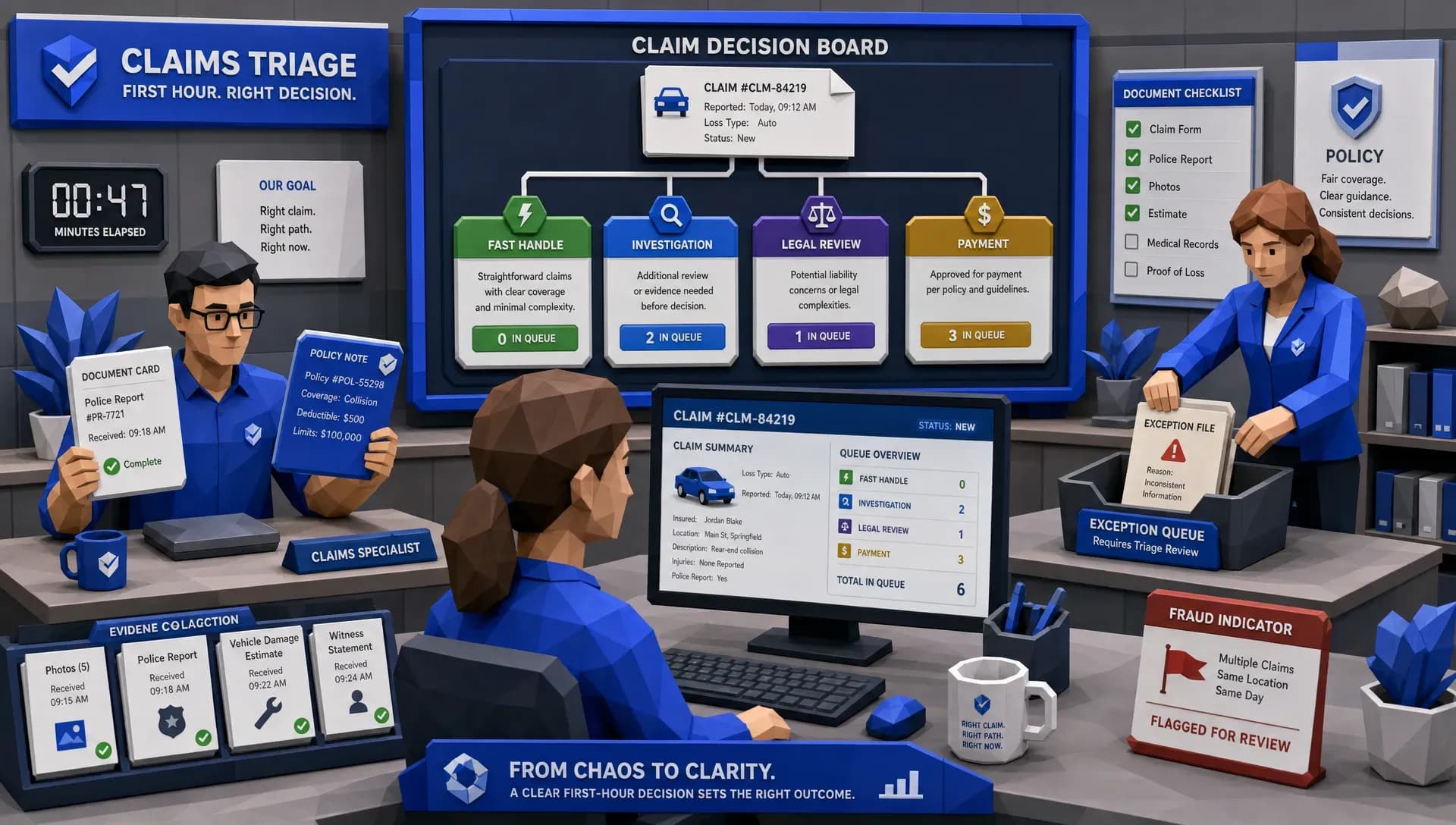
The goal is not to accuse. The goal is to route. A claim with several unusual features should not sit in the same lane as a clean, low-severity claim. It should receive additional verification, specialist review, or a fraud check before payment authority advances.
That distinction matters. Smart triage protects honest customers because it lets clean claims move faster while suspicious ones get the scrutiny they deserve.
It helps underwriters stop treating every submission like a snowflake
Underwriting triage is often where predictive analytics delivers quiet but meaningful gains.
Commercial auto is a good example. A broker sends a fleet schedule, loss runs, driver lists, prior coverage documents, and maybe a few spreadsheet tabs that look like they were assembled during turbulence. Traditionally, someone has to determine whether the submission is complete, whether it fits appetite, whether data needs enrichment, and whether the underwriter should spend time on it now.
Predictive analytics can prioritize submissions based on completeness, appetite fit, historical profitability, loss patterns, driver and vehicle signals, and likely quoteability. That last word is ugly, but useful. Underwriters need to know which accounts are worth moving now, which require missing data, and which should be politely declined before anyone burns three hours.
For MGAs and carriers dealing with submission volume, this is where triage becomes a growth lever. Faster routing means faster quotes. Faster quotes mean better broker experience. Better broker experience usually means more bindable business. Funny how that works.
The data layer is the unglamorous hero
Here is where I get slightly boring, which is usually where the money is hiding.
Predictive triage only works if the data underneath it is clean, structured, and available. If claims history is in one system, underwriting notes are in another, emails live in shared inboxes, and loss runs sit in PDFs, your triage workflow is trying to make decisions through a fogged windshield.
This is why I like unified data platforms more than point solutions that only score one tiny slice of the workflow. A fraud score is useful. A severity score is useful. But the operation improves when those scores connect to intake, document extraction, enrichment, routing, dashboards, and human review.
Inaza was built with that reality in mind. The platform automates data capture across file types, integrates with existing systems, and stores key workflow data in a unified warehouse. That matters because triage is not a one-time decision. Every routed file creates feedback. Which files were fast-tracked correctly? Which ones needed reassignment? Which fraud flags were meaningful? Which underwriting referrals turned into profitable business?
When that feedback is captured, triage gets sharper over time. When it is trapped in inboxes and spreadsheets, everyone just argues from memory. I have been in those meetings. Nobody wins, except the person who brought pastries.
The four routes every predictive triage workflow should support
You can make triage as complicated as you like. I prefer simple lanes with strong logic behind them.
The first lane is fast-track. These are low-complexity files with enough data, low risk indicators, and clear next steps. In claims, they may move toward automated settlement or light-touch handling. In underwriting, they may move to quote or bind with minimal referral.
The second lane is enrich. These files are not ready for a decision, but they do not need senior review yet. They need missing documents, third-party data, VIN validation, driver history, repair records, hazard information, loss run extraction, or policy verification.
The third lane is expert review. These are files where human judgment can materially affect the outcome. Complex bodily injury, unusual coverage questions, high-value risks, litigation potential, adverse loss patterns, and appetite exceptions belong here.
The fourth lane is escalation. This includes fraud indicators, attorney demands, regulatory deadlines, complaints, severe injury, and jurisdiction-specific legal complexity. If a claim involves cross-border issues or local counsel considerations, triage should capture that early. For example, matters touching Jamaican legal proceedings may require guidance from firms such as Henlin Gibson Henlin, rather than sitting in a generic legal review queue.
The beauty of these lanes is that they are easy for teams to understand. Nobody needs a lecture on statistical methods. They need to know why the file went where it went, what action is expected, and how to override the recommendation if the facts demand it.
Explainability is not optional
Insurance professionals are rightly skeptical of black-box decisions. We operate in a regulated business where customers, producers, auditors, reinsurers, and regulators may all ask, “Why did you do that?”
Good predictive triage should show the reasons behind routing. Not a mysterious number. Reasons.
For a claims file, the explanation might say the file was escalated because injury type, representation status, prior claimant activity, and treatment pattern resemble historically severe claims. For underwriting, the workflow might explain that a submission needs review because loss frequency, garaging data, and vehicle class fall outside appetite norms.
This is especially important when triage affects customer speed. If one claim is fast-tracked and another is delayed for review, the insurer should be able to explain the operational basis. That protects the company and builds confidence with the people using the workflow.
What to measure after predictive triage goes live
If you cannot measure the routing decision, you cannot improve it. The best teams track operational results, not only model performance.
Useful metrics include:
- Average time from intake to first action
- Percentage of files routed correctly on first pass
- Reassignment rate after initial triage
- Fast-track cycle time and leakage rate
- Fraud referral quality and false positive rate
- Underwriter touch time per submission
- Quote turnaround time and quote abandonment
- Claims severity drift after initial triage
- Customer satisfaction after automated versus manual routes
The metric I like most is reassignment rate. If files keep bouncing from one desk to another, your triage is not triage. It is shuffleboard.
How to start without boiling the ocean
Start with a painful queue, not a grand transformation slogan.
Pick one workflow where better triage would create measurable value. FNOL routing. Bodily injury severity review. Commercial auto submissions. Attorney demand intake. Invoice review. Broker email classification. Choose something with volume, clear outcomes, and enough historical data to learn from.
Then define the routing decisions before you worry about the technology. What does fast-track mean? What information is mandatory? What triggers human review? What requires escalation? What should the system do when confidence is low?
After that, connect the data sources needed to make the decision. This is where pre-built API templates and enrichment partners help. Inaza supports integrations with sources such as Verisk, LexisNexis, HazardHub, and others, which can reduce the heavy lifting required to enrich workflows.
Finally, put the results in front of managers. Real-time dashboards make triage visible. Benchmarks make it useful. If you can compare cycle time, referral rates, loss patterns, and workflow outcomes against internal targets or industry benchmarks, you can manage the operation instead of merely surviving it.
One reason we built Inaza around configurable workflows is that insurers should not need months of back-and-forth just to test a routing improvement. In many cases, teams can deploy production-ready workflows quickly, without retraining the entire operation or ripping out existing systems.
The real promise: better human work
I have yet to meet a strong underwriter who dreams of re-keying loss runs all afternoon. I have never met a great adjuster who says, “Please give me more duplicate invoices to inspect manually.”
Predictive analytics improves triage because it respects expertise. It moves routine work out of the way and pushes the right complex work to the right people sooner.
That is the part that gets lost in the buzz. The point is not to remove humans from insurance. The point is to stop wasting human judgment on work that should have been sorted, enriched, or resolved before it ever reached their desk.
If you can do that, claims move faster, underwriters quote better risks, fraud teams focus on stronger referrals, and customers spend less time wondering what happened to their file.
That is not futuristic. That is just good operations with better tools.
Frequently Asked Questions
What is predictive analytics in insurance triage? Predictive analytics in insurance triage uses historical and current data to estimate risk, complexity, severity, fraud potential, or quote readiness, then routes the file to the right next action.
Does predictive analytics replace adjusters or underwriters? No. It helps them focus on files where their judgment matters most. Routine files can move faster, while complex or risky files get human review earlier.
Where does predictive triage help most? It is especially useful in FNOL routing, bodily injury claims, fraud referrals, attorney demand management, commercial auto submissions, renewal underwriting, and broker email intake.
What data is needed for effective triage? Teams typically need structured intake data, policy data, claims history, documents, images, external enrichment sources, and feedback from prior routing decisions. Clean, connected data is more important than having a flashy score.
How should insurers measure success? Look at time to first action, cycle time, reassignment rate, fast-track accuracy, fraud referral quality, underwriter touch time, quote turnaround, and customer satisfaction.
Build smarter triage with Inaza
If your team is still triaging claims, submissions, and service requests from inboxes, spreadsheets, and gut feel, there is a better way.
Inaza helps insurers, MGAs, and brokers automate data capture, enrich workflows, route work intelligently, and monitor results through real-time analytics. Whether you are improving underwriting triage, claims routing, attorney demand handling, or operational reporting, the goal is simple: get the right work to the right place, faster.