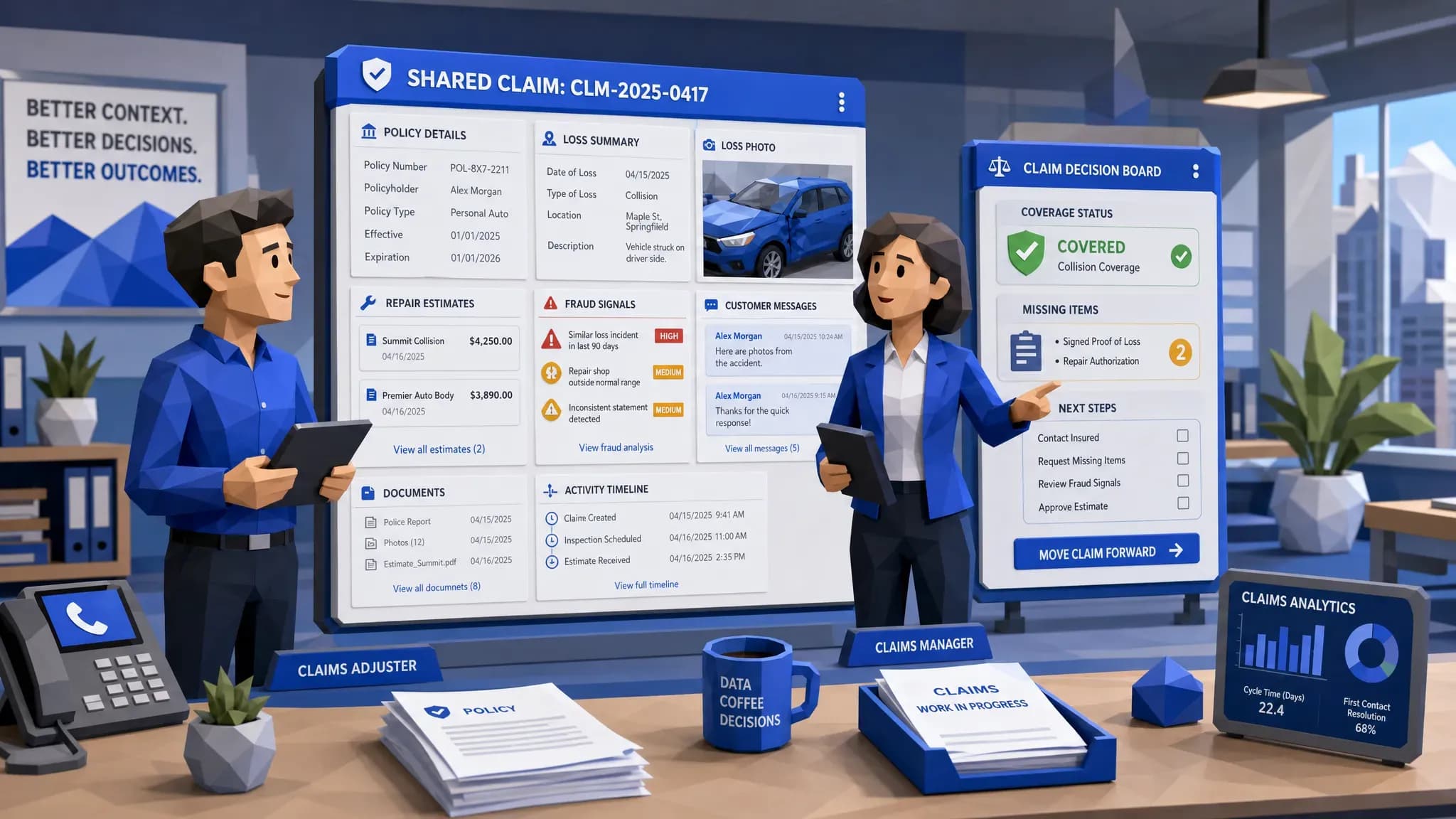
My hot take after a decade around insurance operations: most insurance claims services do not break because adjusters are lazy, vendors are weak, or customers are impossible. They break because the claim file is missing half the plot.
We ask claims teams to make fast, fair, defensible decisions while the policy is in one system, the loss description is in an email, the repair estimate is in a PDF, the fraud signal is in a third-party portal, and the underwriting notes are somewhere nobody has opened since bind. That is not claims handling. That is a digital archaeological dig.
Connected data changes the game. It gives claims teams context before they burn three days asking for it. It gives customers fewer repeat questions. It gives managers cleaner visibility. And, if we do it properly, it gives underwriting and renewals a feedback loop they can actually use.
The service problem is usually a context problem
When people talk about insurance claims services, they often jump straight to outsourcing, adjuster capacity, customer portals, photo estimating, or automation. All of that matters. But the foundation is simpler: does the person or system touching the claim understand the full story?
A claim is not a single event. It is a chain of context. Who is insured? What cover applies? What happened? Where did it happen? What was reported first? What changed later? Has this policyholder had similar claims? Is an attorney involved? Are the documents consistent? Does the repair pattern make sense for the loss?
If those answers are scattered, even the best claims service becomes slower and more expensive than it should be. The adjuster is not adjusting. They are hunting.
I once watched a perfectly ordinary rear-end auto claim take an absurd detour because the deductible information lived in an endorsement document that was not attached to the claim record. The customer called twice. The adjuster messaged underwriting. Someone found the document in a shared inbox. Everyone did their job, technically. The process still looked ridiculous from the outside.
That is the gap connected data closes. It does not make every claim simple. It makes the simple claims stay simple, and it makes the complex claims visible earlier.
Why claims services feel slower than they should
The uncomfortable truth is that insurance has spent years digitizing documents without truly connecting the information inside them. A scanned police report is digital. A PDF demand package is digital. A repair estimate in an attachment is digital. But if nobody extracts, validates, and links the key data points, the operation is still manual in all the places that matter.
This is why a claim can feel busy without moving forward. There are notes, tasks, emails, uploads, diary entries, and escalations, but the decision does not improve because the facts remain fragmented.
J.D. Power’s 2024 U.S. Auto Claims Satisfaction Study is a good reminder that claimants care deeply about cycle time and communication. That may sound obvious, but it is worth repeating. Customers do not experience your internal effort. They experience silence, repetition, and delay.
And customer expectations are no longer set only by other insurers. A policyholder who can get a polished digital journey from a retailer, a bank, or a local business working with a digital agency such as Digidatale does not magically lower their expectations when they file a claim. Fair or not, that is the comparison.
Claims teams know this. The problem is not awareness. The problem is that disconnected data forces them to communicate around uncertainty. Nobody wants to tell a customer, we are waiting because our systems do not agree with each other. So the customer hears a softer version: we are reviewing your file.
Connected data changes the work, not only the workflow
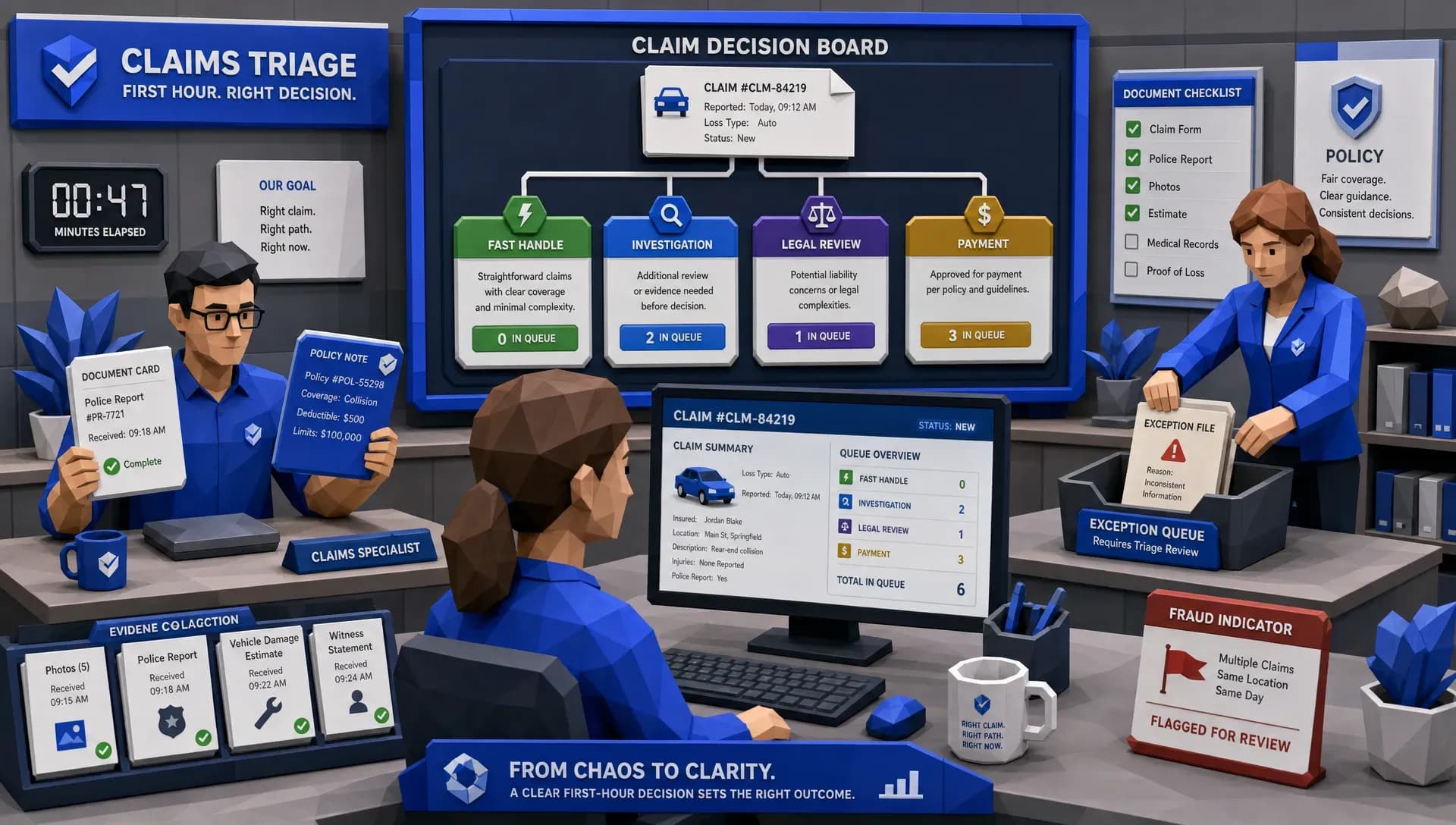
A workflow can route a task. Connected data can change the quality of the decision behind that task.
That distinction matters. Many claims operations have automation that sends reminders, assigns files, and moves items between statuses. Useful, yes. Transformational, not by itself. If the underlying data is still incomplete, automation just helps you move confusion faster.
Connected data means the claim record can bring together policy terms, FNOL details, prior loss history, photos, estimates, attorney correspondence, payment activity, fraud indicators, and third-party enrichment in one usable view. It also means the data is structured enough to support reporting, triage, and downstream learning.
The practical impact is less glamorous than a conference keynote, which is probably why I like it. Coverage reviews start with fewer missing facts. Low-complexity claims can be separated from files that need senior attention. Litigation signals appear before the file becomes a bonfire. Managers can see bottlenecks by cause, not just by age.
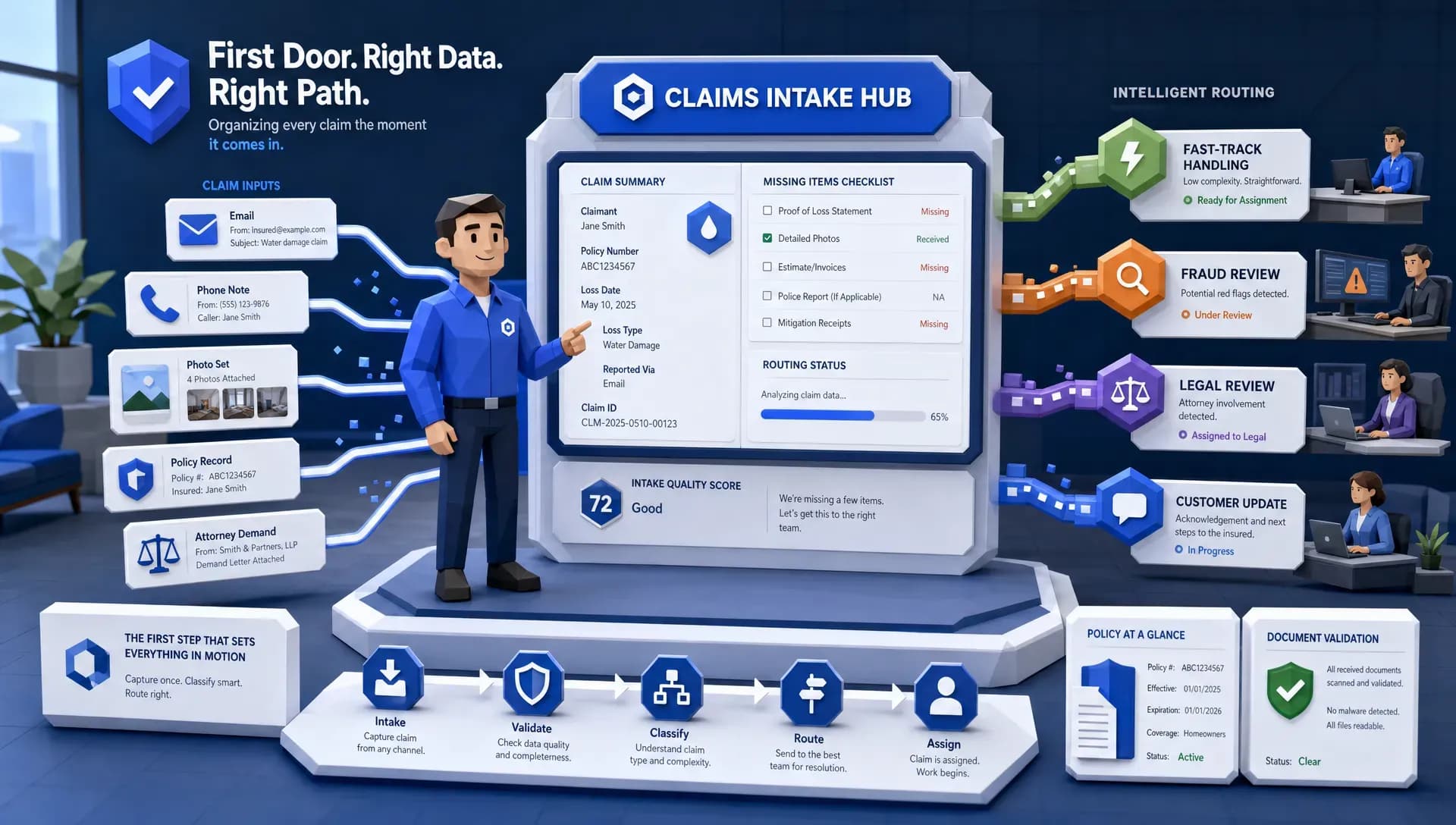
This is also where connected data helps reduce the hidden cost of handoffs. When a claim moves from FNOL to desk adjuster, from adjuster to SIU, from claims to legal, or from claims back to underwriting, the next person should not have to reconstruct the file like a detective in the final scene of a mystery novel.
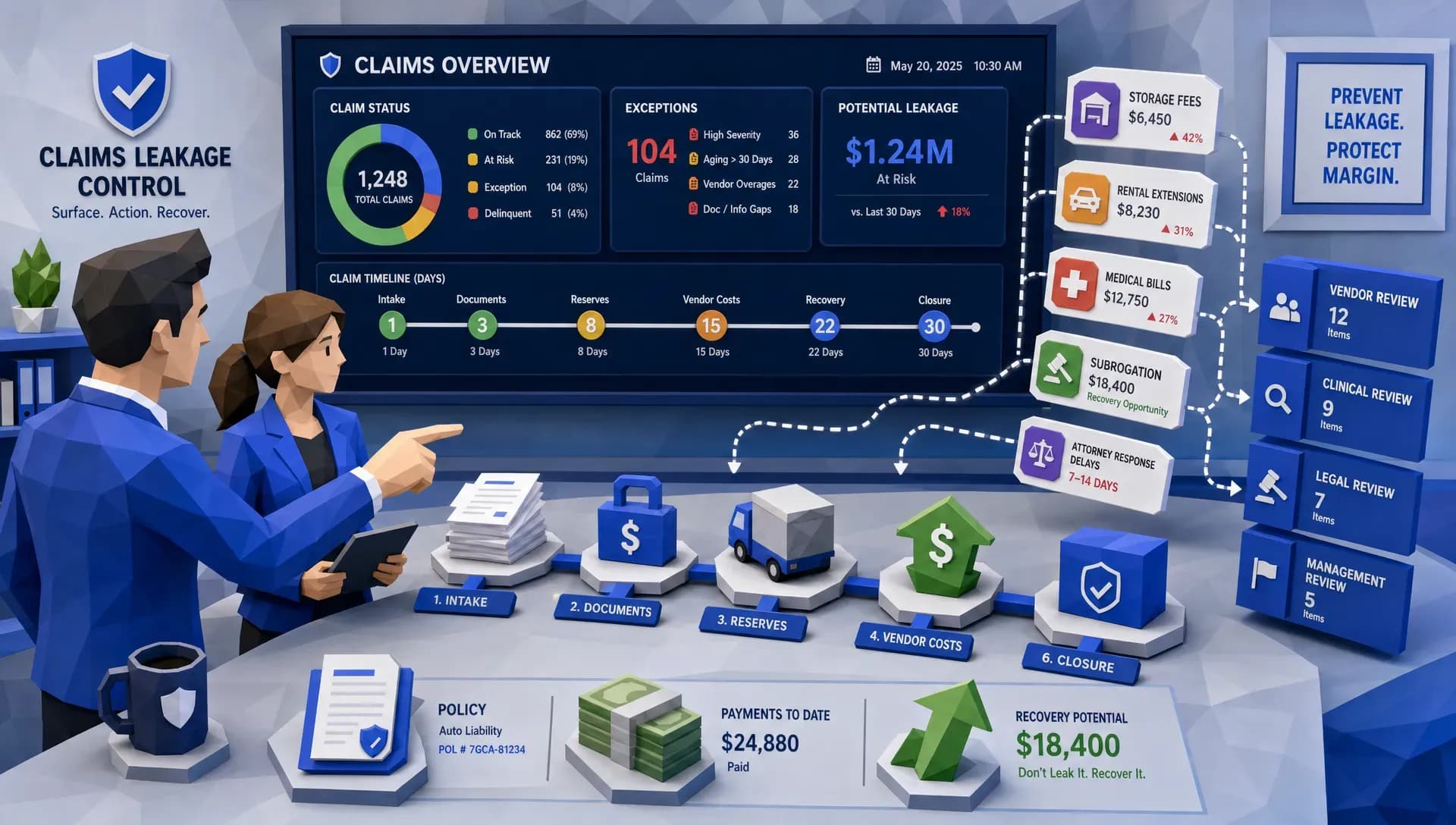
We have written before about how claims handling gets expensive when context goes missing, and that is still the cleanest way I would frame the problem. Missing context creates rework. Rework creates leakage. Leakage creates awkward meetings.
Fraud has raised the price of disconnected claims
Fraud used to be discussed as a special investigation issue. Now it is an operating model issue.
The FBI estimates that non-health insurance fraud costs more than $40 billion per year in the United States. That number is already ugly. What is changing now is the speed and quality of suspicious documentation.
Verisk’s 2025 fraud research points to rising concern among carriers about digital fraud and synthetic evidence. Whether the issue is altered photos, inconsistent timestamps, staged damage, or suspicious provider patterns, the answer cannot be a tired adjuster zooming into images at 5:45 p.m. and hoping for the best.
Fraud detection depends on connected signals. A photo on its own may look fine. A photo matched against loss timing, weather data, prior claims, repair estimates, vehicle history, attorney involvement, and payment behavior may tell a different story.
That does not mean every claim should be treated with suspicion. Quite the opposite. Better data helps genuine customers move faster because the odd files stand out sooner. The best claims service is not suspicious of everyone. It is attentive enough to know where attention is warranted.
The hidden bonus: better underwriting and renewals
Here is the part I think gets underplayed: connected claims data is not only for claims.
Claims are the receipt for underwriting decisions. They show what actually happened after pricing, selection, endorsements, exclusions, inspections, and policy wording met the real world. If claims data stays trapped inside claims operations, the business loses one of its most valuable learning tools.
For MGAs, carriers, and brokers, this becomes especially important at renewal. Reserve movement, late reporting, attorney activity, repair networks, cause of loss, geography, and claimant behavior can all sharpen the renewal discussion. Not in a vague, hindsight-is-20-20 way. In a practical, portfolio-level way.
If you want to go deeper on that point, we have covered how connected claims give underwriters better renewal signals. The short version is simple: claims should not sit at the end of the insurance value chain like a filing cabinet with a bad attitude. Claims should inform what the business writes next.

What a connected claims operation looks like in practice
A connected claims operation does not require every insurer to rip out every core system. In my experience, that phrase alone is enough to make a COO stare into the middle distance.
The more realistic path is to connect the systems and documents already in play, then turn the important information into structured, usable data. That means capturing the relevant fields from emails, PDFs, images, spreadsheets, portals, and core platforms. It means validating them against policy and external data. It means making the result available to the people and workflows that need it.
Take a property claim after a storm. The connected version is not just a folder with photos and estimates. It is a claim record that understands the policy, location, peril, weather context, contractor estimate, prior claims, reserve changes, payment status, and any indicators that suggest escalation. The adjuster still applies judgment. But the judgment starts from a better place.
Or take a bodily injury attorney demand. In the disconnected version, someone reads the package, copies dates and amounts into notes, checks policy limits elsewhere, reviews medical bills manually, and asks legal for input after the file has already aged. In the connected version, the system extracts key details, flags missing or inconsistent information, links the demand to policy and claim history, and routes the file with context.
That is not science fiction. That is operational hygiene for 2026.
What I would ask before buying or rebuilding claims services
If you are evaluating insurance claims services, software, or automation this year, I would ask fewer questions about shiny features and more questions about data continuity. The vendor demo may look lovely. Demos usually do. I have seen demos that could make a claims basement look like a spa.
The tougher questions are the ones that expose whether the service will improve decisions or simply decorate the existing process.
- Can the system capture data from the documents and channels we actually receive today?
- Does it connect policy, underwriting, claim, payment, legal, and third-party data in a usable way?
- Can business users adjust workflows without months of back-and-forth configuration?
- Does the data created during claims handling feed reporting and analytics automatically?
- Can we enrich claim decisions with external sources without rebuilding the plumbing every time?
Those questions matter because claims leaders do not need another place to store files. They need an operating layer that helps the business act on what is inside those files.
This is also where dashboards deserve a brief defense. I know, dashboards have been abused. Every executive has seen a colorful chart that answers no known human question. But when dashboards are fed by connected operational data, they become useful. You can see which claim types are slowing down, where leakage is emerging, which attorneys are affecting severity, which repair patterns are drifting, and which underwriting segments are producing surprises.
The key is that the dashboard cannot be a decorative afterthought. It has to be built on the same data flowing through the claims process.
Where Inaza fits
At Inaza, we see claims automation as part of a broader connected data strategy. Automating a task is helpful. Capturing the data created by that task is where the compounding value starts.
Inaza’s platform helps insurers, MGAs, and brokers automate workflows across claims, underwriting, customer service, and operations while integrating with existing systems. The platform supports data capture, reporting, analytics, and workflow automation, with a unified data warehouse underneath. That matters because the claim data does not disappear into yet another silo once the task is done.
The practical benefit is speed with memory. A workflow can be deployed without the usual endless proof-of-concept loop, then the data captured through that workflow can support dashboards, benchmarks, enrichment, and better business intelligence. Pre-built API templates can also help insurers enrich automations with external sources such as Verisk, LexisNexis, HazardHub, and others.
For claims leaders, the point is not to replace expert judgment. Please do not. The industry still needs people who can smell a strange file from three screens away. The point is to stop wasting expert judgment on clerical scavenger hunts.
Frequently Asked Questions
What are insurance claims services? Insurance claims services include the people, processes, systems, and partners that help insurers receive, assess, manage, settle, and report claims. They can include FNOL intake, coverage review, adjustment, fraud review, vendor management, litigation handling, payment, and customer communication.
Why does connected data matter in claims? Connected data gives claims teams a fuller view of the policy, loss, customer, documents, third-party inputs, and prior activity. That reduces rework, improves triage, supports fraud detection, and helps customers get clearer answers faster.
Can connected data reduce claims costs? Yes, although the impact depends on execution. Connected data can reduce duplicate work, speed up simple claims, identify leakage earlier, and route complex claims to the right people sooner. It also improves reporting, which helps leaders fix root causes rather than chase symptoms.
Does claims automation replace adjusters? No. The best claims automation removes repetitive work and brings the right context to the adjuster. Complex claims, customer empathy, negotiation, legal judgment, and coverage interpretation still require experienced professionals.
How does claims data help underwriting? Claims data shows how risks perform after policies are written. When connected back to underwriting, it can improve renewal decisions, pricing discussions, portfolio analysis, fraud awareness, and product design.
Make the claim file tell the whole story
Insurance claims services work better when teams are not forced to chase facts across systems, inboxes, PDFs, and portals. Connected data gives claims professionals the one thing they are usually missing: context at the moment they need it.
If your claims operation is ready to move from file storage to true operational intelligence, Inaza can help connect the data, workflows, and analytics that make better claims service possible.