I have a fairly unpopular opinion after ten years around underwriting desks, claims floors, and the occasional conference room with stale coffee: most files do not stall because people are careless. They stall because insurance databases are too quiet.
A quiet database stores the submission, logs the FNOL, accepts the PDF, stamps the note, and then politely waits. Meanwhile, the file sits in pending, the broker chases an update, the claimant gets annoyed, and someone in operations creates a spreadsheet named Final_v7. We have all been there. I still have emotional scar tissue from a bordereau reconciliation that depended on a color-coded Excel tab maintained by one heroic analyst.
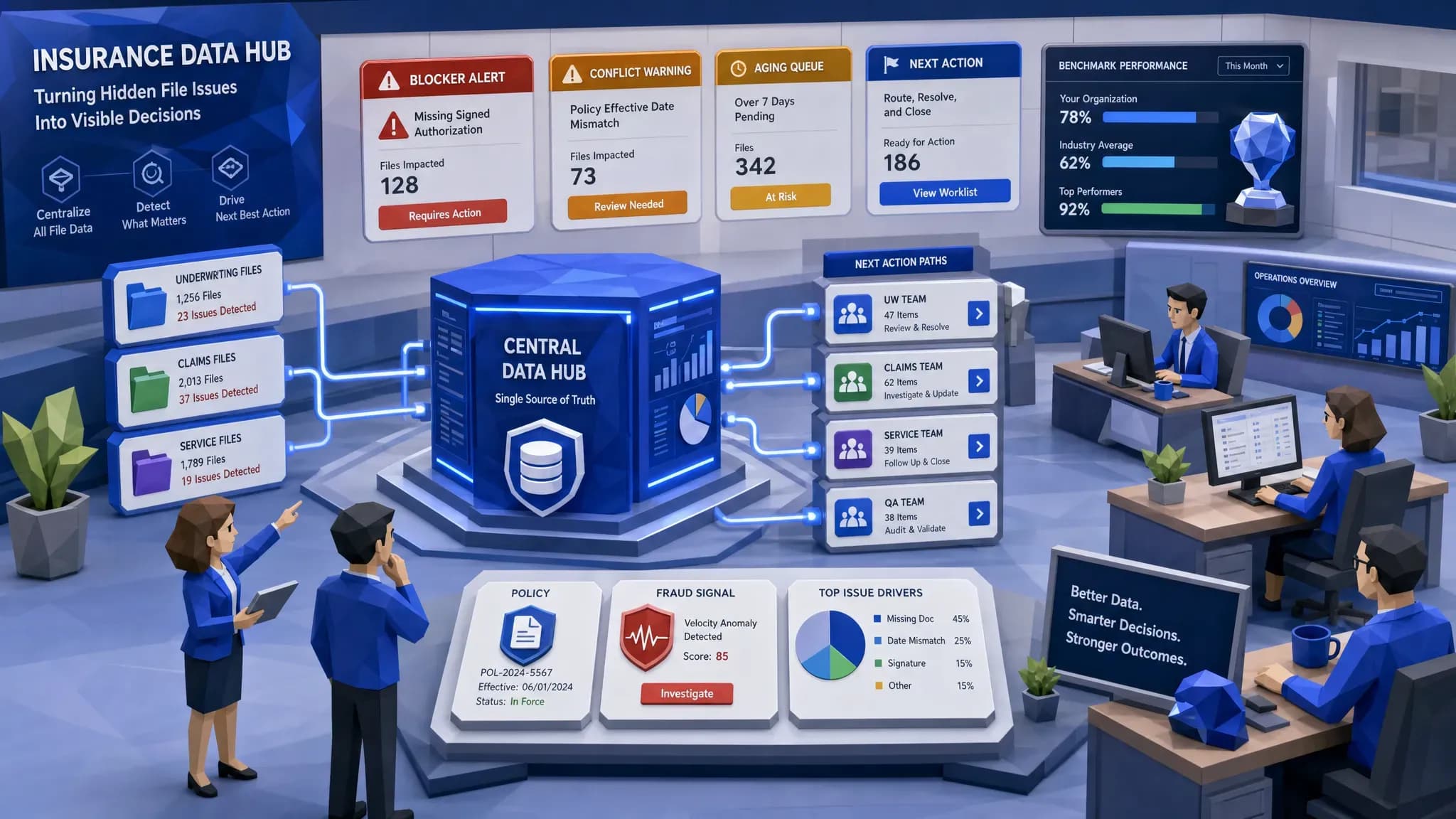
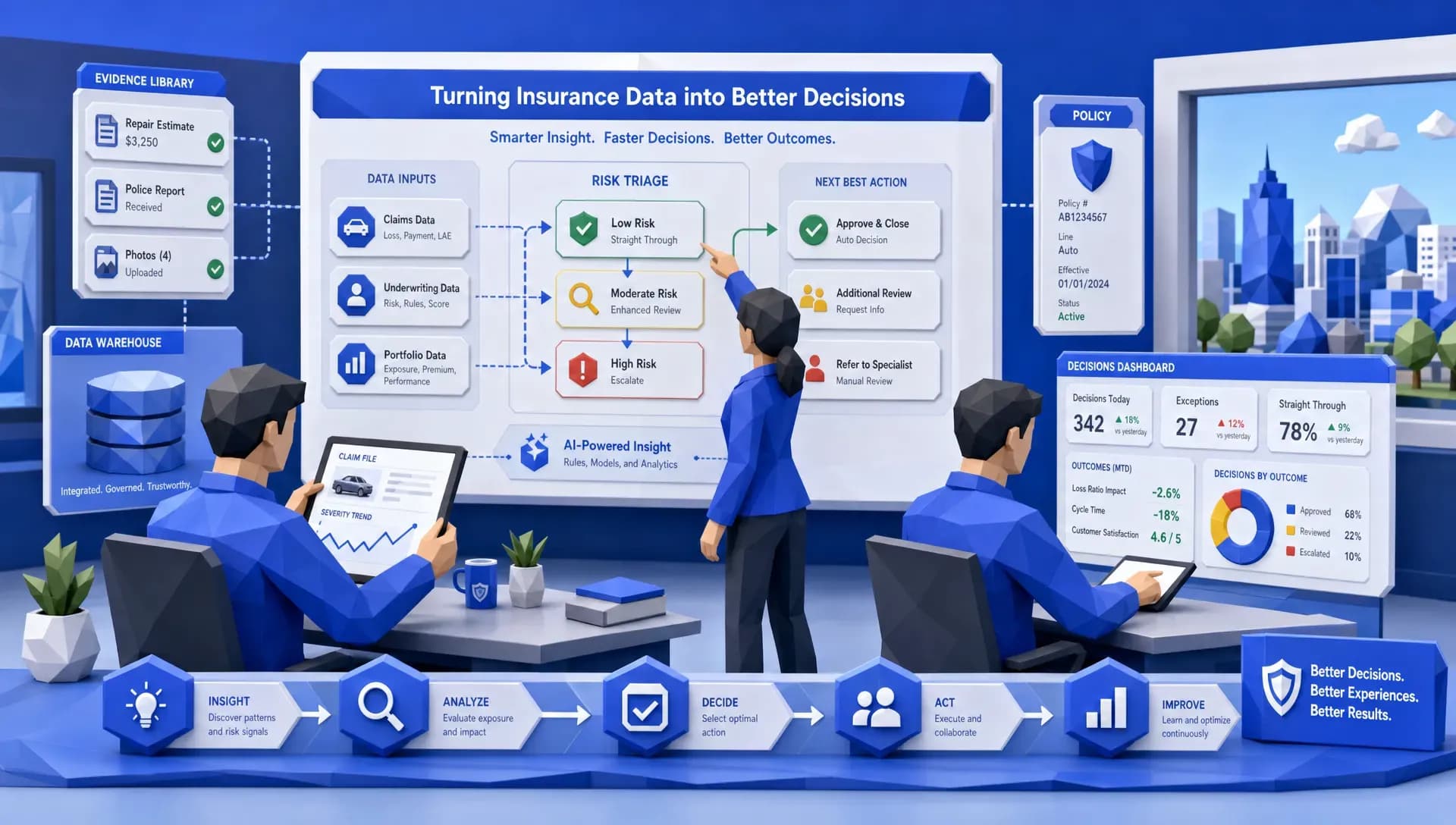
The better standard is simple. Insurance databases should tell teams what is likely to stop a decision before the decision is due. That means surfacing blockers, contradictions, aging, thresholds, and next actions in the place where work happens. If your system only reports stalled files after a weekly operations meeting, it is documenting the traffic jam, not preventing it.
McKinsey has estimated that about 60 percent of underwriter time is spent on administrative work rather than risk assessment. That number feels painfully plausible. In claims, the same dynamic shows up as adjusters hunting for documents, rereading notes, and checking whether a file is truly ready for settlement or just dressed up as ready. The database should be doing more of that watching.
A stalled file is usually a missing decision
The phrase file stall sounds like something dramatic. In reality, it is usually a small missing decision hiding inside a broad status like pending review, awaiting information, or referred. The problem is not always that something is missing. Sometimes the real issue is that two sources disagree, no one owns the next step, authority is unclear, or the file crossed a threshold that nobody noticed.
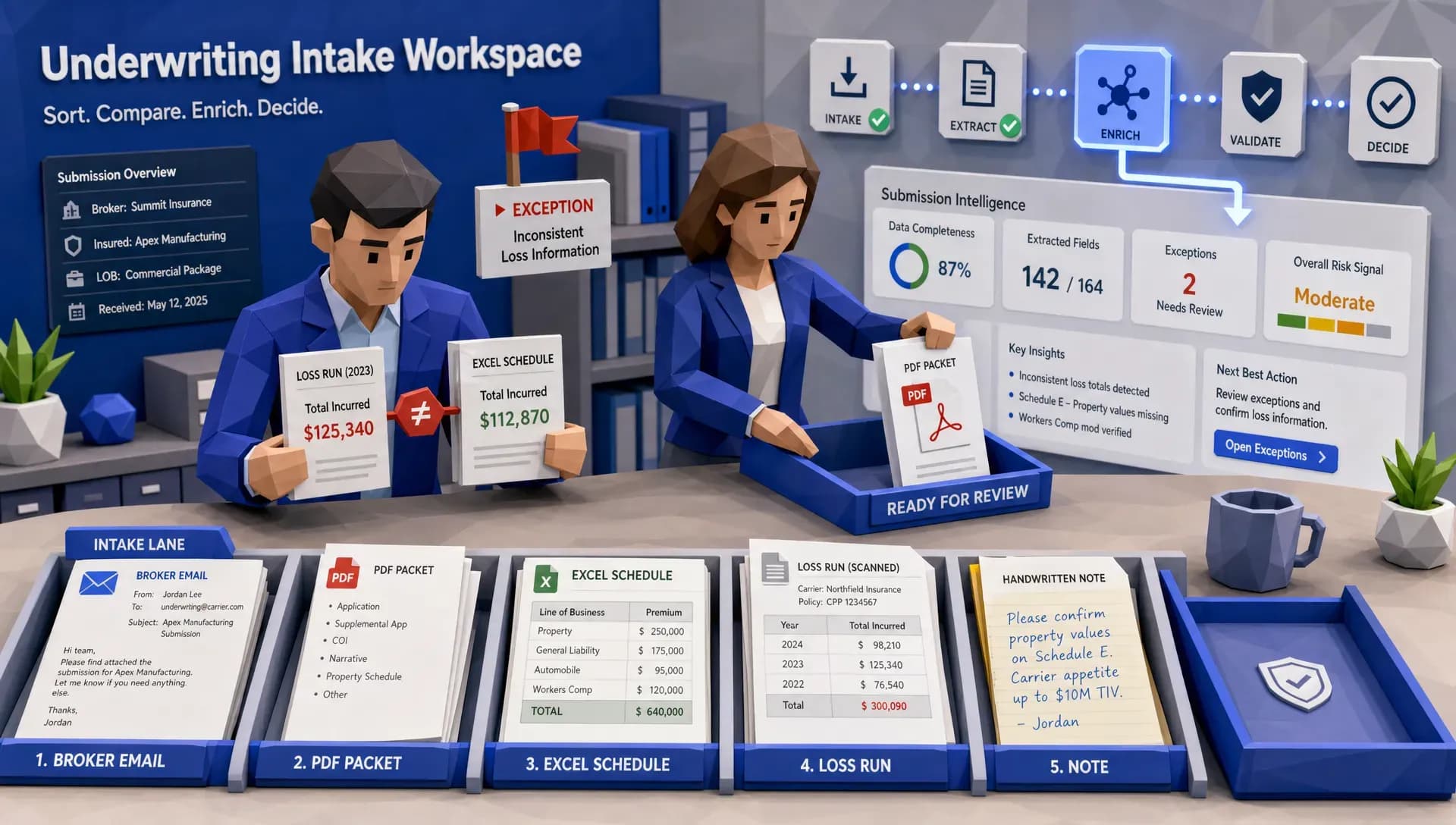
I once watched a habitational submission lose two full business days because the application, SOV, and prior carrier loss run disagreed on the number of units. Nobody was being slow. The underwriter was waiting for clarity, the assistant thought the broker had already answered, and the broker thought the revised SOV solved it. The database knew all three values existed. It just did not surface the conflict.
That is the job. A modern insurance database should not merely answer questions. It should interrupt politely when the file is about to become expensive.
The first thing to surface is the next blocking fact
If I could add one field to every underwriting and claims screen, it would be next blocking fact. Not next task, not status, not owner, although those matter. I mean the single fact preventing a decision.
For underwriting, that might be a missing roof year, unclear prior cancellation reason, invalid VIN, unverifiable named insured, or appetite mismatch. For claims, it might be liability pending, coverage unresolved, medical records missing, attorney representation detected, or an estimate that no longer matches the damage narrative. If the database cannot name the blocker, the file will become a scavenger hunt.
This is why intake matters so much. If the first version of the file is inconsistent, every downstream team inherits the mess. Inaza has written about why underwriting software fails without good intake, and I agree with the premise. Bad intake does not stay in intake. It spreads like glitter.
The database should capture the fact, the source, the date received, the confidence level, and who can resolve it. That sounds procedural, but it is where the savings live. A file does not need another folder. It needs a visible reason to move or a visible reason it cannot.
The signals insurance databases should surface early
Here is the practical version. If your insurance databases are going to prevent stalls, these are the signals I would expect them to show without someone exporting a CSV and becoming an amateur detective.
Signal to surface | What the database should show | Why it prevents stalls
Missing critical data | Required fields or documents absent by product, state, coverage, or claim type | Teams can request the right item before review starts
Conflicting facts | Different values for names, dates, addresses, limits, VINs, loss amounts, or property details | Reviewers do not waste time trusting the wrong source
Aging without meaningful action | Time since the last decision, verified update, payment, referral, or broker response | Managers see true inactivity, not just recent note-taking
Unclear ownership | The person, team, or external party responsible for the next move | Files stop bouncing between queues
Authority or referral threshold | Premium, limit, reserve, severity, litigation, or exception triggers | Senior review happens before the file goes cold
External dependency | Third-party data, inspection, medical record, police report, repair estimate, or counsel response | Follow-ups can be timed and escalated
Fraud or anomaly indicators | Repeat identifiers, mismatched metadata, unusual claim timing, or suspicious document patterns | Investigators get involved before payment pressure builds
Service commitment risk | SLA, broker promise, claimant callback, or regulatory deadline approaching | Customer and compliance pain gets handled early
Portfolio context | Loss trend, concentration, benchmark, or bordereau issue connected to the file | One stuck file does not become a portfolio blind spot
Notice what is not on this table: more generic statuses. Pending is not a signal. Pending is where signals go to hide.
Underwriting stalls start with ambiguity
Underwriting files stall when the risk picture is fuzzy enough that nobody wants to say yes, but not bad enough that anyone wants to say no. That is the most dangerous middle ground. It creates polite delay, and polite delay kills quote speed.
The database should surface ambiguities at intake. Is the insured name consistent across documents and external sources? Does the business description match the class code? Are losses tied to the right entity? Are locations geocoded and matched to hazard data? Do limits, deductibles, and prior terms make sense for the stated exposure?
A non-insurance example helps here. Think about a vacation rental property. The bare address tells you very little. You need to know occupancy pattern, amenities, management model, guest turnover, local hazards, and whether there are features like pools, hot tubs, or remote access. A curated operator of private luxury vacation homes makes those details part of the experience for travelers. For an insurer, similar details decide whether the file can be priced, referred, declined, or sent back for clarification.
In P&C underwriting, databases should surface when the file contains enough information to rate, enough information to refer, or not enough information to touch. That last category matters. I would rather see an early incomplete flag than have an underwriter discover the gap after 28 minutes of review.
Claims stalls start with silence
Claims stalls feel different. They often begin with silence. No new medical records. No police report. No estimate update. No claimant response. No counsel letter logged in the right place. The claim is not obviously broken, but the clock keeps running.
J.D. Power’s 2024 U.S. Auto Claims Satisfaction Study highlighted how cycle time remains a major pressure point in auto claims. Celent has also reported that straight-through claims processing remains limited in many operations, often cited in the low double digits. The point is not that every claim should run without a human. That would be a fine way to overpay and under-investigate. The point is that humans should spend less time figuring out whether the file is ready for human judgment.
For claims teams, the database should surface severity creep before reserves move, missed subrogation potential before the file closes, rental or storage leakage before the invoice arrives, and litigation indicators before the attorney demand lands on Friday at 4:47 p.m. If you want a deeper claims-specific view, the Inaza article on what a claim database should tell you before reserves move gets into that exact problem.
The practical test is simple. If an adjuster opens a claim, can they see what changed since yesterday and what could stop resolution tomorrow? If not, the database is making them reread history instead of managing the future.
Fraud signals should not depend on someone remembering a name
Fraud is where quiet databases become truly expensive. People remember the weird cases, but they cannot remember every phone number, repair shop, address variation, device pattern, claimant connection, and prior investigation note across years of business.
The FBI describes insurance fraud as a major cost to the industry, estimating more than $40 billion per year in non-health insurance fraud costs. Verisk’s 2025 fraud report also points to growing concern around digital manipulation and synthetic claim materials. Whether the threat is a staged accident, inflated injury, fake image, duplicate invoice, or repeat actor, the database must connect patterns faster than a tired human can.
I once saw a suspicious claim only get flagged because an adjuster recognized a body shop name from a prior file. That is not a fraud strategy. That is luck wearing a headset.
Insurance databases should surface repeat identifiers, not just exact matches. Slightly different names, shared addresses, reused bank details, common repair vendors, repeated loss descriptions, and suspicious timing should all be visible as part of the file narrative. The reviewer should not need to run five searches and hope the spelling matches.
Reinsurance and portfolio teams need stall warnings too
Stalls are not only frontline problems. Reinsurance brokers, portfolio managers, and executives feel them later, usually in less forgiving formats: messy bordereaux, weak renewal narratives, late loss development explanations, and awkward questions from capacity providers.
A stalled underwriting file can become missing exposure data. A stalled claim can become late reserve movement. A stalled fraud referral can become unexplained leakage. By the time those issues appear in portfolio reporting, the fix is often more expensive and less credible.
This is where I think many insurance databases aim too low. They focus on individual file storage, but the real value is connecting file-level friction to portfolio-level insight. Are certain brokers consistently submitting incomplete data? Are certain classes taking longer to clear referrals? Are claims from one repair network driving more supplements? Are authority thresholds creating bottlenecks in one region? Are renewal submissions missing the same fields every quarter?
For MGAs and carriers, those patterns are operational gold. For reinsurance conversations, they can be the difference between a vague explanation and a confident narrative. Market benchmarks also matter here. If you can compare your cycle times, loss patterns, or portfolio characteristics against relevant benchmarks, you are no longer telling a story from memory. You are showing your work.
The architecture matters more than the dashboard
Here is my second hot take: a beautiful dashboard on top of fragmented data is just confetti on a pothole.
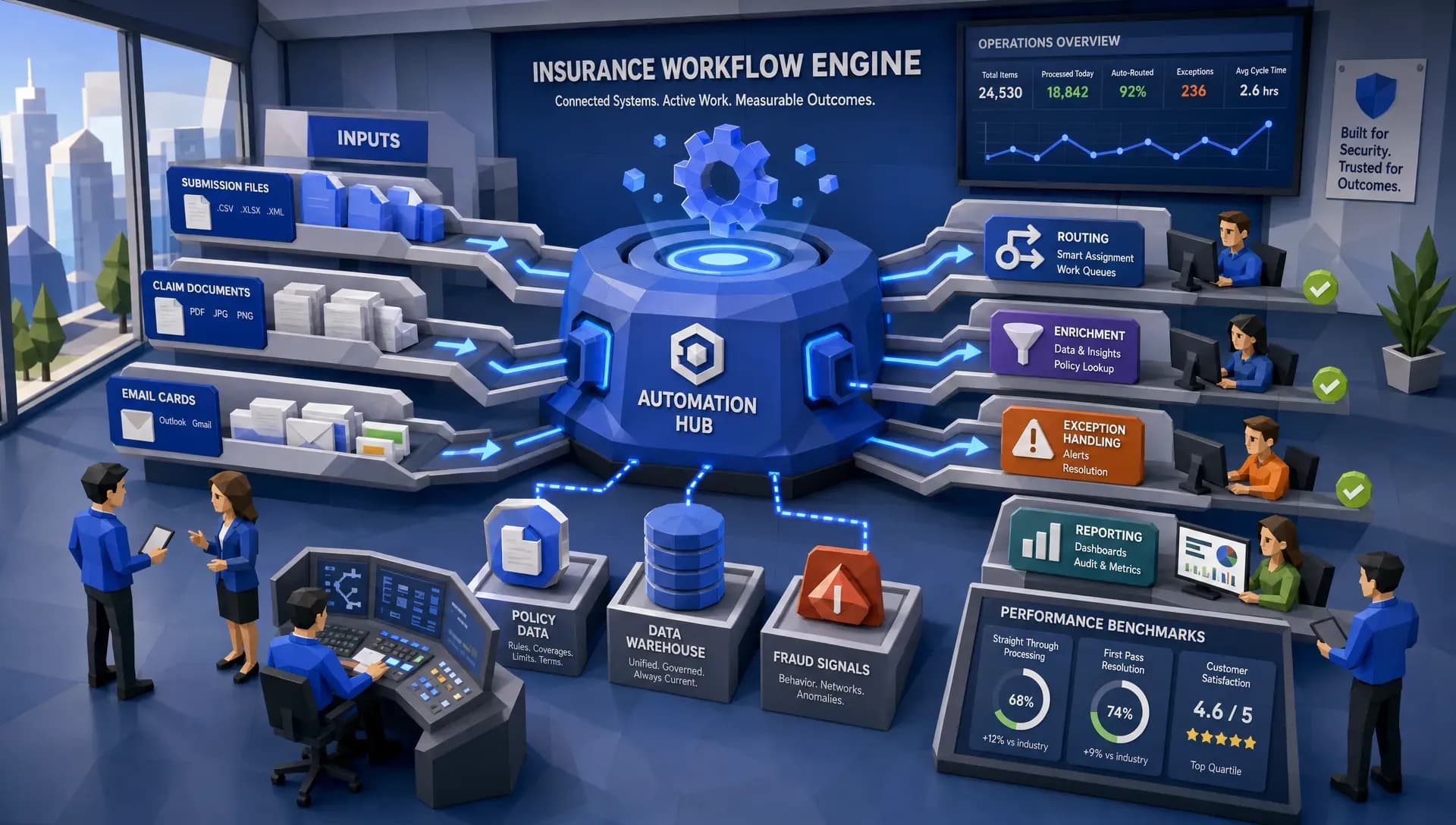
The reason files stall is often architectural. Policy data lives in one system. Claims notes live in another. Broker emails live in Outlook. PDFs sit in a document repository. Third-party enrichment arrives through a portal. Someone tracks referrals in a spreadsheet because the core system is technically correct and practically unhelpful.
To prevent stalls, the database needs a unified view of the file and an event history of what happened. It should know when information arrived, where it came from, which workflow it triggered, what changed, and what is still unresolved. That is why a data warehouse is more than a reporting project. It becomes the operational memory of the business.
Inaza’s insurance data warehouse is built around this idea: centralize claims, policy, and underwriting data so teams can search, automate, report, and spot patterns across the business. The workflow is important, but the captured data is what compounds in value.
Old database habit | Better stall-prevention habit
Store the latest document | Extract and track the decision-critical facts inside it
Show a broad status | Show the blocker, owner, age, and next action
Report monthly totals | Surface file-level exceptions in real time
Match only exact identifiers | Detect related entities and suspicious patterns
Treat dashboards as an output | Treat dashboards as a control system for operations
The best insurance databases do not ask teams to become database people. They bring the right signal into the workflow the person already uses.
How I would test your database in one afternoon
If I were auditing an insurance operation, I would not start with a grand transformation deck. I would pick ten active files that are older than expected and ask three basic questions.
Test | Question to ask | Passing sign
Blocker test | Can the system tell me the exact fact or action preventing a decision? | The answer is visible without reading every note
Ownership test | Can I see who owns the next step and when it is due? | The file has one accountable owner or external dependency
Pattern test | Can I tell whether this stall resembles other stalls? | The database connects the file to broker, class, vendor, region, or claim-type trends
If the answer to those questions requires three meetings, two exports, and one person named Linda who knows where everything is, you do not have a database problem in theory. You have a database problem in production.
And for the record, every insurance company has a Linda. Protect Linda. Then build a system that does not require Linda to remember the universe.
What Inaza helps insurers surface before files stall
Inaza is designed for this exact operational gap. The platform helps insurers, MGAs, and brokers automate data capture, streamline underwriting and claims workflows, integrate with existing systems, and centralize the information that typically gets trapped across documents, emails, portals, and core platforms.
The part I care about most is that workflow automation should create intelligence as it runs. When a system captures key facts from submissions, claims documents, attorney demands, loss runs, or operational handoffs, those facts should feed reporting and analytics. That is how you move from retrospective reporting to earlier intervention.
Inaza also supports customizable workflows, a unified data warehouse, real-time analytics dashboards, and pre-built API templates for enrichment sources such as Verisk, LexisNexis, HazardHub, and more. In plain English, that means teams can stop waiting for perfect system replacement plans and start surfacing the blockers that already cost them time.
Frequently Asked Questions
What should insurance databases surface before a file stalls? They should surface missing critical data, conflicting facts, aging without meaningful action, unclear ownership, external dependencies, authority thresholds, fraud indicators, SLA risk, and portfolio-level patterns.
Why do underwriting files stall so often? Underwriting files usually stall because risk information is incomplete or contradictory. Common causes include missing loss runs, unclear class codes, inconsistent insured names, incomplete property data, appetite issues, and referral ambiguity.
What claim database signals matter most? Claims teams should see coverage blockers, liability status, reserve pressure, litigation indicators, subrogation potential, vendor delays, rental or storage leakage, and changes since the last meaningful action.
How can insurance databases help reduce fraud? They can connect repeat identifiers, suspicious timing, inconsistent documents, shared addresses, reused payment details, vendor patterns, and prior investigation notes so fraud teams do not depend on memory or exact-match searches.
Do insurers need to replace core systems to prevent file stalls? Not always. Many organizations can reduce stalls by centralizing data, automating intake, enriching files through integrations, and surfacing blockers through workflows that connect with existing systems.
Turn quiet files into visible decisions
A stalled file is rarely a surprise. Most of the warning signs were already in the business. They were just buried in documents, notes, emails, and disconnected systems.
If your insurance databases are mostly storing history, it is time to ask them for more. They should surface what is missing, what changed, who owns the next action, where risk is growing, and which patterns are repeating across the book.
That is where Inaza can help. We give insurance teams a practical way to automate workflows, centralize data, and turn file-level activity into usable operational intelligence without asking experienced teams to relearn insurance. If your files are stalling quietly, the best next move is to make the database speak up before the next delay costs you premium, leakage, or trust.