If you ask ten underwriters what loss cost means, you will get ten answers and at least one exhausted sigh. The textbook answer is simple enough: loss cost is the expected cost of claims for a defined exposure. The practical answer is more interesting. For an underwriter, loss cost insurance is the baseline that tells you what the risk should cost before we add expenses, profit, commissions, taxes, reinsurance load, and the thousand little judgment calls that make underwriting a profession rather than a spreadsheet hobby.
My hot take: underwriters who treat loss cost as a price list are using it wrong. Loss cost is a challenge. It asks, should this account perform like the average account in this class, territory, and exposure group, or do I have evidence that it will behave differently?
I learned this the slightly embarrassing way early in my career. A broker once sent me a trucking submission with a lovely safety narrative, shiny fleet photos, and the kind of driver handbook that looked like it had been written by a law firm and a motivational speaker. The advisory loss cost said the risk was expensive. The broker said the risk was best in class. The loss run said three backing claims in nine months at the same warehouse dock. Guess which document told the truth?
That is why loss cost matters. It gives us a disciplined starting point, but it does not absolve us from thinking.
Loss cost insurance, in plain English
The phrase loss cost insurance can sound like a product. It is not a coverage type, a policy form, or a special kind of premium. In P&C insurance, loss cost usually means the expected claim cost per unit of exposure for a specific risk category.
For example, a commercial auto loss cost might be expressed per vehicle. A workers compensation loss cost might be expressed per $100 of payroll. A property loss cost might be tied to insured value, construction type, occupancy, protection class, and territory.
A simplified version looks like this:
Expected losses divided by exposure equals loss cost.
If a book of business is expected to generate $500,000 in losses across 1,000 vehicles, the indicated loss cost is $500 per vehicle. That $500 is not the final rate. It is the claim-cost ingredient.
The insurer then applies a loss cost multiplier, often called an LCM, to account for things such as underwriting expenses, acquisition costs, taxes, profit provision, contingencies, and company-specific operating assumptions. If the loss cost is $500 and the carrier uses a 1.40 multiplier, the starting rate becomes $700 before account-level modifications.
That distinction matters. Loss cost is about expected claims. Rate is what we charge. Premium is what the insured pays after rates, exposures, schedule credits or debits, minimum premiums, endorsements, and sometimes a lively round of broker negotiation.
Why underwriters should care more than they usually do
Loss cost is one of the cleanest ways to separate risk price from company strategy. The advisory or actuarial number tells us what the claims are expected to cost. The carrier’s rate tells us how the business model wraps around that expectation.
That makes loss cost useful in three very practical ways.
First, it anchors pricing discipline. If an account is being quoted well below expected loss cost, someone should have a very good reason. Maybe the account has credible favorable experience, exceptional controls, or a deductible structure that changes the loss pick. Maybe the market is just getting silly. I have seen both.
Second, it gives underwriters a common language with actuaries. When underwriting and actuarial teams argue only in final premium terms, everyone talks past each other. When the conversation starts with loss cost, the debate becomes sharper: Is the base expectation wrong, is the exposure misclassified, is the trend assumption outdated, or are we intentionally accepting a thinner margin?
Third, it helps explain decisions. A broker may not love hearing that the indicated premium is up, but a clear explanation tied to expected claim cost is better than saying, well, the model said so. Nobody enjoys that answer, least of all the person giving it.
Loss cost vs. rate vs. loss ratio
These terms get blended together in meetings, especially when everyone is moving fast. They are related, but they answer different questions.
- Loss cost: What do we expect claims to cost for this exposure?
- Rate: What do we need to charge after adding company expenses, profit, taxes, and other loads?
- Loss ratio: After the fact, how much of the premium was consumed by losses?
- Premium: What the customer pays based on rate, exposure, adjustments, and policy structure.
Here is the diner version. Loss cost is the cost of ingredients. Rate is the menu price. Premium is the bill. Loss ratio is the owner checking at the end of the month whether the restaurant made money or accidentally became a charity.
For underwriters, confusing these concepts leads to bad decisions. A low loss ratio does not automatically mean the loss cost was right. Maybe the account got lucky. A high loss ratio does not automatically mean the account was underpriced. Maybe one shock loss distorted a small exposure base. The job is to understand which story the data supports.
Where loss cost comes from
Loss costs are usually built from historical loss experience, exposure data, loss development, trend assumptions, classification relativities, territory factors, and credibility adjustments. Advisory organizations may publish loss costs for certain lines and jurisdictions, while carriers may also develop proprietary loss costs based on their own books.
The math can get sophisticated, but the underwriting implication is straightforward: the quality of the loss cost depends heavily on the quality of the underlying data.
If the class code is wrong, the loss cost is pointed at the wrong target. If exposure units are stale, the denominator is lying. If claim reserves are inconsistent, incurred losses become noisy. If loss runs are missing prior carriers or have old valuation dates, the account story may be incomplete.
This is why loss runs still matter so much. A loss cost gives you the expected claim level for a pool. A loss run tells you how the actual account has behaved. If you want to go deeper on that account-level view, we have written about what loss run insurance data tells underwriters and why it is so useful before quoting.
The best underwriters I know do not worship either number. They compare them. When the expected loss cost and the account’s actual loss history disagree, that gap is where the underwriting work begins.
The catch: average data can punish good risks and flatter bad ones
Loss cost is based on groups. Underwriting is about individual accounts. That tension never goes away.
Take two contractors in the same class and territory. One has ten-year drivers, strict vehicle maintenance, dash cameras, documented jobsite controls, and a CFO who can explain every claim in the last five years. The other has rapid growth, new subcontractors, weak documentation, and a loss run that looks like it was assembled during a fire drill. The base loss cost may start in the same neighborhood for both. The underwriter’s job is to decide whether they deserve to stay there.
This is where judgment beats mechanical pricing. A loss cost can recognize broad frequency and severity patterns, but it may not immediately see a new safety director, a fleet telematics rollout, a deteriorating venue, a change in litigation climate, or a recent acquisition that doubled exposure overnight.
I once reviewed a small habitational risk where the loss cost looked tolerable and the premium looked competitive. The problem was that the account had recently converted several units into short-term rentals. Same building, very different exposure. The historical data had a calm voice. The future risk was clearing its throat loudly.
How bad data bends loss cost decisions
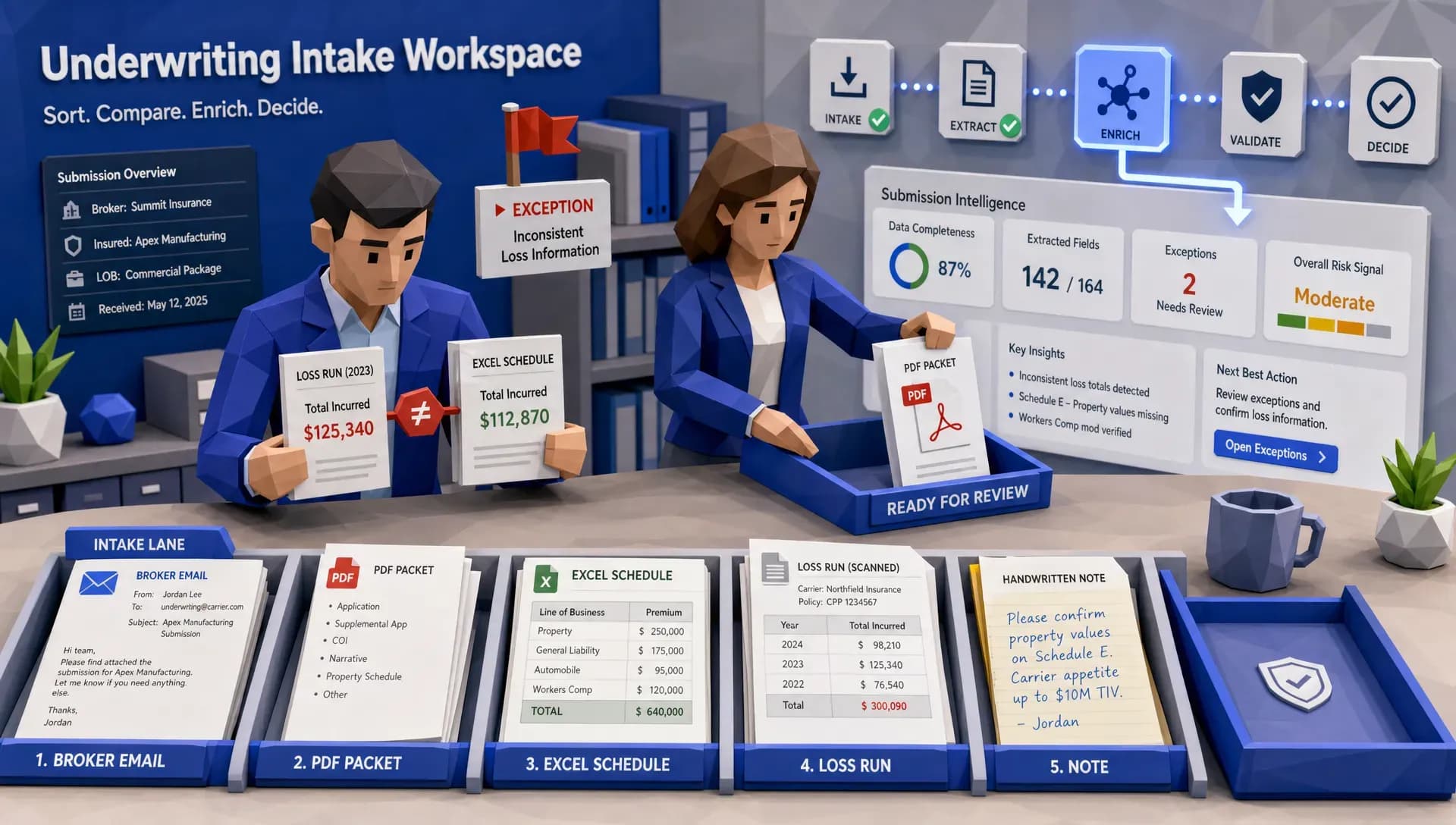
Underwriters are often blamed for pricing misses, but many misses begin upstream. A submission comes in with inconsistent exposure values. A loss run arrives as a scanned PDF. Someone rekeys claim amounts into a spreadsheet. A vehicle is misclassified. A driver is missing. A territory code is off by one digit. None of these errors look dramatic by themselves. Together, they can quietly shove an account into the wrong pricing lane.
McKinsey has noted that underwriters can spend as much as 60 percent of their time on administrative work rather than core underwriting. Anyone who has chased missing schedules on a Friday afternoon knows that number feels painfully plausible.
The problem is not only wasted time. Manual friction also affects loss cost interpretation. If underwriters cannot trust the data feeding the decision, they either over-correct with conservative pricing or under-correct because the market is moving too quickly. Neither is ideal.
In auto especially, small data issues can become real margin problems. Incorrect VINs, missed surcharges, undisclosed drivers, and misapplied discounts all distort the relationship between expected loss cost and collected premium. That is one reason premium leakage in auto insurance deserves more attention than it usually gets.

How underwriters should use loss cost in real decisions
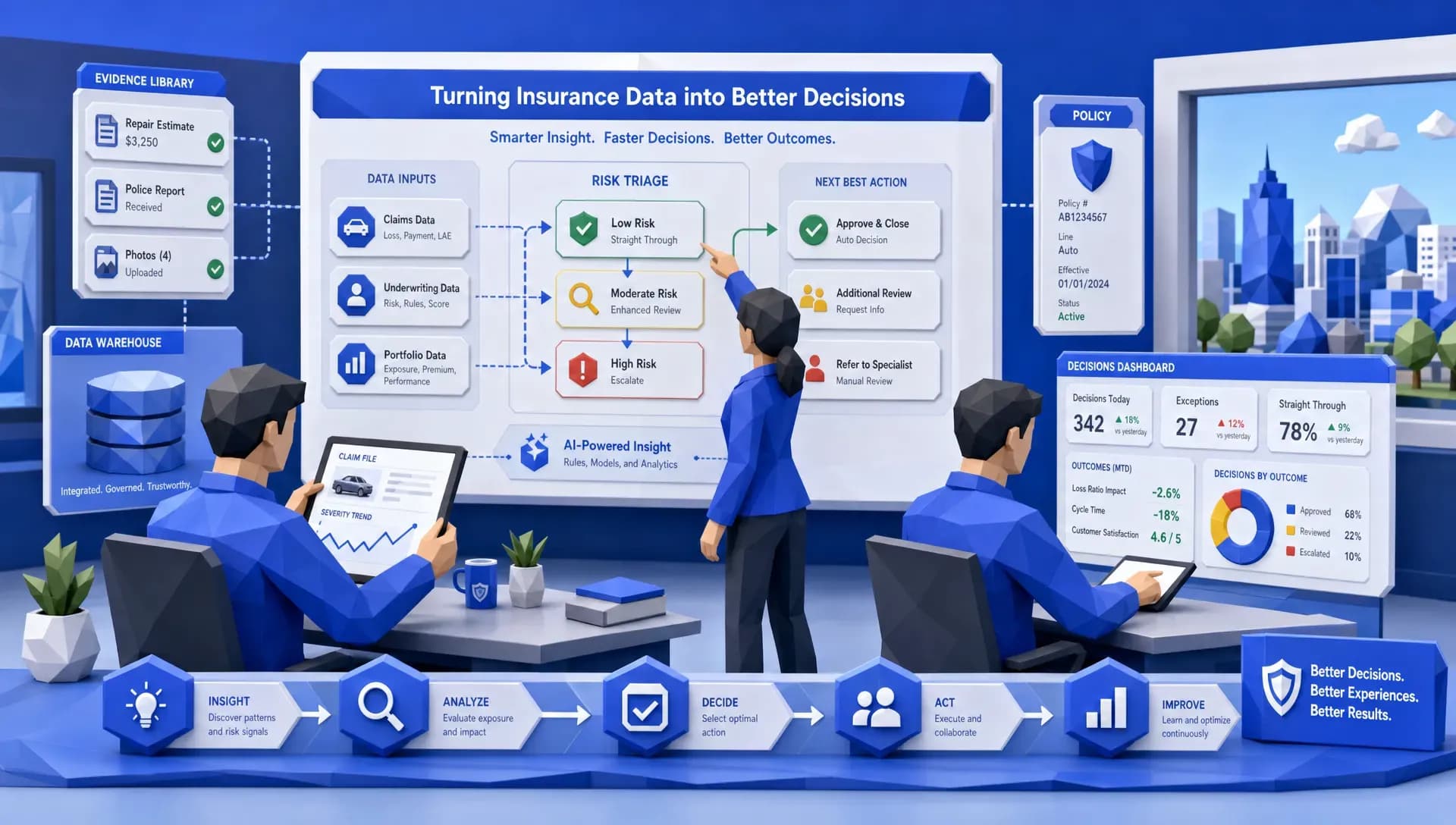
The practical use of loss cost starts with a simple question: what would I need to believe for this account to beat the expected claim cost?
If the answer is nothing more than the broker says they are great, I get nervous. Brokers often are doing their job well, but optimism is not a risk control. I want evidence. That may include credible loss experience, improving frequency trends, stronger reserves discipline, updated inspections, operational controls, telematics data, financial stability, management tenure, or clean exposure reconciliation.
Then I want to compare expected losses against actual losses. If the indicated loss cost suggests $200,000 of expected annual losses and the account has averaged $80,000 over a credible period, I want to know why. Is the account genuinely better? Were exposures lower during the experience period? Are losses immature? Were deductibles or claim handling practices different? Did one large open reserve disappear after the valuation date?
The same logic applies in reverse. If actual losses are worse than the loss cost, the account may be misclassified, deteriorating, or simply unlucky. Frequency and severity should be separated. Five small preventable claims tell a different story than one severe claim from a rare event. I have seen underwriters non-renew a basically sound risk because of one ugly loss, then keep a chronic frequency account because no single claim looked scary. That is how loss ratios get mugged in slow motion.
Documentation is the other underrated piece. If you deviate from the indicated loss cost, write down why. Not because compliance enjoys extra paragraphs, although some days it does seem that way. Do it because six months later, when the account develops differently than expected, your note becomes the feedback loop.
Loss cost belongs in portfolio management, not only individual quoting
The best use of loss cost is not one account at a time. It is portfolio-level learning.
If your underwriters consistently credit certain accounts below indicated loss cost and those accounts perform well, you may have found a profitable niche. If the opposite happens, you may have found a charming underwriting story that is quietly eating surplus.
This is especially important for MGAs and program administrators. A program can look healthy at the submission level while drifting at the portfolio level. Maybe the average schedule credit has crept upward. Maybe a certain territory is worsening. Maybe claim severity is moving faster than the rating plan. Maybe renewals are being held too flat while new business is priced properly.
Loss cost gives you a benchmark for those conversations. Loss ratio tells you what happened. Loss cost helps you ask whether the original expected claim cost was sensible, whether underwriters deviated appropriately, and whether the book is still aligned with the carrier’s appetite.
For auto writers, that loop is especially valuable because exposure changes fast. Driver behavior, repair costs, litigation patterns, parts inflation, and vehicle technology can all move faster than annual rating reviews. We have covered related portfolio tactics in our article on how insurtech can improve your auto insurance loss ratio.
The 2026 reality: loss cost needs better data plumbing
In 2026, the underwriter’s problem is rarely a lack of data. It is that the data lives everywhere. Loss runs are in PDFs. Exposure schedules are in spreadsheets. Core system data sits in one format. Third-party data arrives through portals. Claim notes live somewhere else. By the time the underwriter assembles the picture, the account may already be bound by a competitor.
That is why loss cost workflows need stronger data infrastructure. The broader lesson shows up across regulated industries: organizations that control clean, governed, interoperable data make better decisions faster. Firms working on data governance and advanced analytics for digital sovereignty are tackling that challenge in other complex markets, and insurance has the same core need inside underwriting and claims.
For insurers, MGAs, and brokers, the win is not simply faster quoting. The win is turning every submission, quote decision, loss run, claim trend, and portfolio result into usable intelligence.
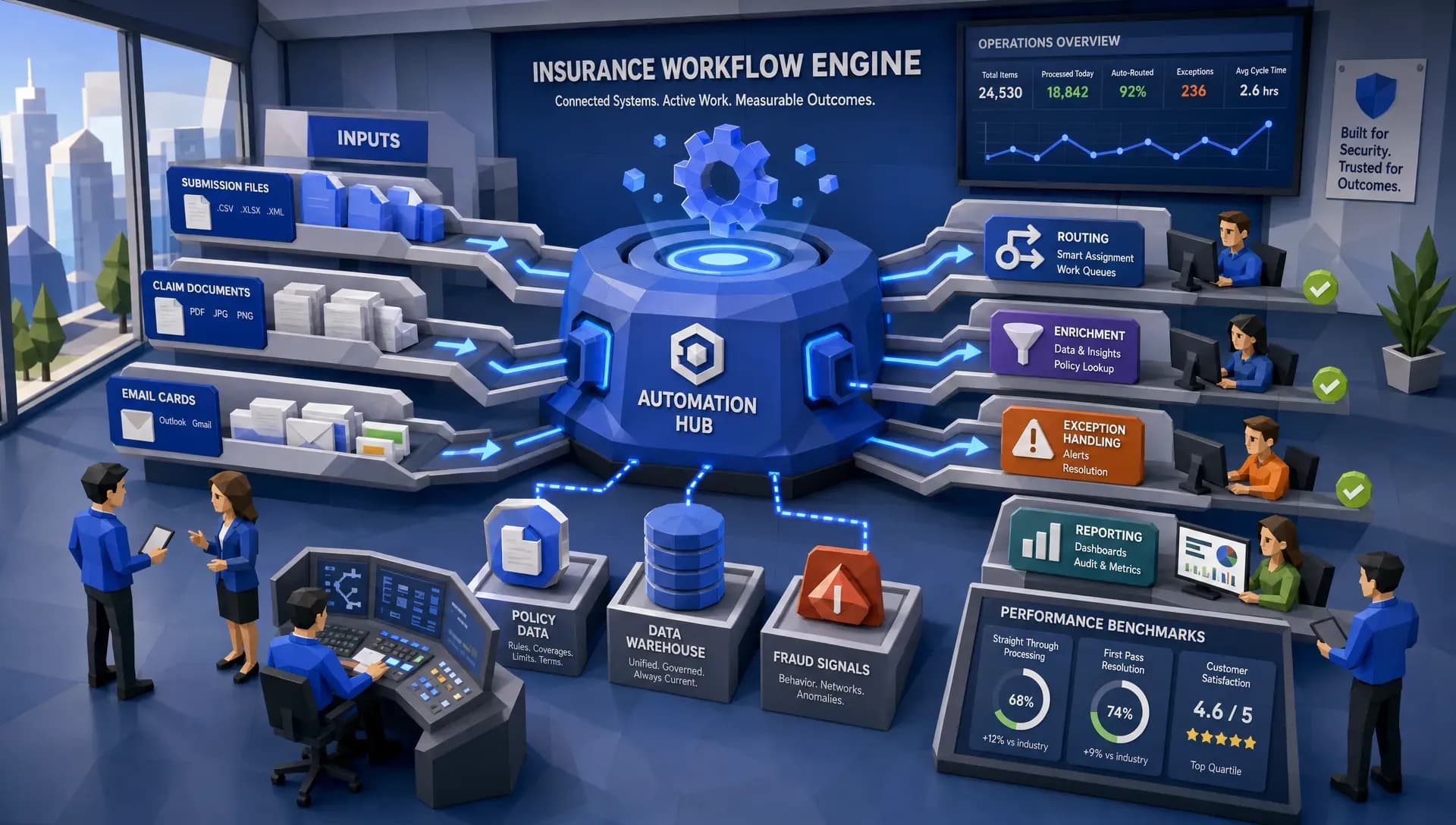
This is where Inaza’s approach is relevant. Inaza helps insurance teams automate data capture, connect workflows with existing systems, and unify operational data in a warehouse that supports reporting and analytics. The platform includes customizable workflows, pre-built templates, and integrations that can enrich underwriting and claims processes without forcing teams to rebuild the way they work from scratch.
That matters because loss cost is only as useful as the data and workflow around it. If an underwriter spends the morning cleaning PDFs, rekeying losses, and hunting for missing exposure details, the loss cost discussion becomes rushed. If the data is captured cleanly and surfaced in context, the underwriter can focus on the real question: does this risk deserve the baseline, a credit, a debit, different terms, or a polite no thank you?
Common mistakes underwriters make with loss cost
The first mistake is treating advisory loss cost as gospel. It is a strong benchmark, but it is still a benchmark. It reflects a pool of experience, not every nuance of the account in front of you.
The second mistake is ignoring credibility. A tiny account with one loss-free year has not proven it is excellent. A large account with stable exposure and consistent favorable experience deserves more respect. Credibility is what keeps us from confusing luck with skill.
The third mistake is failing to connect loss cost decisions back to outcomes. If your team gives credits for certain controls, track whether those controls actually correlate with better loss performance. If they do, lean in. If they do not, stop giving away margin because a submission has a nice-looking safety page.
The fourth mistake is pricing to win without knowing what you are winning. I understand market pressure. We have all seen accounts where the desired premium and the indicated loss cost are barely on speaking terms. But if we underprice knowingly, we should at least be honest about it. Hope is not a rating variable.
Frequently Asked Questions
Is loss cost the same as insurance premium? No. Loss cost is the expected claim cost for an exposure. Premium is the amount charged to the insured after applying rates, exposure, expenses, profit loads, policy terms, and underwriting adjustments.
Is loss cost the same as loss ratio? No. Loss cost is forward-looking and estimates expected claims. Loss ratio is backward-looking and compares actual or incurred losses to earned premium.
Who creates loss costs in insurance? Loss costs may come from advisory organizations, rating bureaus, actuarial teams, or a carrier’s own proprietary analysis. The source depends on the line of business, jurisdiction, and company strategy.
How should underwriters use loss cost? Underwriters should use loss cost as a baseline, then adjust based on credible account-specific evidence such as loss history, exposure quality, operational controls, claim trends, and risk appetite.
What does it mean if actual losses are below the indicated loss cost? It may mean the account is better than average, but it may also mean the data is immature, exposures changed, claims are under-reserved, or the account had a lucky period. The underwriter should investigate before applying a credit.
Why does automation matter for loss cost decisions? Automation helps capture and structure the data underwriters need to compare expected loss cost with actual account behavior. That reduces manual work and gives teams more time to assess risk rather than chase documents.
Loss cost insurance is not mysterious once you strip away the jargon. It is the expected claims foundation beneath the rate. For underwriters, the opportunity is to use that foundation intelligently, challenge it when the evidence supports it, and feed results back into the portfolio.
If your team is still stitching together loss cost decisions from PDFs, spreadsheets, portals, and tribal knowledge, there is a better way to work. Inaza helps insurance teams automate data capture, streamline underwriting workflows, and turn operational data into usable intelligence, so underwriters can spend less time assembling the file and more time making the call.